Trump's twin play: squeeze Iran's economy and tilt the 2026 ballot
Two August 22 moves from Washington point in the same direction: a financial blockade on Tehran and a quieter effort to reshape how Americans vote. The pattern is more instructive than either headline alone.
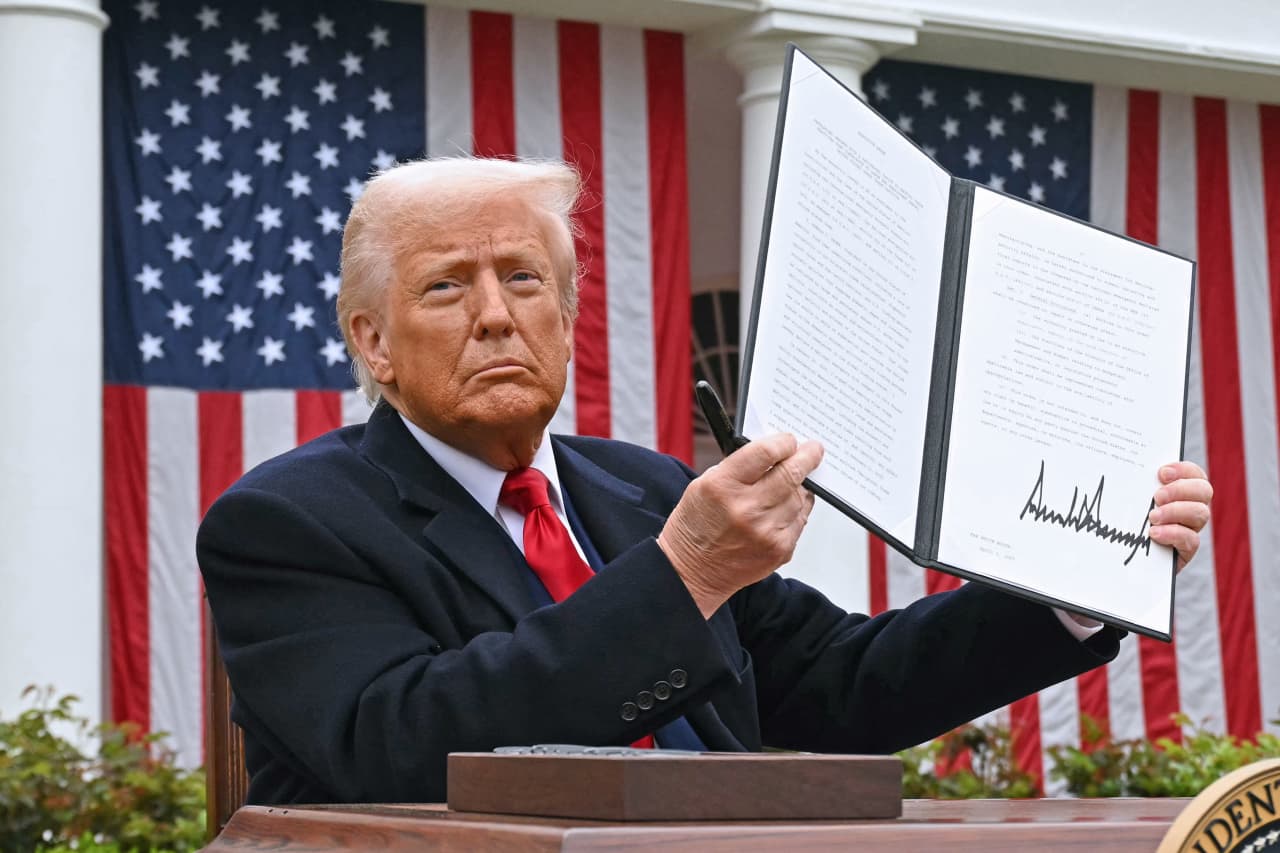
On 22 August 2026, the US Postal Service circulated new mail-in ballot restrictions even as a federal court had moved against them, and the Trump administration pressed a separate campaign to isolate Iran's economy and warn off its neighbours. Two stories, two continents, one operating theory.
Read them together and a pattern sharpens. Washington is using the tools of economic statecraft against an adversary abroad while, at home, reshaping the procedural infrastructure of an election six weeks out. Neither piece is new in isolation. The point worth naming is that both are running on the same political clock.
Squeeze the rial, warn the neighbourhood
Al Jazeera reported on 22 August that Iran had cautioned nearby states against aligning with US efforts to economically isolate Tehran, framing the US push as an "economic war." The warning came as President Donald Trump threatened to squeeze the Iranian government through financial pressure, a familiar instrument from his first term that has since been rebuilt around oil-export enforcement, secondary sanctions and correspondent-banking access (Al Jazeera, 22 August 2026).
The mechanics matter. Iran's external revenue depends on a thin set of channels: a handful of buyers for its crude, a smaller set of refineries willing to process it, and a still smaller set of banks willing to clear the resulting transactions. Cut any one of those nodes and the rial, already under sustained pressure, accelerates downward. The neighbourhood warning is a recognition that the next tightening will require regional complicity. Tehran is asking its neighbours, in effect, to refuse the role of enforcer.
The counter-read is straightforward: economic isolation works only if it is multilateral. A sanctions regime that depends on the active cooperation of Iran's Gulf neighbours, Iraq and Turkey can be diluted by any one of them deciding the cost of compliance exceeds the cost of evasion. That is the gap Trump is trying to close before the November midterms.
Refund the tariffs, then run on them
The second story sits closer to the ballot box. MarketWatch reported on 22 August that tariff refunds have been flowing back to US companies since the Supreme Court rejected Trump's earlier levies. The headline is unflattering: a large transfer from the Treasury to corporate balance sheets. Polling cited in the piece suggests a chunk of the public believes consumers should see a piece of that refund directly (MarketWatch, 22 August 2026).
This is the political puzzle the administration is solving with the Postal Service move. Tariff authority is contested in court. The political benefit of a tariff regime is highest when voters feel it. With refunds heading to importers rather than households, the White House needs another channel to make the underlying policy feel like it is working for ordinary Americans. Controlling the mechanics of mail-in voting is one such channel.
Ballot access as economic policy
Al Jazeera also reported on 22 August that the US Postal Service had circulated new mail-in ballot restrictions despite an active court ruling against them, and that Trump has publicly called for tighter mail-in voting rules as part of a broader effort to assert control over elections (Al Jazeera, 22 August 2026).
The two-pronged character is worth dwelling on. The president cannot, on his own authority, rewrite the rules of an election. He can, however, instruct an executive agency to issue guidance that, even if later enjoined, will shape how ballots are processed in the weeks before November. By the time a court strikes the guidance down, the sorting and acceptance decisions have already been made.
Monexus analysis: the structural move here is not novel, but it is being executed with unusual speed. The pattern is to announce a restriction, let it operate through the early-voting window, and force litigants to chase the policy through the courts after the fact. Each round consumes the clock the challenger has.
What stays contested
The available reporting does not specify how the new Postal Service guidance interacts state by state with existing state-level ballot receipt deadlines, which will control the practical effect in November. The Supreme Court tariff ruling is referenced in MarketWatch's piece but the underlying decision and its scope are not detailed in the source items; how much of the refund flow is mandatory versus discretionary, and over what time horizon, is therefore a question this article has not independently resolved.
What is clear from 22 August is that the administration is running two parallel projects, both timed to the same autumn window. One is the financial encirclement of an adversary. The other is the procedural narrowing of the American electorate. The risk worth naming is not that either project succeeds on its own terms, but that together they compress the time available for legal and political pushback on both fronts at once.
Wire provenance
This editorial synthesis draws on the following public wire/social posts:
- https://www.aljazeera.com/news/2026/8/22/iran-warns-nearby-nations-against-joining-us-economic-war-efforts?traffic_source=rss
- https://www.aljazeera.com/news/2026/8/22/us-postal-service-shares-mail-in-ballot-restrictions-despite-court-ruling?traffic_source=rss
- https://www.marketwatch.com/story/a-massive-corporate-welfare-program-is-underway-and-consumers-want-a-bigger-cut-of-it-0ff06d67?mod=mw_rss_topstories
- https://www.aljazeera.com/news/2026/8/22/iran-warns-nearby-nations-against-joining-us-economic-war-efforts?traffic_source=rss
- https://www.aljazeera.com/news/2026/8/22/us-postal-service-shares-mail-in-ballot-restrictions-despite-court-ruling?traffic_source=rss
- https://www.marketwatch.com/story/a-massive-corporate-welfare-program-is-underway-and-consumers-want-a-bigger-cut-of-it-0ff06d67?mod=mw_rss_topstories