Every home a launcher: Iran’s security chief frames a national call to economic mobilisation
Mohsen Rezaee, Secretary of Iran’s Supreme National Security Council, broadcast a string of remarks on 22 August 2026 casting the standoff with Washington as a total economic contest and calling households to the fight.
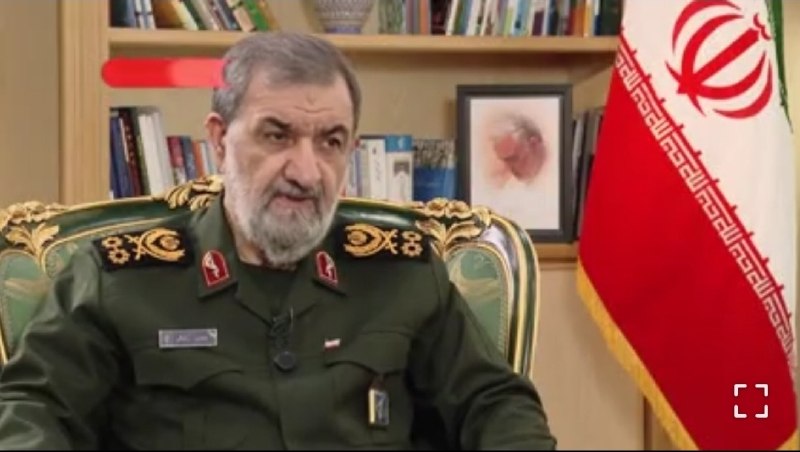
At 18:38 UTC on 22 August 2026, Mohsen Rezaee, Secretary of Iran’s Supreme National Security Council, took to Iranian state media with a single, restated message: the contest with Washington is no longer a battlefield contest, it is a household contest. Within the next ninety minutes, four messages from his office circulated across Tasnim News English, the Telegram channels of OSINT Live and the pro-Iran Clash Report aggregator, and the English-language account of Abuali, all elaborating the same script.
Rezaee is not a marginal voice. As Secretary of the SNSC, he sits atop the body that coordinates Iran’s security policy across military, diplomatic, and intelligence portfolios, and his uniform in the interview signalled that he was speaking as a sitting security official, not as a political commentator. The remarks deserve to be read as a deliberate staging of national posture, not a stray comment.
What Rezaee actually said
Reporting carried by Tasnim News English and relayed by OSINT Live and Abuali captures the core claims. The first, broadcast in uniform: "Every home can be a launcher in the economic war. Every neighborhood can be a missile base for the economic war," with a follow-up instruction that "Iranian youth should enter the economy" as part of that mobilisation. The second, a direct line to neighbours: "We say to all the countries surrounding us not to join the economic war against Iran. Any country that…" joins it will be treated as a combatant, the framing implies. The third, on the Strait of Hormuz: the waterway "is bound to its obligations until the action of America," a phrase widely read in the region as Tehran reserving the right to revise shipping access in response to US pressure. The fourth, on regime survival: "Iran will not surrender even with an economic blockade," coupled with the boast that "the nation of Iran dropped F-35s."
Taken together, the sequence is a doctrine: economic pressure is the new battlefield, every node of civilian life is a launch point, regional states that align with US sanctions become legitimate pressure-points, and the Strait of Hormuz remains the country’s principal leverage card.
The framing problem in Western coverage
Western wires covering Iran’s posture routinely reduce this sort of rhetoric to a quote block labelled "threat" and move on. That headline reading does two things at once. It treats Rezaee as a lone provocateur, ignoring his institutional weight. It also strips out the explicit civilian dimension of the message, which is not about escalation, it is about mobilisation of the population against sanctions architecture. The Tehran line is not that sanctions are illegal, although Tehran says that too, but that they are a form of warfare that must be answered by a whole-of-population economic counter-effort. Reading those remarks solely through a security lens misses that this is, in form, an industrial policy speech with a security accent.
This publication’s reading is that the broadcast is best understood as a continuing Iranian effort to convert external sanctions pressure into an internal mobilisation narrative, in the same way that wartime economies are typically framed by governments under blockade.
A snapshot of the counter-frame inside Iran
Rezaee is also making a domestic argument. His comment that "there has been an evolution in Iran's defense strategies and since the second imposed war…" and that "Iran's diplomatic behavior should be reformed" frames the current standoff as the latest iteration of a long-running confrontation, with Iranian diplomacy itself in need of recalibration. He pairs that with a confidence pitch: "Wars will be decided on the battlefields and diplomacy. We consider diplomacy as a battlefield," and the claim that "the Americans have completely lost hope in military attacks and now imagine that an economic blockade can suppor[t]" their aims instead. The combined effect is to tell an Iranian audience that the regime has judged correctly, that the US is running out of conventional options, and that the next phase will reward political patience at home.
The Strait of Hormuz line sits inside that argument. The phrase "the Strait of Hormuz is closed despite the claims of the American[s]" is a clear reminder to a domestic audience of the lever Tehran believes it still holds, even as it ostensibly upholds a passage regime.
Stakes, timeline, what to watch
Three things to track through the autumn of 2026.
First, whether the SNSC’s economic-mobilisation language migrates into formal policy, in the shape of new subsidy structures, rationing frames, or wartime-style price controls. Rezaee is signalling intent; the question is whether the budget and the cabinet pick the message up.
Second, how neighbouring states respond to the line that joining the US sanctions architecture "is the economic war against Iran." That phrasing is unusually expansive for an SNSC Secretary and reads as a diplomatic warning shot. The Gulf states, Iraq, Turkey, and the Central Asian neighbours have good reasons to keep sanctions enforcement selective; Rezaee is making that discretion costlier.
Third, the Strait of Hormuz. The standard caveat applies: the available source items do not specify whether any change in passage regime has been formally notified to the Islamic Republic’s Navy or to shipping authorities, and this article has not independently established whether tanker traffic has been affected in the past 24 hours. Watch for any IRINMA advisory or IRGC Navy briefing that converts the rhetoric into a specific transit instruction.
The structural question under all of it is whether Iran’s leadership, after a decade of pressure that has hollowed out parts of the formal economy, judges that a popular mobilisation narrative gives the regime more durability than a quiet, technocratic sanctions-management posture. Rezaee’s eight-message salvo on 22 August 2026 is, on its face, an answer in the affirmative.
Desk note: Monexus framed these remarks primarily through Iranian state-aligned sources, weighted with the institutional role of the speaker. Western wire coverage from major outlets on 22 August 2026 was not in the research feed for this piece; readers seeking the official US or European reaction should treat that absence as a known gap and consult their newsroom of record for the response.
Wire provenance
This editorial synthesis draws on the following public wire/social posts:
- https://t.me/tasnimnews_en/32621
- https://t.me/tasnimnews_en/32611
- https://t.me/tasnimnews_en/32625
- https://t.me/tasnimnews_en/32626
- https://t.me/tasnimnews_en/32627
- https://t.me/englishabuali/78139
- https://t.me/ClashReport/93328
- https://t.me/ClashReport/93324
- https://t.me/osintlive/565978
- https://t.me/osintlive/565979
- https://t.me/tasnimnews_en/32621
- https://t.me/tasnimnews_en/32611
- https://t.me/tasnimnews_en/32625
- https://t.me/tasnimnews_en/32626
- https://t.me/tasnimnews_en/32627
- https://t.me/englishabuali/78139
- https://t.me/ClashReport/93328
- https://t.me/ClashReport/93324
- https://t.me/osintlive/565978
- https://t.me/osintlive/565979