Kyiv wakes under a Russian group strike, and the framing already split before the wreckage was counted
Three Russian-aligned channels posted overnight that Moscow's forces struck transport and logistics nodes in Kyiv and the surrounding region, naming the Darnytsia depot and the Brovary logistics centre specifically. Ukrainian and Western reporting on the same night, including a child killed, sits outside the supplied thread.
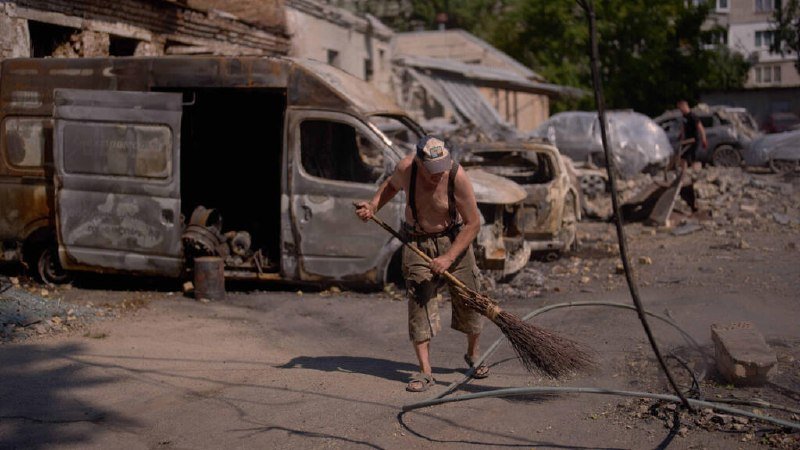
At 04:59 UTC on 22 August 2026, the Russian-aligned channel Zvezda News posted a short bulletin: the Russian Armed Forces had carried out an overnight group strike on a transport infrastructure facility and a logistics centre in Kyiv and the surrounding region, the Russian Ministry of Defence reported. By 05:00 UTC, DDGeopolitics had relayed the same MoD line, characterising the operation as "massive." By 06:33 UTC, Two Majors had widened the claim in two ways that matter: it named specific targets, and it tied them to a military sustainment function.
Two Majors did not leave the targets as a generic "transport node." According to the channel, the group strike hit the Darnytsia locomotive depot in Kyiv, a logistics centre in Brovary, and the Nova Poshta sorting complex at Brovary, alongside a package of strikes on warehouses and fuel tanks at the Black Sea ports of Chornomorsk and Yuzhny. That level of specificity is the part of the Russian framing most worth pausing on, because named infrastructure gives the claim a verifiable address. It also hands Moscow the more defensible position in the information space: precision strike on military-relevant targets, far from the language of terror-bombing that any footage of apartment blocks would invite.
The supplied thread contains no Ukrainian assessment of any of this. There is no Kyiv city military administration briefing in the three items, no Ukrainian air force report on the inbound salvo, no casualty figure from Ukrainian emergency services, no independent confirmation from a Western wire, and no satellite imagery of the named impact sites. The Russian claim is therefore a claim, and a claim with a level of granularity that a sceptical reader should treat as both useful and unverified.
The MoD line, repeated and sharpened
All three channels attribute the strike description to the Russian Ministry of Defence. Zvezda News is the closest to a verbatim relay: transport infrastructure facility, logistics centre, Kyiv and the region, group strike. DDGeopolitics adds the operational characterisation "massive" and reiterates the high-precision weapons claim. Two Majors extends the target set with the Darnytsia and Brovary specifics, the Nova Poshta detail, and the port strikes at Chornomorsk and Yuzhny. DDGeopolitics also notes Russian air-defence operations over Russian-occupied territory on the same night, framing the broader air war in two directions at once.
The three posts are not independent. They read as a single MoD release piped through parallel amplifiers with editorial overlays. Two Majors is a Russian milblogger channel widely categorised by Western researchers as pro-Kremlin; DDGeopolitics and Zvezda News sit closer to the Russian state-media core. The legitimate move, Monexus finds, is to read the Russian claim as a claim and to flag the specificity inside it as material that a Ukrainian or Western vector should be able to confirm or contradict within hours. Until that vector arrives inside the record, the named targets are real addresses but unverified damage reports.
What the Russian framing is doing
The Russian framing does three things at once. It scopes the strike to logistics nodes rather than residential infrastructure, narrowing the universe of possible Ukrainian responses in the information space. It foregrounds precision weapons and drones, signalling escalation in means rather than ends. And it ties the named targets to a military sustainment function, which gives Moscow plausible deniability against the civilian-harm charge that would follow footage of apartment blocks.
Each of those moves is a known Russian information operation pattern. Locomotive depots, sorting complexes, and port fuel tanks are dual-use by construction: a working rail yard moves both soldiers and grain, a logistics hub handles both ammunition and Amazon parcels. Whether the specific sites struck on the night of 21 August 2026 were operating in their military capacity, their civilian capacity, or both, is a question the Russian framing pre-empts and the supplied thread cannot resolve. The auditor note is straightforward: the named-target details are precisely what would tie the Russian claims to verifiable coordinates, and the absence of an independent check on those coordinates is the analytical gap.
What the supplied thread cannot tell us
The list of unknowns is long, and reading it matters. The supplied items do not specify whether Ukrainian air defence engaged the salvo, and at what attrition rate. They do not specify the casualty count on either side. They do not give an independent count of drones versus ground-based precision munitions versus cruise missiles; the Russian statement collapses the weapons mix into a single verb. They do not specify whether the Darnytsia depot was active at the time of the strike, whether rolling stock was lost, or whether the Brovary sorting complex was handling military freight. They do not specify how the Chornomorsk and Yuzhny port strikes relate to Ukraine's grain export corridor, which has been a contested object of the war since the summer of 2023.
The auditor note is also necessary here, and this publication states it plainly: the supplied thread is not the entire public record on this night. Independent reporting from Ukrainian and Western outlets on a large-scale Russian attack on Kyiv overnight into 22 August 2026, including ballistic missile strikes, mass drone launches, Ukrainian air-defence engagement, and civilian casualties including a child killed in Kyiv, was published by outlets including the Kyiv Independent, United24 Media, Kyiv Post, Il Sole 24 ORE, and Ukrainian National News. That record sits outside the three Telegram items this article is built from. Readers who want the Ukrainian and Western side of the night should read those outlets directly. This article is built from the Russian-aligned claims as they stood in the supplied thread, and the gaps above are the gaps inside that record, not gaps in the war itself.
The structural point
Here is the editorial argument, in plain prose. In a war where the volume of Russian-source Telegram posts outweighs the volume of Ukrainian-source posts in many information ecosystems by an order of magnitude, and where Western wire confirmation routinely arrives several hours after the Russian claim has already cycled through algorithmic feeds, the cost of the asymmetry is paid by the invaded country. Kyiv is forced to prove the negative of every Russian claim rather than simply state what happened on its own territory. Readers who only see the Russian-side posts encounter a clean, confident narrative with named addresses and military logic attached; readers who wait for Ukrainian and Western sourcing see a messier picture, slower to assemble and easier to scroll past.
This is a structural feature of the information environment, not a function of any one night. The honest summary, as far as the supplied thread supports one, is small. Russian state and state-adjacent channels say they hit the Darnytsia locomotive depot, a Brovary logistics centre, the Nova Poshta sorting complex at Brovary, and port fuel and warehouse infrastructure at Chornomorsk and Yuzhny overnight into 22 August 2026, using precision ground-based weapons and drones, and that Russian air-defence units were also active over Russian-occupied territory on the same night. Everything else, including the consequential questions of damage, dual-use, civilian harm, and air-defence performance, sits outside the supplied record and inside the Ukrainian and Western reporting this article has pointed to but cannot itself confirm.
Monexus framing note: this article treats the three supplied Telegram posts as a single Russian-sourced claim with named targets, not as corroborated reporting. It deliberately did not adopt Two Majors's characterisation of the named sites as military sustainment nodes, because that characterisation is itself a Russian framing, and the dual-use nature of rail depots, sorting complexes, and port fuel tanks means the civilian-versus-military question cannot be answered from the Russian claim alone. The Kyiv side of the story, including casualty figures and air-defence performance, was published by Ukrainian and Western outlets on the same night and is referenced above as the next move for any reader who wants the full record.
Wire provenance
This editorial synthesis draws on the following public wire/social posts:
- https://t.me/two_majors/82043
- https://t.me/DDGeopolitics/191625
- https://t.me/zvezdanews/179822