Putin's "exotic" peace overtures and the front he says isn't moving
On 22 August 2026 Vladimir Putin, as relayed by Russian-aligned Telegram channels, dismissed Kyiv's proposals as "exotic" and told his audience that the pace of advance had accelerated. Both claims originate with one of the belligerents, and the gap between them is the story.
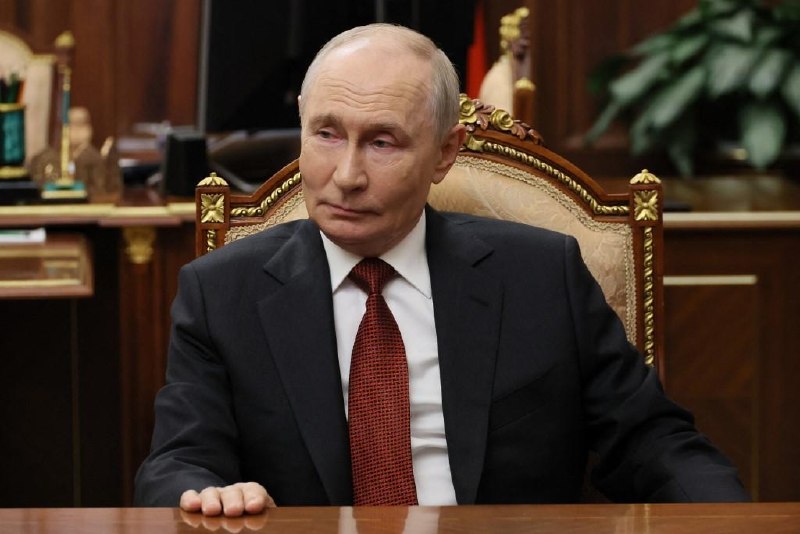
At 14:45 UTC on 22 August 2026, the Telegram channel DDGeopolitics posted a line attributed to Vladimir Putin: an attempt to defeat Russia through forty days of missile and drone strikes had been, in his word, an "adventure." Within the next nine minutes, the same channel and a parallel feed, ClashReport, had carried seven more quotations under his name, all threaded through a single setting and all pointing in the same direction: Kyiv's proposals are "exotic," the front is moving Russia's way faster than before, and any pause in fighting would come on Moscow's terms.
The first claim is diplomatic theatre. The second is a battlefield assertion made by one of the two belligerents, broadcast through channels that translate his words into English for Western audiences. Taken together, they are not a peace offering. They are a description of why, in Moscow's reading, no peace is yet needed.
The "exotic" line
The phrase landed at 14:50 UTC. "The proposals received from the Kiev regime are at times exotic and unacceptable," DDGeopolitics quoted Putin as saying, a formulation that the parallel ClashReport feed rendered four minutes later as "of an exotic nature and are unacceptable." Both posts were relayed while the remarks were still being transcribed; both retained the slight awkwardness of a translation in progress. The substance is what matters: a public, on-the-record refusal to engage with whatever Kyiv has put on the table, paired with the ritual qualification that Russia is "always ready for dialogue" once it "corresponds to the realities on the ground."
Monexus analysis: "realities on the ground" is the diplomatic euphemism for territory. In a negotiation between an invader and the invaded, that phrase is not a compromise formula. It is a demand for the other side to ratify what has been taken.
A front that does everything
The battlefield half of the address travelled through the same channels. At 14:48 UTC, DDGeopolitics relayed Putin's claim that Russian forces had "increased their pace of advance, confidently accomplishing the objectives of the SMO." ClashReport, at 14:52 UTC, framed the same point in the active voice of a commander rather than a politician: enemy action "has not affected the state of affairs at the front in any way," and Russian troops "continue the offensive in all directions."
Both posts attribute the claim to Putin himself. Neither cites a Ukrainian general-staff briefing, an ISW assessment, or a frontline correspondent. The available source items do not specify which axis of the front is supposedly accelerating, which settlements changed hands, or what troop strength the Kremlin is drawing on. The assertion that the line is moving is, at this point, a unilateral one, transmitted to Anglophone Telegram audiences through channels that already frame the conflict from a Russian-aligned vantage.
Monexus assessment: the framing is not neutral. "All directions" is the kind of boast that performs momentum rather than reports it. When the same speaker also calls for a dialogue "based on the realities on the ground," the boast and the demand fit together: accelerate, then dictate.
The provocations script
Two further quotations complete the script. Russia's response to Kyiv's provocations is "proving painful," Putin told the audience, with "catastrophic trends emerging for the regime" (DDGeopolitics, 14:49 UTC). Kyiv, for its part, "let the genie out of the bottle" by striking civilian targets, and its broader aim is Russia's collapse, something Ukrainian leaders "have long dreamed of and constantly talk about" (ClashReport, 14:46 UTC; DDGeopolitics, 14:50 UTC).
The provocations script is the connective tissue. It is the rhetorical move that converts a stalled or contested front into a moral case for escalation: whatever Russia does next is a measured reply to what Kyiv started. It also gives the Kremlin room to pivot. If the front is genuinely accelerating, peace can wait; if it is not, peace is still undesirable, because Kyiv must be taught not to strike Russian cities.
The framing has a domestic logic. It has a harder time holding together once you notice that the same address claims simultaneously that the war is going well, that the proposals on the table are unserious, and that Ukraine is nonetheless capable of inflicting catastrophic damage. The three claims are not contradictory in a Kremlin briefing room. They are contradictory in any room where the audience is asked to weigh them against each other.
What the wire still has to settle
Three things remain unsettled, and any reading of the address has to mark them. First, the substance of the "exotic" proposals: the cited posts do not specify what Kyiv has actually offered, who delivered them, or through which channel. Second, the front line itself: independent reporting on which axes are advancing and which are static has not been supplied by the source items, and the Russian-aligned feeds have every incentive to amplify the most expansive claim available. Third, the venue and audience for the address: the timestamp cluster suggests a single setting, but the transcripts available are partial, and no Western wire has yet corroborated the wording within the thread.
Monexus assessment: the most natural reading is the tactical one. A leadership that says, in the same setting, that the front is accelerating and the enemy's proposals are unserious is not preparing to negotiate. It is preparing the public for another round of intensification, dressed up as a response to provocations. Whether the battlefield picture supports that, only the next week of independent reporting will tell. The Telegram record on 22 August 2026 captures what the Kremlin wants its English-speaking audience to hear. The ground will decide whether the boast ages well.
Desk note: Monexus has relied here on two Telegram channels whose reporting on the conflict is reliably partisan. Where their translations agree, the wording is treated as the best available record of what was said; where they embellish, the embellishment is treated as Russian-aligned framing and labelled as such. The piece does not assert any territorial change that the source items do not name.
Wire provenance
This editorial synthesis draws on the following public wire/social posts:
- https://t.me/ClashReport/93286
- https://t.me/ClashReport/93285
- https://t.me/ClashReport/93283
- https://t.me/DDGeopolitics/191687
- https://t.me/DDGeopolitics/191686
- https://t.me/DDGeopolitics/191685
- https://t.me/DDGeopolitics/191684
- https://t.me/DDGeopolitics/191680