The $850 million tell: Trump turns midterms into a loyalty auction
On 21 August 2026 Trump claimed an $850 million war-chest and warned Democrats will impeach him regardless of cause. The subtext is the GOP's money flow has been captured by a single donor in waiting.
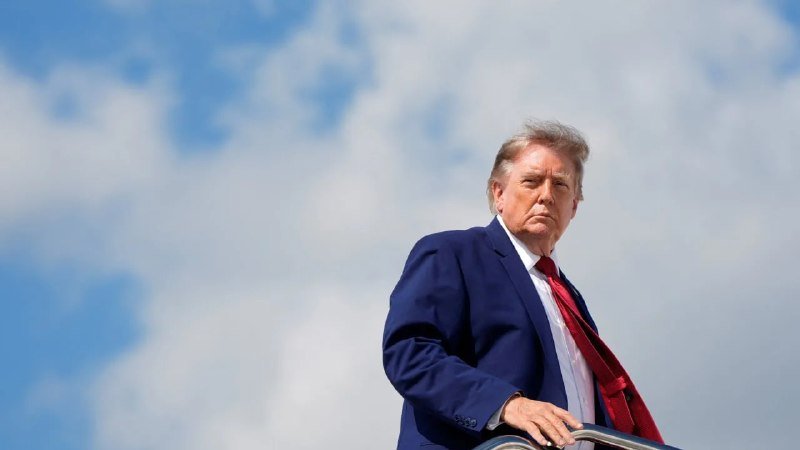
By his own telling on 21 August 2026, Donald Trump has corralled roughly $850 million for Republican candidates and is preparing to spend it. He told a rally audience, relayed through the ClashReport channel and Disclose.tv, that the figure is unknown outside his inner circle and that he will direct the money toward candidates he judges to be good Republicans. The performance was vintage: a number large enough to be cited as a fact, a caveat large enough to make verification impossible, and a recipient list defined entirely by his personal verdict.
Monexus assessment: this is not a fundraising announcement. It is an intra-party acquisition. When one figure controls the disbursement of nine-figure sums inside a national party, the candidate pool reshapes itself around his preferences. The party is not captured by ideology. It is captured by capital flow.
The donor who does not yet exist
The $850 million number is striking because, on the available evidence, no one outside the rally circuit has produced it. Trump volunteered it; the broadcast channel transcribed it; the wider press has not, in the items available to this article, filed an independent accounting. A war-chest of that scale, raised in the off-year stretch before a midterm, would dwarf the usual disclosures from the formal party committees. If the figure holds, it implies a small-donor and intermediary apparatus operating at industrial speed. If it does not, the political effect is the same: it freezes the field.
Candidates reading the clip do not need the number to be audited. They need to know whether Trump will fund them or fund their opponent. The answer, per his own framing, depends on whether he considers them good Republicans. That is the only published criterion. No policy test, no ideological grid, no donor coalition outside the principal. The filter is personal.
Impeachment as brand maintenance
In a separate clip the same evening, Trump told the same circuit that Democrats will impeach him if Republicans lose the midterms, adding that they do not even know why. The line is functionally a marketing pitch for the donor class he is addressing. It converts the abstract risk of electoral loss into a concrete cost: every dollar withheld from a candidate Trump disfavors raises the probability, in his framing, of a Democratic majority that will reach for the impeachment article.
This is the loop, as this publication reads it. Donors fund candidates. Candidates must clear Trump. Failure to clear him raises the perceived risk of a Democratic congress. A Democratic congress, in his telling, means impeachment. Impeachment fear drives donations. The cycle closes without any reference to the voter's interest.
Why the communist line matters
In a third dispatch on 21 August 2026, captured by ClashReport, Trump asked the audience whether they had ever seen a happy communist, adding that he had known communists and that they are very unhappy people. The line reads as rhetorical filler. It is worth pausing on anyway, because the framing he is reaching for is identical to the framing he uses against domestic opponents. The external enemy and the internal enemy are described in the same idiom. Communist, socialist, Democrat, dissenter: these collapse into a single category of unhappy people. The $850 million is the apparatus that enforces the category.
What it costs the party
The Republican party's long-standing argument has been procedural: lower taxes, less regulation, judicial restraint. Those arguments can survive disagreement inside the coalition. They cannot survive a structure in which the deciding vote on who carries the banner is held by one person who openly admits the criterion is subjective. A party that runs on personal vetting of candidates by a single donor does not have an ideological centre of gravity. It has a patronage ladder.
The counter-reading is straightforward and serious: $850 million committed to candidates Trump approves of is still $850 million deployed against Democrats. From the standpoint of an activist conservative who wants Senate seats held, the mechanism is the message, and the message is the seat. This publication's read is that the cost arrives later, in the primaries, where the same apparatus that delivered the seat eventually turns on the incumbent who voted wrong on a single amendment.
The serious part
The stakes are not abstract. State legislatures certify federal elections. Governors sign or veto redistricting. Attorneys general decide which post-election disputes get filed. If the $850 million is real and is spent where Trump says it will be spent, the 2026 midterms will produce a federal and state bench that owes its tenure to a single principal. That bench then adjudicates the next presidential cycle. The impeachment language is not background noise. It is a forecast of the procedural terrain the next election will be fought over.
The remaining uncertainty is the verification of the headline figure. The available source items do not specify an FEC filing behind the $850 million claim, nor do they name the donors who assembled it. Treat the number as Trump's own characterisation until the public record catches up. The political effect, however, does not wait for the auditors. Candidates are already reading the clip.
Desk note: Monexus framed the rally clip as a capital-flow event rather than a campaign-finance disclosure. The wires have carried the number; the structural read is our own.
Wire provenance
This editorial synthesis draws on the following public wire/social posts:
- https://t.me/ClashReport/93203
- https://t.me/osintlive/565847
- https://t.me/disclosetv/21745
- https://x.com/disclosetv/status/2090905524694913270
- https://t.me/ClashReport/93231
- https://t.me/osintlive/565878
- https://t.me/disclosetv/21746
- https://x.com/disclosetv/status/2090946395943342437