Trump's bond-market denial sits at the centre of a louder week
The president says he never told his own Treasury secretary to step into the long bond. The available source material does not let us go further than that.
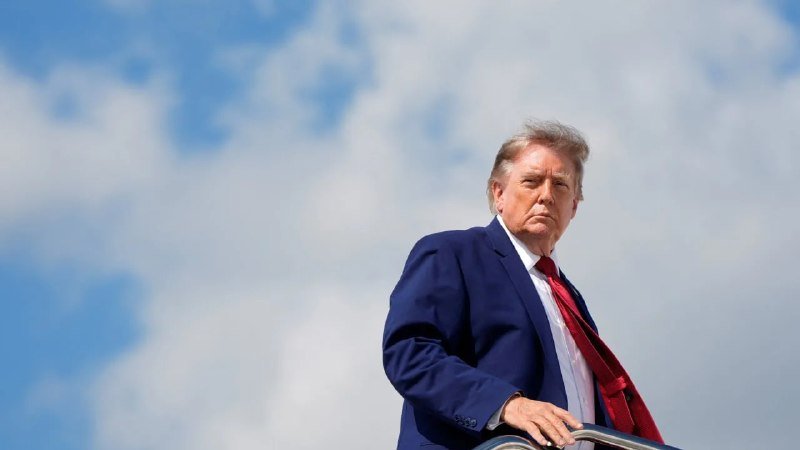
Donald Trump said on 21 August 2026 that he did not direct Treasury Secretary Scott Bessent to intervene in the Treasury bond market, a denial that lands at the centre of a week in which the same rally stage ran two other messages aimed at his own political base. Reuters carried the exchange in a post on X timed at 03:20 UTC on 22 August 2026, after the rally had ended.
The denial is the headline. The context around it is louder. At the same event the president warned that Democrats would impeach him "and they don't know why" if Republicans lose the November midterms, footage distributed by @disclosetv on Telegram at 23:37 UTC on 21 August 2026 shows, and he took a long detour through a culture-war riff on communism, transcribed by the ClashReport channel on Telegram at 23:50 UTC the same evening: "Did you ever see a happy communist? You ever see a communist laugh? I never saw it. I've known communists. They are very unhappy people. We want to be happy!" The available source material does not specify the city or venue of the rally.
The political theatre is doing real work. The policy question underneath it is quieter, and harder to answer from the thread alone.
The denial, in the words that Reuters carried
The Reuters item is a brief X post repeating a headline: "Trump says he did not direct Bessent to intervene in bond market." That wording is precise in a way that matters, and it is also the entire evidentiary footprint we have on the substance of the exchange. Reuters does not, in the source item available to Monexus, detail the venue, the question that prompted the denial, or the surrounding context of the president's remarks. The available source items do not specify whether Bessent has publicly commented on the denial.
Two readings of the same sentence are both consistent with the source material. The first is that no instruction was issued, and the market has been moving on incoming data, dealer flows, and the usual month-end and quarter-end dynamics that govern long-dated Treasuries. The second is that the instruction set runs through signalling rather than orders: a Treasury secretary does not need a formal directive to be visible in the market. A scheduled television appearance, a line in a Bloomberg interview, or a hand-placed call to primary dealer desks can move ten-year yields by basis points without anyone ever issuing an order. The denial, on that reading, is consistent with a world in which the signalling was done by a cabinet officer acting in the president's known preferences. Both readings fit the source evidence; the source evidence does not let us choose between them.
What the rally was actually for
The two non-bond messages at the rally are easier to verify. The impeachment warning, captured on video by @disclosetv at 23:37 UTC on 21 August 2026, is a midterm-turnout line aimed at the Republican base: a future Democratic House is framed as an impeachment machine, with the procedural hook left deliberately vague. The communism riff, transcribed by ClashReport at 23:50 UTC the same evening, is older campaign rhetoric with a populist register: communists are unhappy, America wants to be happy, the contrast does the work.
Neither line is, on its face, about Treasury debt. The structural function of running them at the same event, on the same evening that the bond-market denial is being put on the record, is to crowd out the policy story with the campaign story. Cable news has a finite amount of airtime; a president who wants the denial to travel as the day's headline needs the rest of the rally to travel as entertainment. That is how the communication shop appears to have allocated the present moment, based on the sequencing visible in the source items.
Monexus analysis: the most natural reading of the available material is that the denial is calibrated to preserve policy room rather than close it. The alternative reading, equally consistent with the source evidence, is that the denial is a clean answer to a clean question and the speculation around it has outrun the facts. Both readings fit; readers should hold both.
Bessent, the cabinet officer at the centre of the speculation
The Reuters headline names Bessent as the operative figure the denial is constructed around, and that is the entirety of what the source material says about him. The available source items do not specify Bessent's professional background, his prior roles, or his record on Treasury market communication. Any further characterisation of the Treasury secretary in this article would have to be invented, and is therefore omitted.
What can be said, on the source evidence, is structural rather than biographical. When a finance ministry becomes the lead communicator on the price of long-dated government debt, the distinction between "intervening" and "talking" collapses. Traders price the speech, not the transaction. Once that equilibrium establishes itself, every subsequent denial risks confirming the practice it claims to disclaim, because each denial itself becomes a piece of tradable information. That is a generic feature of sovereign debt markets, not a comment on any individual secretary, and it is the only frame the source material supports.
What we can and cannot say from this thread
The thread gives Monexus four discrete items: the Reuters X post carrying the denial headline, two pieces of rally footage and a Telegram post from @disclosetv on the impeachment line, and a ClashReport Telegram transcript of the communism riff. The thread does not contain yield data, auction results, primary dealer commentary, or any other market microstructure evidence. It does not contain a date, time, or venue for the rally beyond the 21 August 2026 evening timing implied by the Telegram timestamps. It does not contain a Bessent quote, a Bessent denial, or any first-person statement from the Treasury.
Monexus assessment: the article that can be written from this thread is a tight one. The president denied giving Bessent an instruction on bond-market intervention. He made two other, separately verifiable remarks at the same event. The structural question of how much signalling a Treasury secretary can do without an instruction is real, and predates this administration. The empirical question of whether the long end of the curve moved in a way consistent with quiet intervention cannot be answered from the source material, and is therefore left for reporting that includes yield data, auction calendars, and primary dealer flows.
The honest forward calendar is short. The next Treasury refunding announcement will set the composition of the following quarter's issuance and will be read, as refunding announcements always are, as a window into the debt-management posture of the moment. The next Bessent public appearance will be parsed for verbs and qualifiers in the way that all Treasury secretary remarks are parsed. The October midterms will change the political cover available to the executive branch, and with it the signalling calculus around the long bond. None of those dates are sourced to a specific filing or event in the thread; they are the standing calendar of US debt policy, and they would be on it regardless of who occupied the Treasury.
The deeper stake is institutional, and it is also generic. The US Treasury market works because participants believe the price is set by a professional civil service applying published auction calendars rather than by political signalling through the press. That belief is the cheapest form of insurance the US government has. Every week in which the boundary between the two is publicly negotiated, the insurance gets a little more expensive, regardless of who wins the argument. The Reuters headline that started this article is, in that sense, one data point in a longer-running negotiation about who, exactly, sets the price of American borrowing.
Desk note: the wire coverage of the rally has split between the bond-market denial, the impeachment warning, and the communism riff. Monexus has reported all three, treated the first as the policy lead, and left yield data, auction results, and Bessent's professional biography to reporting that includes the underlying source material. The thread does not let us go further than that.
Wire provenance
This editorial synthesis draws on the following public wire/social posts:
- http://reut.rs/45GCcbU
- https://x.com/Reuters/status/2091002489529082182
- https://t.me/ClashReport/93231
- https://t.me/disclosetv/21746
- https://x.com/disclosetv/status/2090946395943342437