A court ruling, a leaked frame, a channel's count: one afternoon, four signals
On 22 August 2026, NPR filed a federal ruling that a 75-country visa pause was unlawful, an X clip showed a protester's t-shirt behind the president during an address, ClashReport carried a Trump quote, and an Iranian military channel kept its running tally.
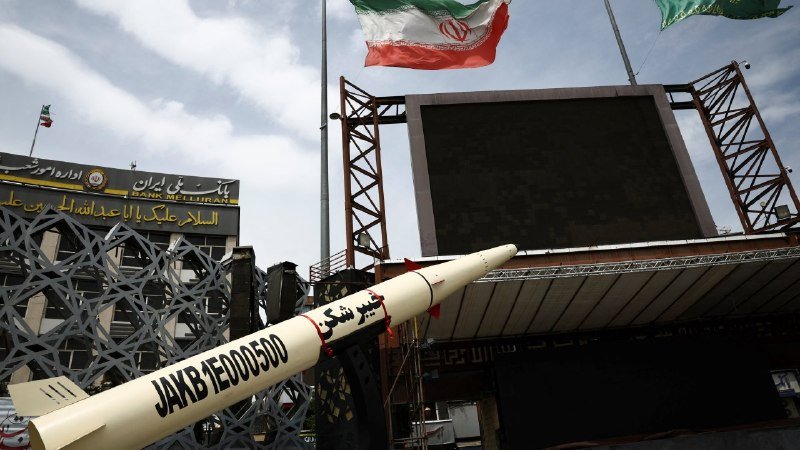
Four small things crossed the wire on 22 August 2026 and, read together, sketch the shape of a White House day better than any one of them does alone. At 20:53 UTC, NPR's news desk filed a federal-court ruling that the Trump administration's pause on issuing visas to nationals of 75 countries was illegal because it discriminated on the basis of nationality. Eight minutes later, at 21:01 UTC, a clip posted by SprinterPress on X showed a man wearing a t-shirt reading "kill local pedophile" visible on screen during a Trump address. At 21:30 UTC, the ClashReport Telegram channel carried a Trump quote, captioned simply "Trump:". And earlier in the afternoon, at 19:04 UTC, the IRIran_Military channel on Telegram had posted a single declarative line: "We are not done with Trump@IRIran_Military."
None of these is, on its own, a story. The court ruling is a legal instrument with downstream effects on visa applicants. The t-shirt is a piece of political theatre. The Trump quote, stripped of surrounding policy, is whatever a relay channel wants it to be. The Iranian line is rhetoric, not a missile trajectory. What is worth noticing is the geometry: a federal court, a domestic political signal, an American political channel optimised for relay cadence, and a foreign military-affiliated channel keeping score, all in motion within a two-and-a-half-hour window on the same calendar day.
The court drew the first line
NPR's reporting on the ruling is the only item in this set with primary-document weight. The policy at issue had stopped issuing visas for citizens of 75 countries on the stated rationale that those travellers were likely to need public assistance. The court held that the policy illegally discriminated on the basis of nationality. That is what the cited source contains, and it is enough.
What the cited source does not specify is the doctrinal architecture behind the holding: whether the court treated nationality as an explicit statutory category, whether it reached the underlying fiscal justification, or how the decision interacts with adjacent nationality-based measures the administration has used elsewhere. Those are real questions, and the available reporting does not answer them. Monexus assessment: the ruling is a clear loss for the executive's most categorical instrument in this batch of immigration restrictions, and the more interesting question is the next instrument the administration reaches for, not the legal taxonomy of this one. The ruling can be appealed; the administration can redesign the policy around individualised assessments; or it can decline to comply and dare the courts to enforce. Each of those choices is a tell about the cost the executive is willing to absorb, and the cited source does not yet tell us which the White House will pick.
The screen caught something else
At 21:01 UTC, eight minutes after NPR's filing, SprinterPress on X posted a short clip in which a man wearing a "kill local pedophile" t-shirt is visible behind the president during a televised address. The clip is short, the text on the garment is legible, and the framing is the kind of artefact the political internet metabolises faster than any court ruling. By the time cable news was reading the visa decision aloud, the t-shirt had already become the day's image on the platforms where the court ruling was, at best, a headline.
It is tempting to read the two as part of the same story. They are not. The court ruling affects a defined class of visa applicants through a defined legal mechanism. The t-shirt is a visual artefact whose meaning is whatever each viewer brings to it. Treating them as equivalent is the kind of equivalence that flattens governance into mood. The day's actual news is that a court invalidated a policy. The day's actual texture is that the frame beside the president travelled farther than the docket number did.
Two channels, two registers
At 21:30 UTC, the ClashReport Telegram channel posted a Trump quote, captioned simply "Trump:", with no further context in the visible excerpt. The juxtaposition is the point: a presidential quotation, stripped of surrounding policy, served to an audience that reads via channels optimised for cadence. Earlier, at 19:04 UTC, the IRIran_Military channel on Telegram had posted a single line: "We are not done with Trump@IRIran_Military." The handle attached to the line is the same handle publishing it, a stylistic choice that fuses institutional voice with first-person grievance.
Read against each other, the two posts show the information geometry of the present moment. One is the president of the United States, speaking in fragments suitable for relay, his words harvested by aggregators. The other is a military-affiliated channel of a foreign state, addressing the president by name, in a register that is neither diplomacy nor formal threat but something closer to scorekeeping. Both are content. Both assume their audience reads in feeds, not in newspapers. Neither requires a journalist to interpret; both reward the platform that ships them fastest. The cited posts do not specify whether either line was preceded by a fuller statement; the framing above is Monexus's read of the visible material, not an account of any underlying event.
What the afternoon reveals
The lesson of the day is not that any of these four items is decisive in isolation. The ruling can be appealed. The t-shirt is already a meme and will be forgotten by next week. The Trump quote, in its stripped form, can mean whatever a channel wants it to mean. The Iranian line is rhetoric. What they describe together is a system in which the bandwidth of attention and the bandwidth of governance have decoupled. The court moves at docket speed. The platforms move at retweet speed. The foreign adversary moves at grievance speed. The White House, attempting to govern across all three, finds that the t-shirt travels farther than the docket number.
That is the asymmetry worth naming. A federal ruling against a nationality-based visa pause is a serious constitutional event with downstream effects on tens of thousands of individual visa applicants, per the cited NPR report. A t-shirt that makes it on camera is a visual artefact that produces traffic. A quote stripped of context is a Rorschach test. A channel's first-person line to a foreign head of state is theatre. Each of them arrived within a two-and-a-half-hour window on the same day. The work of the next 72 hours is to find out which one the administration treats as the actual news, and whether the Iranian channel updates its count.
Desk note: this article leans on a federal-court ruling reported by NPR, an on-camera visual artefact posted by SprinterPress on X, a Trump quote relayed by ClashReport on Telegram, and a single-sentence post from IRIran_Military. The platform-native items are presented as counter-claims and visual context, not as primary evidence of any underlying action. Source coverage was thin on the legal-doctrine details and on any official Iranian or US institutional response, and those gaps are flagged in the body rather than papered over.
Wire provenance
This editorial synthesis draws on the following public wire/social posts:
- https://www.npr.org/2026/08/22/nx-s1-5941765/trump-immigration-visa-ban-75-countries
- https://x.com/SprinterPress/status/2091269547517149274
- https://t.me/ClashReport/93336
- https://t.me/IRIran_Military/9753