Canada's premiers rally behind Carney's tariff stance as the dispute widens
Provincial premiers publicly backed Prime Minister Mark Carney's pushback against the latest U.S. tariffs, with Al Jazeera's wire capturing on-camera statements directed at President Trump.
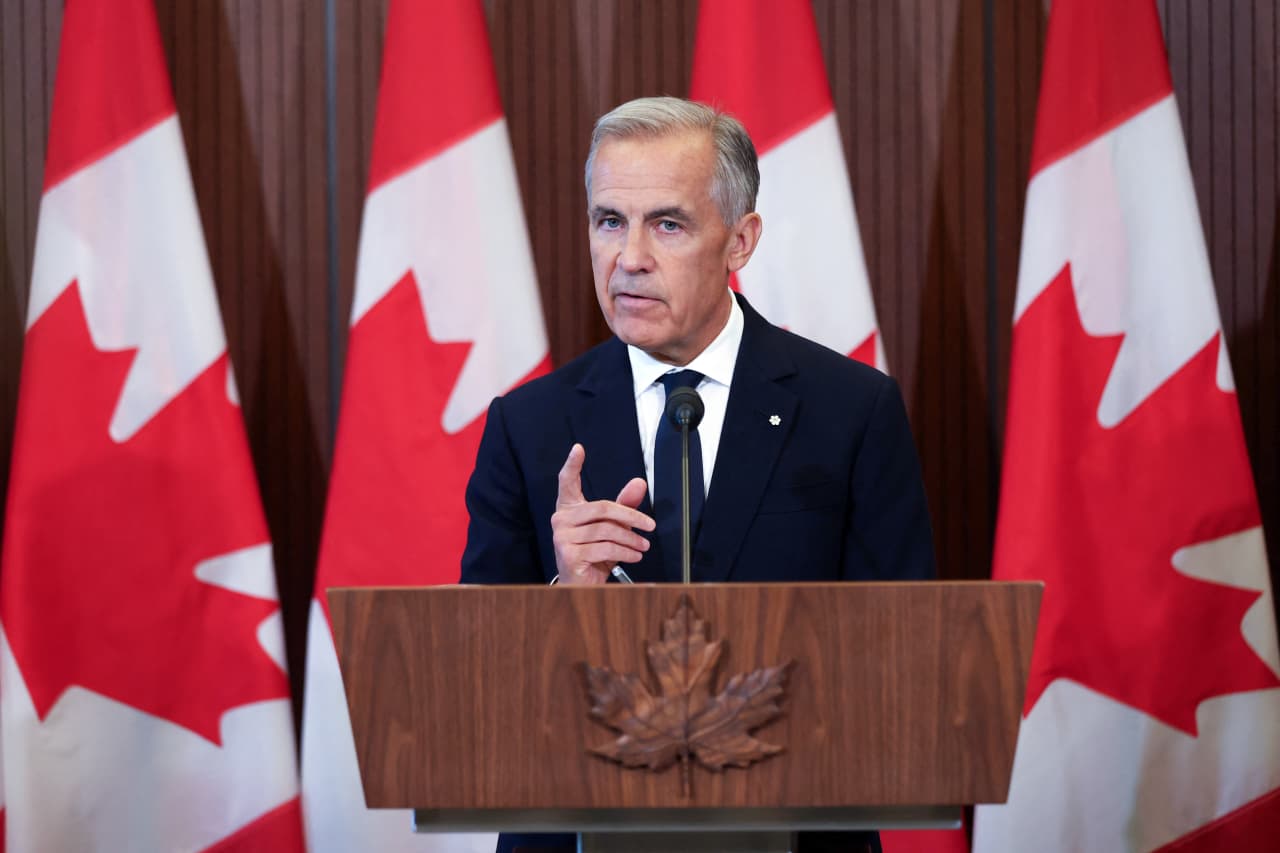
Canada's premiers lined up behind Prime Minister Mark Carney in the early hours of 23 August 2026, publicly joining his pushback against the latest U.S. tariffs and widening the political base for Ottawa's retaliation.
Al Jazeera's video newsfeed broadcast at 03:42 UTC on 23 August showed provincial premiers firing back after U.S. President Donald Trump imposed the new duties, capturing on-camera language of distrust directed at Washington. Carney's earlier vow to match the U.S. move "dollar for dollar," recorded on a Polymarket wire at 20:30 UTC on 22 August, has now been echoed at the sub-federal level. Read together, the federal vow and the premiers' on-camera response give Ottawa a wider political mandate to sustain retaliation across multiple provincial economies without one province undercutting the others.
What the wire shows
The available source items establish the sequence and the public alignment, not a province-by-province roster. Al Jazeera's 03:42 UTC newsfeed on 23 August specifically names provincial premiers, not generic "Canadian officials," joining Carney's pushback against the new U.S. duties. The wire captures a quoted premier directing the line "you just can't trust Trump" at the U.S. president.
Earlier in the day on 22 August, Carney had vowed on camera to match the new tariffs "dollar for dollar." A Polymarket wire post at 20:30 UTC on 22 August carried Carney's vow ("JUST IN: Canadian PM Mark Carney vows to match new U.S. tariffs dollar for dollar after trade talks collapse") and, separately, Carney's "at war" framing of the dispute. MarketWatch confirmed the retaliatory tariffs package at 18:55 UTC on 22 August. An Unusual Whales post at 04:06 UTC on 22 August relayed CTV reporting that the new U.S. duties had taken effect at the midnight deadline, with no deal announced. A Polymarket post at 04:04 UTC on the same day described the action as "50% U.S. tariffs on ~$20 billion of Canadian goods."
The premiers' choice to publicly back Carney's pushback, captured by Al Jazeera, is the story at the sub-federal level. The available source items do not specify which provincial premiers appeared in the Al Jazeera broadcast, which provincial caucuses have formally endorsed the response, or whether any provincial government has publicly dissented. The wire establishes the symbolic alignment, not a formal policy commitment from each province.
The premiers' role in Canada's retaliation
Canada's tariff retaliation is not a single switch. Provincial governments administer many of the sectors the retaliatory package will bite: Ontario's auto assembly belt, Quebec's aerospace and aluminium, Alberta's energy exports, British Columbia's softwood and ports. When premiers publicly back Carney's framing, they accept the political cost of the retaliation inside their own provinces. When they refuse, Ottawa's retaliation list shortens to whatever the federal government can hit without pulling provinces into a fight they did not sign up for.
The premiers' on-camera endorsement, captured by Al Jazeera, narrows the room for that refusal. It does not eliminate it. The available source items do not specify whether the premiers' intervention changes the sectoral composition of the Canadian retaliation list, whether Carney has briefed the premiers on a negotiation channel with Washington since the deadline, or whether the coordination is wholly rhetorical or includes formal trade-remedy commitments. The wire records the alignment; the substance of the provincial cooperation remains to be confirmed.
What the structural read is
Monexus assessment: the structural read is that the managed-friction model, quiet talks, sectoral carve-outs, face-saving joint statements, is now under strain at both the federal and the sub-federal level. For forty years, Canadian premiers have relied on the federal government to manage the bilateral file, with provincial input on sectoral carve-outs behind closed doors. Carney's choice to call the dispute "war" and the premiers' choice to publicly join his pushback is a sign that bilateral choreography inside Canada is now part of the public dispute, not a quiet back-channel.
The counter-narrative is that this is a pressure play that ends the way prior rounds ended: a phone call, a face-saving joint statement, carve-outs in dairy, autos, lumber. The dominant read is that the U.S. side of that choreography has lost its capacity to deliver a face-saving statement to its own base. Tariffs are now a first-resort tool in Washington across allies and adversaries. Once that premise is operating, the carve-out Canada enjoyed is no longer available to be negotiated back, regardless of how many premiers stand behind Carney on camera.
The premiers' intervention does not change which side of that read the evidence supports. It does change the cost calculation on the Canadian side. A cabinet that cannot count on provincial cooperation has a limited retaliation list. A cabinet that can now count on premiers saying "you just can't trust Trump" to the cameras has a much larger one. Washington now faces not one Canadian voice but a coordinated Canadian voice.
Stakes and what remains uncertain
Two reads compete on the outcome. The dominant one is that this is a pressure play: tariffs land, both sides settle inside thirty days for a face-saving compromise. The counter-narrative is that the underlying political logic on both sides has shifted enough that no compromise is available. A U.S. administration that uses tariffs as a first-resort tool does not gain from removing them; a Canadian government that has chosen the word "war" and a set of premiers who have publicly joined its pushback does not gain from settling quietly.
Who wins if the dominant read holds: U.S. negotiators extract sectoral concessions on dairy and autos without altering the tariff framework, and a Canadian federal-provincial coalition that showed unity in public discreetly disaggregates afterwards. Who wins if the counter-narrative holds: domestic political coalitions in both countries consolidate around an industrial-policy frame that treats trade as security rather than economics, with Canadian premiers now formally inside that frame. The cost is borne by integrated supply chains, autos most visibly, energy pipelines, softwood, that have spent forty years organising around the assumption that the border is a customs formality rather than a tariff frontier.
The available source items do not specify the precise sectoral mix of the new U.S. duties, the response window for Canada's retaliatory schedule, which provincial premiers appeared in the broadcast, whether any provincial government has publicly dissented, whether either cabinet has signalled a willingness to resume talks, or whether prior rounds of this dispute settled on different terms. The ledger stops at the premiers' on-camera response and the deadline rhetoric.
The next data points to watch are the formal U.S. Customs notice, the Canadian retaliation list with any provincial input now reflected in it, the next public exchange between a premier and a U.S. governor or trade representative, and whether either cabinet leaks a back-channel before then.
Desk note: This update adds the Al Jazeera wire of 23 August 2026 capturing provincial premiers publicly firing back at Trump and joining Carney's pushback. Monexus treats the premiers' on-camera statements as evidence of a coordinated national posture, not as a tactical shift inside an already-coordinated federal escalation. The premiers' endorsement, on the available evidence, is of the pushback against Trump rather than of the specific 'at war' phrase.
Wire provenance
This editorial synthesis draws on the following public wire/social posts:
- https://www.aljazeera.com/video/newsfeed/2026/8/23/you-just-cant-trust-trump-canadian-premiers-fire-back-in-trade-war?traffic_source=rss
- https://www.marketwatch.com/story/canada-announces-retaliatory-tariffs-on-u-s-goods-after-trade-talks-break-down-45081c2f?mod=mw_rss_topstories
- https://x.com/Polymarket/status/2091189645459501489
- https://x.com/unusual_whales/status/2091235068710945016
- https://x.com/Polymarket/status/2091013514638885288
- https://www.aljazeera.com/video/newsfeed/2026/8/23/you-just-cant-trust-trump-canadian-premiers-fire-back-in-trade-war?traffic_source=rss
- https://www.marketwatch.com/story/canada-announces-retaliatory-tariffs-on-u-s-goods-after-trade-talks-break-down-45081c2f?mod=mw_rss_topstories
- https://x.com/Polymarket/status/2091189645459501489
- https://x.com/unusual_whales/status/2091235068710945016
- https://x.com/Polymarket/status/2091013514638885288