A 9.39-second robot is not the finish line
A humanoid robot's reported 9.39-second 100 metres at the World Humanoid Robot Games in Beijing has triggered predictable claims that the human era of athletics is ending. The more consequential race is already elsewhere: between controlled demonstrations and repeatable machines.
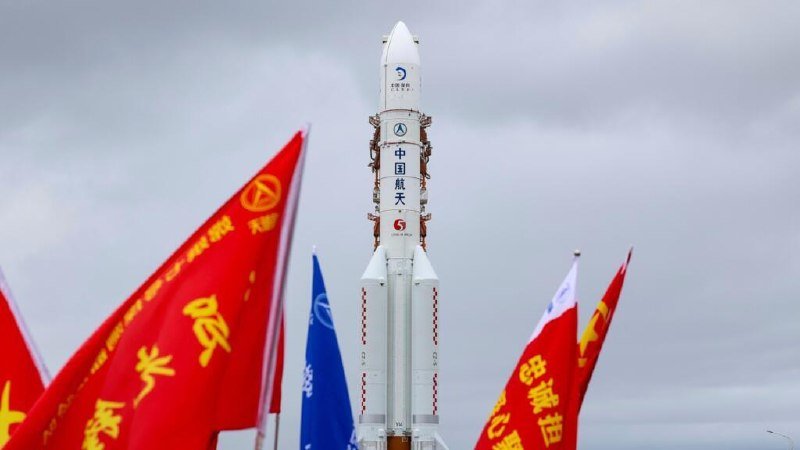
At the five-day World Humanoid Robot Games in Beijing on 23 August 2026, a humanoid robot developed by the Beijing Innovation Center of Humanoid Robotics reportedly covered 100 metres in 9.39 seconds. The figure, circulated by Polymarket and Unusual Whales and reported by The Guardian, is faster than Usain Bolt's 9.58-second human world record. The result makes for an arresting headline. It should not be mistaken for proof that humanoid athletes have arrived.
The useful question is not whether a robot can cross a line before a person. It is whether the performance can be reproduced outside a showcase, under comparable conditions, and with a clear account of what the machine was doing. A sprint demonstration is a milestone in engineering and public spectacle. It is not yet evidence of an industrial transformation by itself.
A naming caveat sits on top of the headline. The Polymarket social-media post identifies the 9.39-second machine as "Tianzhuo," while the Unusual Whales post and The Guardian identify the developer as the Beijing Innovation Center of Humanoid Robotics without supplying that model name. Separately, other public reporting on the same games has used the name "Tiangong Ultra" for the machine at the centre of the 9.39-second claim. The available source items do not specify which name the developers themselves use. The responsible reading treats the developer as the confirmed entity and the model name as contested across reporting, not as a settled cross-source fact.
The number needs context
The three source items converge on the same reported time, event and developer. The Guardian described a robot developed by the Beijing Innovation Center of Humanoid Robotics breaking human track records during the Beijing games. The two social-media posts put its 100-metre time at 9.39 seconds and make the comparison to Bolt.
That agreement establishes that the reported performance happened. It does not settle every question a sports record normally answers. The available sources do not specify the event's governing rules, the robot's operating conditions, the number of attempts, or the method used to verify the time. They also do not specify whether the 9.39-second result is directly comparable to Bolt's mark under like-for-like conditions.
The distinction matters because a human world record is tied to a defined competitive category, with timing protocols and eligibility rules. A robot demonstration is a different category, particularly when the source trail is brief. Monexus analysis: the 9.39-second figure is consequential as a signal of China's ability to stage and publicise a high-profile robotics event. It is weaker as evidence that humanoid locomotion has reached a settled athletic benchmark.
The same caution applies to the language of records. The Guardian's headline says humanoid robots smashed human records, including Bolt's 100-metre sprint. The social posts repeat the 9.39-second comparison. Neither form of attribution supplies the additional verification needed to treat the result as a like-for-like world record. The responsible reading is narrower: a Chinese humanoid robot reportedly ran 100 metres faster than Bolt's recorded human time at a Beijing competition that is itself five days long.
Demonstration is not deployment
Robotics has long had a gap between a striking demonstration and a machine that works reliably, cheaply and repeatedly in the world. A robot that can sprint in a prepared event is not necessarily a robot that can navigate an ordinary street, work in a factory or operate for long periods without specialised support.
The Beijing games are useful because they put humanoid machines before a public audience and give engineers a visible target. They can also create a misleading benchmark. A 100-metre track isolates a narrow task. Success there says less about the harder problem of building adaptable machines than a viral video may suggest.
Monexus assessment: the immediate competition is therefore not between any specific robot and Bolt in any ordinary sporting sense. It is between institutions that can turn a controlled performance into a repeatable capability. That test will be decided by maintenance, power, control systems, cost, safety and performance across changing conditions, none of which the available source items specify.
There is a second competitive layer. China's robotics push is a deliberate effort to build an industrial ecosystem, not merely a collection of laboratory novelties. Public games can help demonstrate progress, attract attention and create demand. The event's five-day format also gives the public a visible connection to technologies that are usually discussed through forecasts and policy documents.
The strongest Western reading is that the spectacle risks confusing speed with maturity. The strongest Chinese position is that staged competitions are a legitimate way to accelerate learning, test hardware and normalise human-robot interaction. Both can be true. A demonstration can be commercially and scientifically useful without being a universal measure of readiness.
The record is also a media test
The speed of the story's circulation is as revealing as the sprint itself. The same 9.39-second claim appeared in two separate social-media posts and then in a Guardian report on the same day. The repetition gave the figure the appearance of consensus before the underlying conditions had been publicly detailed in the source items supplied here.
This is not an argument for dismissing the result. It is an argument for separating the event from the comparison. Bolt's mark is a human athletic record, while the robot's result is being reported from a competition involving machines. The human comparison is irresistible because it gives an unfamiliar technology a familiar scale. It is also precisely where overstatement begins.
The episode shows how platform incentives favour clean numbers. A decimal is easy to repeat. Conditions are harder to explain. The more dramatic the figure, the more likely it is to travel without the technical context that would make it meaningful. Monexus finds that the important media failure would be not the existence of the claim, but the conversion of a reported demonstration into a settled judgment about the future of work, sport or human capability.
What the sprint cannot answer
The source material does not say whether the reported performance was independently timed, whether the robot used specialised components, or whether the 100 metres was run under the same rules applied to human competition. It also does not provide evidence about commercial production, unit cost, battery endurance, safety certification or the number of machines deployed outside the event. The sources also do not specify which model name the Beijing Innovation Center of Humanoid Robotics uses for the machine in question.
Those omissions do not make the achievement worthless. They define its proper scale. A humanoid robot developed by the Beijing Innovation Center of Humanoid Robotics reportedly ran faster than Bolt's human time in Beijing. That is a notable result in a showcase organised around humanoid robotics. It is not enough to establish a general measure of machine superiority, let alone a timeline for the replacement of human athletes or workers.
The credible conclusion is therefore conditional. If the time is confirmed under transparent conditions, it will mark an improvement in robotic locomotion and another step in China's effort to make humanoid technology visible at scale. If the comparison is repeated without those conditions, it will become another example of a benchmark outrunning its explanation.
The date to watch is the next event at which the result can be tested against a published set of rules and independently documented operating conditions. Until then, the 9.39-second run belongs in the record of engineering spectacle, not in the record book as a clean equivalence between machines and people.
Desk note: Monexus framed this as a question of what a reported demonstration can and cannot prove, rather than as a sprint story. Where the wires reported a clean "robot beats Bolt" headline, we flagged the developer-versus-model-name gap, the absence of disclosed timing protocol, and the difference between a controlled showcase and a like-for-like athletic record.
Wire provenance
This editorial synthesis draws on the following public wire/social posts:
- https://www.theguardian.com/world/video/2026/aug/23/humanoid-robot-smash-human-records-including-usain-bolts-100m-video
- https://x.com/Polymarket/status/2091371623597171053
- https://x.com/unusual_whales/status/2091244596550611398