Sanctions theatre, again: Tehran reads the signal in Washington’s “desperate” framing
Tehran is brushing off a new US sanctions package as the moves of a “desperate” administration, while Iranian-aligned channels pivot the rhetorical focus toward Turkey.
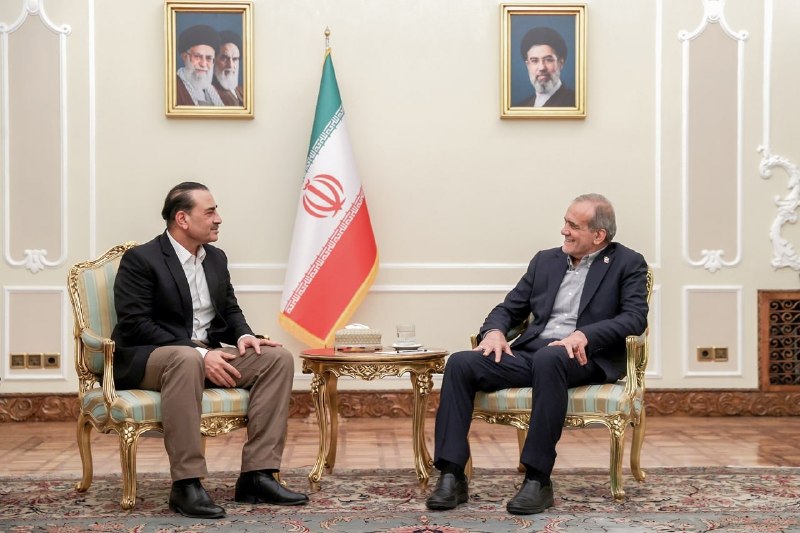
On 23 August 2026, an Iranian state-aligned channel reposted a familiar script: Iran warned Muslims about this day a long time ago. They failed in Iran. Now they're going after their next target: Turkey, the account @IRIran_Military wrote in a 16:34 UTC post, framing Washington’s next move as a regional pivot rather than a Tehran-specific squeeze (https://t.me/IRIran_Military/9765). The post landed the same morning Iran’s foreign-policy apparatus was already dismissing US threats of new sanctions as the behaviour of a cornered administration.
Tehran’s read on the moment is not subtle. On 23 August at 12:30 UTC, Iran’s official line, relayed via wire coverage on Investing.com, was that any new US sanctions would fail, and that Washington is acting out of desperation rather than leverage (https://www.investing.com/news/commodities-news/iran-says-new-sanctions-threatened-by-desperate-us-will-fail-4872444). The day before, at 17:18 UTC on 22 August, Iran had already condemned US plans to announce fresh measures, sharpening the framing before the formal unveiling (https://www.investing.com/news/commodities-news/iran-condemns-us-plans-to-announce-new-sanctions-4872376). Two messages, one day apart, both aimed at the same audience: domestic constituencies in Iran, neighbouring capitals, and a Global South watching how the dollar’s enforcement arm is deployed.
The package itself is less interesting than the messaging
US sanctions architecture on Iran is not new. What the cited coverage shows is the political theatre around the next tranche: the timing, the vocabulary, and the choice of venue. Tehran’s read, that Washington is signalling rather than squeezing, is structurally plausible. New sanctions announced without teeth produce headlines for a domestic US audience and ammunition for Iran’s “resistance economy” line at home. They rarely change Iranian behaviour in the short run, and they harden the very negotiating posture they are nominally designed to soften.
Monexus analysis: the pattern is familiar from previous rounds. Announce, condemn, negotiate. The Iranian state reads every announcement as proof that the economic war is the point, not the prelude to a deal. That reading is not paranoid; it is the lesson Tehran has drawn from four decades of measures, exemptions, and snapbacks.
Why Turkey now
The @IRIran_Military pivot to Turkey is the more revealing signal. Turkey is a NATO member with its own sanctions-evasion playbook, a substantial border with Iran, and a recent history of trading energy and gold across the Gulf. If Washington tightens the screws on Tehran, Ankara is one of the obvious pressure points: a partner state whose commercial and security interests pull it in different directions.
The cited Telegram post does not specify which Turkish policy or actor is in the crosshairs; it asserts a directional threat. That vagueness is itself the point. Iranian-aligned messaging tends to broaden the target list early, so that any subsequent Turkish accommodation of US measures can be read in Tehran as proof of betrayal, and any Turkish defiance can be read as proof of multipolar momentum. Either outcome serves the framing.
Sanctions as dollar politics, in plain terms
Strip away the legalese and a US sanctions announcement is a directive to the global financial plumbing: dollar clearing banks, SWIFT-adjacent messaging systems, and the insurers and shipping firms that price risk in dollars. Most countries have no realistic alternative to using that plumbing for their trade, so the choice is binary: comply, or pay a premium to route around it.
That is why the Iranian response frames the United States as “desperate.” A confident enforcer does not need to justify its measures; a cornered one does. Tehran’s argument, that unilateral sanctions are losing legitimacy across the Global South because they weaponise infrastructure the rest of the world is forced to use, has more traction than it did a decade ago. BRICS+ settlement experiments, renminbi-priced oil, and the slow accretion of non-dollar trade invoicing are not yet a substitute, but they are no longer a joke.
Monexus assessment: the more Iran can position the next US package as a defensive move by a declining hegemon, the more it can buy time at home and credibility abroad. The more Washington can frame the package as routine enforcement, the less it looks like escalation. Both sides are running a narrative war, and the sanctions text is the set.
What to watch next
Two near-term markers matter. First, whether the US package names Turkish individuals, banks, or shipping registries; that would convert the Iranian warning from rhetoric into a real commercial risk for Ankara. Second, whether Iran responds with a tit-for-tat measure of its own, or with a regional diplomatic move aimed at a third capital, signalling that the pressure is being routed around rather than absorbed.
The available source items do not specify the contents of the announced package, the timing of its formal publication, or the response of any Turkish ministry. Those are the gaps to fill before the next cycle of claims becomes harder to walk back.
Desk note: Monexus framed the sanctions exchange as a messaging contest with structural stakes in dollar politics, rather than as a stand-alone enforcement story. The Iranian state-aligned Telegram channel is cited as a counter-claim source with explicit provenance, not as a stand-alone factual basis.
Wire provenance
This editorial synthesis draws on the following public wire/social posts:
- https://t.me/IRIran_Military/9765
- https://www.investing.com/news/commodities-news/iran-says-new-sanctions-threatened-by-desperate-us-will-fail-4872444
- https://www.investing.com/news/commodities-news/iran-condemns-us-plans-to-announce-new-sanctions-4872376