Israeli demolition work and artillery hit Bint Jbeil villages; CENTCOM cites 70-vessel tally off Iran
Israeli demolition work in Haddatha and artillery fire around Sribbin were logged across Telegram channels on 23 August, the same day a CENTCOM figure relayed by wfwitness counted 70 vessels redirected, three disabled and two boarded in the Iran-directed maritime campaign.
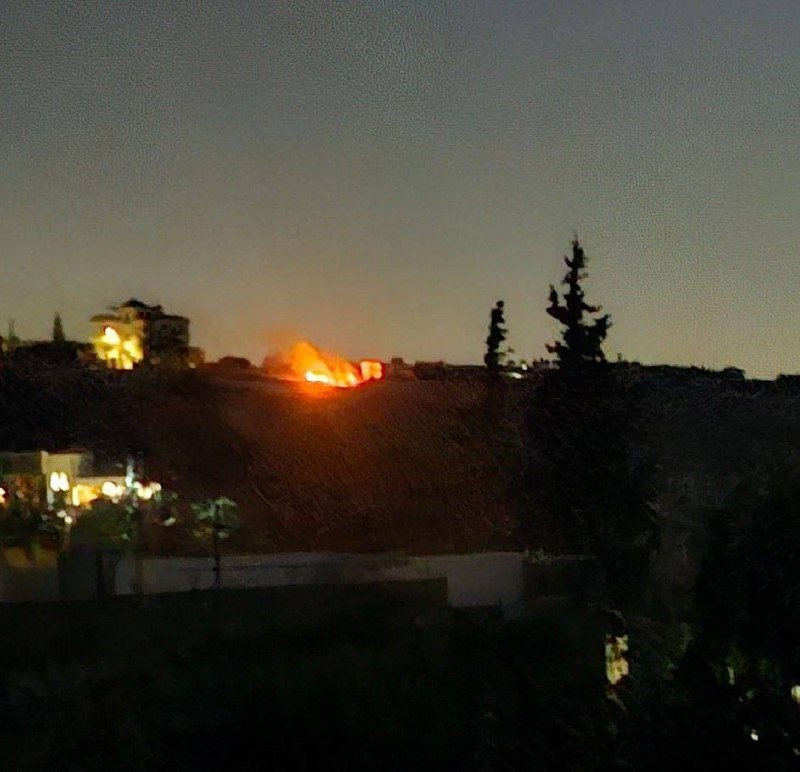
At 21:55 UTC on 23 August 2026 the Telegram channel wfwitness reported an explosion in the southern Lebanese town of Haddatha and attributed it to Israeli demolition activity. Six minutes later the same channel posted that Israeli jets had entered southern Lebanese airspace. The two posts sit inside a longer evening cluster: at 21:28 UTC, the Iranian-state PressTV's Telegram channel said Israeli forces had set fire to the north-western outskirts of Haddatha; at 17:11 UTC, BellumActaNews relayed Al Mayadeen's reporting that areas around the town of Sribbin in the Bint Jbeil district had come under Israeli artillery fire.
The southern Lebanese border district is taking a layered campaign of airstrikes, demolition work and shelling on the same day that a US Central Command figure, as relayed by wfwitness, puts the running count of its Iran-directed maritime campaign at 70 vessels redirected, three disabled and two boarded. Read together, the day's posts describe an Israeli ground-and-air operation in Bint Jbeil running in parallel with a separate US maritime pressure campaign further east. Whether the two tracks are coordinated is the question the available source items do not directly answer.
Bint Jbeil in close succession
The 17:11 to 22:01 UTC window on 23 August produced an unusually dense cluster of single-evening posts. Al Mayadeen, via BellumActaNews, reported artillery fire around Sribbin in Bint Jbeil. PressTV's Telegram account said Israeli forces had set fire to the north-western outskirts of Haddatha, a town in the same district. wfwitness then logged Israeli jets over southern Lebanese airspace, an explosion in Haddatha tied to demolition activity, and a second overflight post.
Haddatha and Sribbin are not new names in this war. Both sit close to the Israeli border in the Bint Jbeil district and were sites of ground combat during the 2023-2024 phase of the Israel-Hizbullah exchange. Israeli military communiqués in that earlier phase identified villages in the Bint Jbeil cluster as sites of cross-border tunnels, weapons caches and staging positions attributed to Hizbullah, and named engineering and demolition work as the stated method for removing them. wfwitness, BellumActaNews and Al Mayadeen are not Israeli sources, and the casualty picture they describe across weeks of reporting tends to weight Lebanese civilian impact more heavily than the Israeli military's public framing does. On 23 August specifically, all three accounts agree that air activity over Haddatha and artillery fire around Sribbin are real and concurrent.
The available source items do not specify whether Israeli ground troops are deployed in Haddatha or Sribbin on 23 August, nor do they give a casualty count for the day's bombardment. The article therefore records what the posts consistently say and flags what they do not.
The CENTCOM tally, as relayed
At 18:02 UTC on 23 August, wfwitness relayed a figure it attributed to CENTCOM: 70 vessels redirected, three disabled and two boarded "as of this Sunday, August 23rd," with the phrase "operations to ensure compliance with the blockade continue." The post is a Telegram relay rather than a direct CENTCOM statement, and the channel's own copy is the only place those numbers appear in the source set.
The Telegram post does not give a start date, geographic perimeter, or vessel identities. It does not define what "redirected," "disabled" and "boarded" mean operationally, nor does it name the flag states, owners or cargoes involved. This article records the figure as relayed by wfwitness and does not characterise it further.
What the post does establish, on its own terms, is that as of the day in question there is a CENTCOM-attributed running count in three categories. The single Telegram message is the only document in the source set that records those numbers.
Two tracks, one day
The temptation in Western wire reporting is to file the Israel-Lebanon front and the US-Iran maritime front on separate desks. The day's posts put both on the same calendar. Hizbullah is a designated Iranian proxy in US Treasury material, and Iran's resupply corridors to Hizbullah and to its own missile and drone programmes have been a stated US target in public US messaging for years. The combination on 23 August of an active Israeli demolition operation in Bint Jbeil and a relayed CENTCOM running count off Iran is consistent with a structural reading in which two chains of command are pressing overlapping Iranian-linked networks on the same day.
Monexus analysis: the structural reading is the most natural fit for what the day's posts describe, but the available source items do not contain any document, statement or post asserting coordination between the Israeli and US campaigns. The article records the simultaneity as a fact of the day's reporting and treats the coordination question as open. The CENTCOM tally in particular is a single Telegram relay of an attributed CENTCOM figure, not a CENTCOM press release in the source set, and the article treats it on those terms.
Stakes and what to watch next
The most immediate stakes are local. South Lebanese towns in the Bint Jbeil cluster have been the subject of repeated Israeli demolition and artillery work for the better part of a year, and the post-war reconstruction that aid agencies have flagged as the precondition for any durable displacement reversal has not begun at scale. On the CENTCOM side, a 70-vessel redirection tally on a single day, if the figure holds against later CENTCOM releases, points to a non-trivial volume of maritime traffic being intercepted. The source items for this article do not contain freight, insurance or commodity-price data; any claim about downstream market effects would rest on reporting outside the source set and is therefore left out.
The two items most worth watching next are both operational. On the Lebanon side, the question is whether the demolition activity in Haddatha on 23 August expands to adjacent villages that have appeared in earlier posting waves or stays contained. On the CENTCOM side, the question is whether the running count is confirmed in a direct CENTCOM release that names vessels, flags and cargoes, rather than only in Telegram relays. The source set for this article is Telegram-only; a CENTCOM press release, an Israeli IDF briefing, or a UN OCHA situation report on Bint Jbeil would each shift the evidentiary base materially.
Desk note: sourcing for this article is restricted to the five Telegram posts in the thread set, three of them from wfwitness and one each from PressTV and BellumActaNews. The CENTCOM tally is a wfwitness relay of an attributed CENTCOM figure, not a direct CENTCOM statement. The article foregrounds what the day's posts consistently record, attributes Lebanese-side claims to the channels that carried them, and does not assert details that the source set does not support.
Wire provenance
This editorial synthesis draws on the following public wire/social posts:
- https://t.me/wfwitness/108054
- https://t.me/wfwitness/108053
- https://t.me/presstv/203937
- https://t.me/wfwitness/108037
- https://t.me/BellumActaNews/176613