Pakistan army chief's Tehran trip puts Rawalpindi at the visible centre of the US-Iran file
Iran's foreign ministry spokesperson Esmail Baghaei announced on 23 August 2026 that Pakistan's Chief of Army Staff Field Marshal Asim Munir will travel to Tehran on Monday for talks with senior Iranian officials.
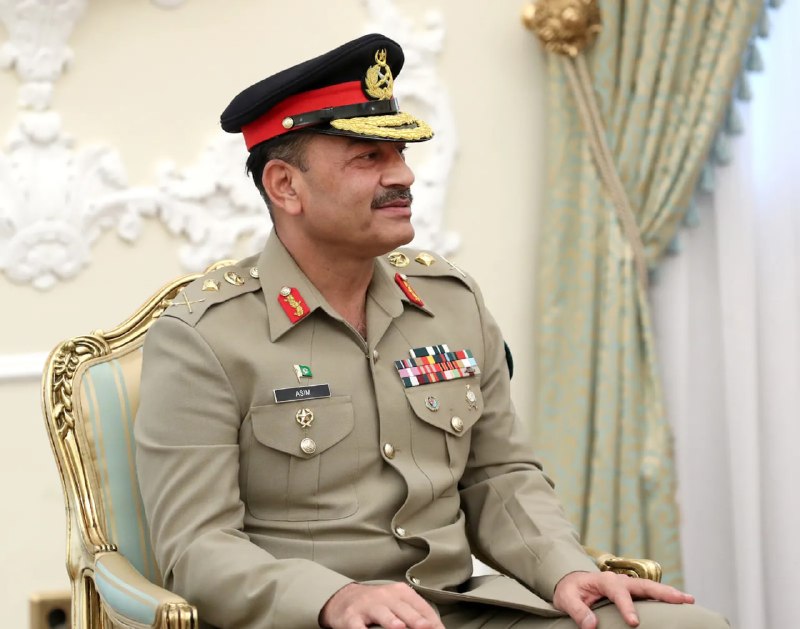
Pakistan's Chief of Army Staff Field Marshal Asim Munir will travel to Tehran on Monday for talks with senior Iranian officials, Iran's foreign ministry spokesperson Esmail Baghaei announced on 23 August 2026. The announcement was relayed by the Jerusalem Post's Telegram channel the same morning and was also reflected in a Reuters bulletin republished by Investing.com. A separate Clash Report item described Pakistan as a key mediator in the US-Iran conflict alongside Qatar.
The visit places a serving Pakistani army chief at the public centre of a diplomatic channel involving Iran and the United States, even though the available source items do not specify the agenda, the Iranian counterparts Munir is expected to meet, or the length of his stay. What can be established is narrower: Iran has publicly announced the visit, Pakistan is being presented as a mediator alongside Qatar, and Munir is the official chosen to carry the message in Tehran.
A military-led channel
Baghaei framed the trip, in the Jerusalem Post relay of his briefing, as a continuation of Pakistan's efforts to strengthen peace and security in the region. The wording is general. The choice of envoy is more consequential. Rather than sending a foreign minister, Pakistan is publicly represented in the announcement by its army chief, with the stated destination and purpose pointing to a security-focussed diplomatic channel.
That is an interpretation of the institutional arrangement, not evidence of a private negotiating mandate. The source items confirm only that Munir is travelling to Tehran for talks with senior Iranian officials. They do not specify whether the discussions will concern a particular conflict, a particular diplomatic proposal, or a broader regional security issue. Nor do they establish whether the visit follows a specific recent escalation.
Reuters' short bulletin, republished by Investing.com, confirmed the visit and its Monday timing. The available reporting does not identify the Iranian officials due to meet Munir or set out a detailed programme. The contrast is important: the public record contains a confirmed trip and a broad peace-and-security rationale, but not a disclosed negotiating text.
A mediator with limits
The mediation claim requires care. The Clash Report item says Pakistan has been a key mediator in the US-Iran conflict alongside Qatar. That is a characterisation of Pakistan's role, not evidence in the supplied material of a negotiated settlement, a completed round of talks, or a specific agreement with Tehran or Washington. Reuters and Investing.com's shorter report leads with Iran's announcement of the visit rather than spelling out a mediation track.
Monexus analysis: the more defensible reading is that Islamabad is being positioned as a communications channel in a live regional dispute, while the public details remain tightly limited. The choice of Munir as envoy may give the channel military and security weight, but the supplied sources do not show that he is carrying an agreed proposal or a formal mandate beyond the stated talks with senior Iranian officials.
The same caution applies to the timing. The announcement came on 23 August 2026, with the visit scheduled for Monday, but the source items do not establish a link between the trip and a particular event in the US-Iran conflict. It would therefore be an overreach to describe the journey as a response to a named incident or as the culmination of a newly announced diplomatic sequence.
What remains unknown
The public record leaves several questions unresolved. The available source items do not specify the identity of the Iranian counterpart or counterparts, the detailed agenda, the duration of the visit, or any agreed outcome. They also do not provide a readout from earlier contacts in this channel or a statement from a named United States official about the trip.
That uncertainty does not erase the basic fact. Iran has announced that Munir will visit Tehran on Monday, and the available accounts associate the visit with Pakistan's regional peace-and-security efforts and with mediation alongside Qatar. The evidence is enough to establish the journey and its stated purpose, but not enough to reconstruct the diplomacy behind it.
There is also a difference between institutional prominence and diplomatic control. Munir's public role makes the Pakistani security establishment the visible face of the visit, but the supplied material does not establish that the army chief is acting outside ordinary state diplomacy, that he is carrying messages for Washington, or that the channel is intended to be deniable. Those interpretations are possible, but they are not demonstrated by the available evidence.
The significance of Monday
The immediate test is narrow. On Monday, 24 August 2026, the visit announced for the preceding day is due to take place in Tehran, but the supplied source items do not specify the meetings' content or whether a public readout will follow. Any assessment of diplomatic success will depend on details the current reports do not provide.
The larger structural point is the use of a military chief as a public intermediary in a dispute involving states. Monexus assessment: the announcement suggests that Pakistan is willing to lend senior military-level representation to its regional diplomacy, while Iran is prepared to acknowledge that role publicly. It does not, on the evidence available, prove that the two sides have reached an agreement or that the United States has accepted a particular Pakistani mediation formula.
For Tehran and Islamabad, the benefit of the arrangement is visibility without a detailed public negotiating position. For outside observers, the cost is uncertainty. A military-led channel can carry authority, but the same opacity makes it difficult to distinguish genuine mediation from a diplomatic signal whose meaning will only become clear in later reporting. Until Tehran or another directly involved party provides a fuller account, the trip's importance lies in the channel it puts on display, not in an outcome the supplied evidence does not document.
How Monexus framed this vs the wire: the wire items led with the visit, its Monday timing, and the mediation framing; Monexus kept the military-chief channel as analysis, distinguished the confirmed announcement from unstated negotiating details, and marked the limits of the available source record.
Wire provenance
This editorial synthesis draws on the following public wire/social posts:
- https://t.me/The_Jerusalem_Post/17089
- https://t.me/ClashReport/93352
- http://reut.rs/4xTToGJ
- https://x.com/Reuters/status/2091432787018400014
- https://www.investing.com/news/commodities-news/iran-says-pakistans-army-chief-to-visit-tehran-on-monday-4872425