Damascus signals it's ready to talk again, but says the prior track was broken by strikes, not abandoned
Syria's foreign minister says negotiations had been frozen since the US-Israeli war on Iran began and were further interrupted by an Israeli airbase strike, and that Washington is now pressing for a return to the table.
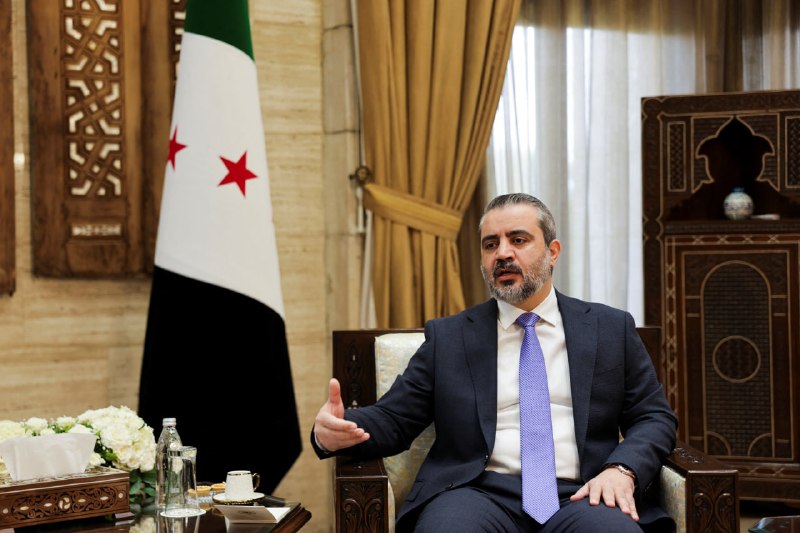
Syria's foreign minister Asaad al-Shibani said on 23 August 2026 that Damascus expects negotiations with Israel over a long-stalled security agreement to resume shortly, while making clear that the previous track had been suspended since the US-Israeli war on Iran began and then further interrupted by an Israeli airbase strike. The remarks, relayed by the Beirut-based outlet The Cradle and the open-source channel Clash Report, are the most explicit public signal from Damascus since the channel froze that the government of President Ahmed al-Sharaa wants it reopened, with Washington pressing both sides to come back to the table.
The signal matters less for what it announces than for what it confirms about the prior trajectory. By Shibani's own account, the sides were closer to text than the public record suggests, and the suspension had as much to do with the wider war as with the bilateral file.
What the Syrian side is actually saying
Shibani's framing is calibrated rather than effusive. Israel, he said, "has tried to maintain its security through brute force and it hasn't succeeded," and Damascus expects the talks to resume "soon," with Washington acting as the convener. The Syrian side, he added, "believes there should be contact, especially with a party that constantly threatens the security of Syria," but is wary of a process that produces only photographs. "If this contact doesn't bring results," he warned, "we reserve the right to reconsider."
The more telling line is procedural. According to the Clash Report readout of his remarks, the sides had previously "agreed on paper to almost everything" before the track was suspended. Damascus, in other words, is not signalling from a cold start. It is signalling from a near-miss, and it wants the world to know how close the prior channel came to producing text. The Cradle's summary adds that Damascus hopes any eventual deal will eventually result in Israel withdrawing from Syrian territory, a stated objective Monexus flags as Damascus's framing rather than as an agreed term.
Shibani also framed the suspension itself. According to The Cradle's summary, he said negotiations "had been suspended since the US-Israeli war on Iran began," and that communication was halted following an airbase strike. The two events sit on the same timeline: a regional war that changed Israel's threat picture and a specific strike on Syrian infrastructure that ended the working-level channel. Monexus assessment: the prior round did not collapse because the two sides ran out of issues; it was overtaken by a wider conflict and then broken by force.
The Israeli position, and the silence that does the talking
Israel has not, in the materials available to this article, publicly confirmed the substance of any near-final security arrangement, nor has it commented on Shibani's specific characterisation of the prior round. The available source items do not specify which Israeli ministries or officials, if any, have been briefed on the renewed push. The asymmetry of disclosure is itself part of the story. Damascus is briefing through outlets sympathetic to the Axis of Resistance; Jerusalem is absent from the public record on this exchange. A negotiation in which only one side is on the public record is a negotiation in which each side is performing for a different audience.
Israeli security concerns along the Golan frontier and the broader north remain, on any sober reading of the available materials, the operative variable. The thread evidence does not specify what Damascus has offered regarding Iran's residual posture inside Syria, or what Jerusalem has demanded on that file. Until that variable is named, the agreement on paper will stay on paper.
Why Washington matters more than either capital admits
Shibani named the United States as the actor trying to bring the parties back. According to The Cradle's summary of his remarks, he said Washington "is trying continuously to put pressure on Israel to return to the dialogue table," with Damascus hoping a deal will eventually produce an Israeli withdrawal. That detail is the load-bearing one. Monexus assessment: the Syrian-Israeli security track has historically moved only when an American administration decided it was worth the diplomatic capital, and the Al Sharaa government's willingness to engage in public is partly a function of wanting to be seen as a serious interlocutor in Washington, not in Tel Aviv. Damascus is bidding for sanctions relief, for reconstruction access, and for a place in whatever regional security architecture the next US administration chooses to underwrite.
Israel, for its part, tolerates a US-mediated channel because it compresses the distance between the two governments without requiring full normalisation, the political third rail inside Israeli coalition politics. A security agreement is a tractable deliverable. A peace treaty is not, at least not yet.
What to watch next
Three indicators will tell whether this is a real track or a talking point. First, whether a senior US envoy is named publicly as the convener; the materials available to this article do not specify which one. Second, whether Israeli ministers confirm, even obliquely, that the channel has reopened. Third, whether the airbase strike that broke the previous round is followed by further action in the window the talks occupy, or by a quietening that only a security understanding could justify.
The structural read is straightforward. Syria under its new leadership wants out of the international pariah economy and in to the regional security conversation. Israel wants quiet on its northern border more than it wants credit for the deal that produces it. Washington wants a controllable process that doesn't blow up before a planned diplomatic calendar. None of those interests requires a treaty. All of them can survive a security understanding that is announced, paused, and re-announced, which is roughly the rhythm the channel has kept since the 1990s.
What remains genuinely uncertain is the position of the residual Iranian presence in Syria, which neither Damascus nor Jerusalem has been willing to define on the record within the materials available here. Until that variable is named, the agreement on paper will stay on paper.
How Monexus framed this: wire coverage of a possible Syria-Israel security channel tends to either inflate it into a normalisation breakthrough or dismiss it as atmospherics. The honest read is smaller and more useful: by Damascus's own account, the prior round was suspended by a wider war and then broken by an airbase strike, and both sides have now told the press they want it back. The interesting story is what interrupted the channel, not the handshake.
Wire provenance
This editorial synthesis draws on the following public wire/social posts:
- https://t.me/ClashReport/93357
- https://t.me/ClashReport/93355
- https://t.me/thecradlemedia/66677
- https://t.me/TheCradleMedia/66677
- https://t.me/ClashReport/93354