Zelenskyy shuts the ballot box, names a €30 billion price tag, and waits on a 300,000-troop rumour
Zelenskyy rejected calls for wartime elections and told Telegram's BRICS News Ukraine needs €30 billion for defence, while the same channel reported a 300,000-troop Russian mobilisation that the source itself framed as an expectation, not an order.
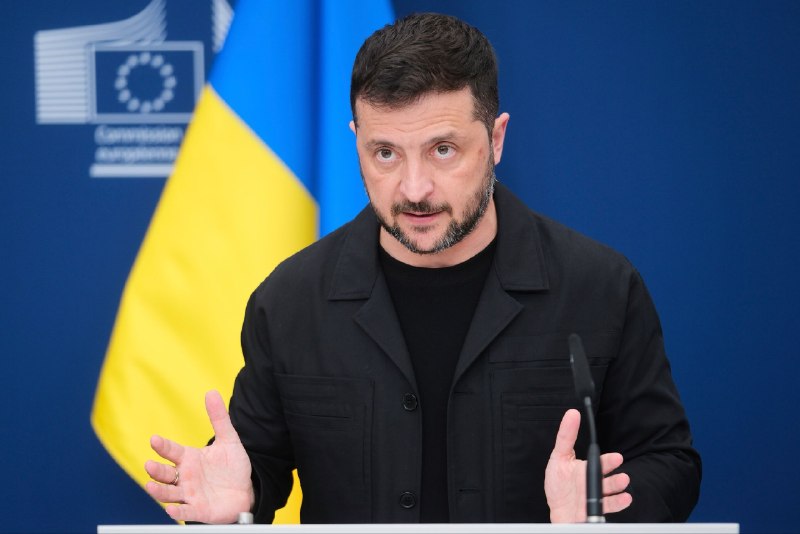
At 16:28 UTC on 23 August 2026, Telegram's BRICS News channel relayed a single declarative line: Ukrainian President Volodymyr Zelenskyy has rejected calls to hold elections before the war with Russia ends. Posted into an afternoon feed that had already carried a €30 billion Ukrainian defence ask, a "ready for peace talks" line from Vladimir Putin, and a reported 300,000-troop Russian mobilisation figure, the dispatch is the most politically consequential of the four. It decides, on the record available to us, who speaks for Ukraine and on what terms.
Eleven minutes earlier, the same channel reported that Russia is expected to mobilise an additional 300,000 troops. Two hours before that, the channel carried President Putin's claim that Moscow is ready for peace talks, provided negotiations reflect "realities on the ground." And earlier in the afternoon, Zelenskyy named a hard European currency figure for the war's next phase: €30 billion to strengthen Ukrainian defence. Four wires, one afternoon, the geometry of a war being fought on three fronts at once: at the front line, at the negotiating table, and inside Ukraine's own constitutional clock.
The election question, settled for now
The wartime moratorium on national votes is what allows Zelenskyy to keep making decisions that bind the country, and his refusal, as reported at 16:28 UTC, forecloses that debate for the duration of the source material. The BRICS News dispatch records the rejection; the source does not specify which capitals or critics are pressing for a ballot, only that calls exist and have been turned back. This article therefore does not attribute those calls to specific governments. Monexus analysis: the political logic is tighter than the moral case. Closing the question now removes a variable the Kremlin can lever in any future talks, and tells European finance ministries that any future aid package is being negotiated with a single, uninterrupted Ukrainian counterpart.
The 300,000 men that may or may not be coming
The mobilisation figure moves the conversation in the other direction. Per BRICS News, Russia is expected to mobilise an additional 300,000 troops. Monexus assessment: the source itself uses the word "expected," not "ordered," and the available items do not specify where the number originated, what timeline attaches to it, or whether it represents a Defence Ministry directive, a parliamentary authorisation, or an estimate circulating in Russian-aligned commentary. Until a primary statement corroborates it, it sits in this article as a reported expectation rather than a confirmed order of battle.
Even on that caveat, the political signal is the point. A reported mobilisation at this scale forces Kyiv to choose between accelerating its own conscription reforms and conceding that the war's demographic math is being decided in Russian recruitment offices. Ukraine's ability to compete on that axis is constrained not by money but by population, which is what makes the next item in the sequence especially loud.
€30 billion, named, not itemised
The BRICS News post on Zelenskyy's defence ask carries a single rounded sum and no breakdown. Monexus analysis: €30 billion should be read as an opening figure attached to a stated purpose, not a costed invoice. What the available source does not specify is how that figure is meant to be delivered: whether as grants, loans, or a mix; whether back-loaded by procurement lead times that push actual deliveries into 2027; or how much of it would fund Ukrainian defence industry versus replenishing stocks already drawn down by European armies. The source names the number; the source does not name the instrument.
Putin's "realities on the ground"
The Putin dispatch frames itself as a peace overture conditional on negotiations reflecting "realities on the ground." Monexus analysis: in Russian diplomatic usage over the past decade, the phrase has functioned as shorthand for recognition of annexed territory, demilitarisation clauses, and limits on Ukraine's Western alignment. Read against the same afternoon's reported mobilisation, the most natural reading is that the offer is not an offer. It is a price list dressed as an opening, paired with an expanding force structure that determines what those talks would actually settle for. The contradiction is not accidental. It is the strategy.
What the wires do not yet settle
The four BRICS News dispatches are internally consistent but sparse on several points the story will turn on. The source items do not specify a timeline for the reported Russian mobilisation, a breakdown of the €30 billion ask, which capitals are pressing Zelenskyy hardest on the election question, or a venue for any putative talks. They do not name a primary source for the 300,000 figure. Until that figure is corroborated against a primary statement from Moscow or a Western intelligence assessment, this publication is treating it as a reported expectation rather than a confirmed order of battle. The next briefing will need to confirm or kill that number.
Desk note: this article leads with Zelenskyy's election refusal as the most politically consequential wire of the afternoon, treats the €30 billion figure as a named, not itemised, ask, and flags the 300,000-troop mobilisation as a relay-sourced expectation that the next round of reporting must confirm. Russian state media frames all four wires as evidence of a war Kyiv is choosing to continue; the Western wire line has, in past cycles, framed Zelenskyy's electoral posture as a democratic deficit. We have named the source caveats rather than paper over them.
Wire provenance
This editorial synthesis draws on the following public wire/social posts:
- https://t.me/bricsnews/17821
- https://t.me/bricsnews/17819
- https://t.me/bricsnews/17818
- https://t.me/bricsnews/17817