Zelenskyy's electoral math: why Kyiv is betting that no vote is the only safe vote
On 23 August 2026, Zelenskyy declared wartime elections impossible; hours later Putin framed Ukrainian strikes on economic sites as opening a Pandora's Box. The two statements, read together, describe a frozen conflict with no diplomatic off-ramp in sight.
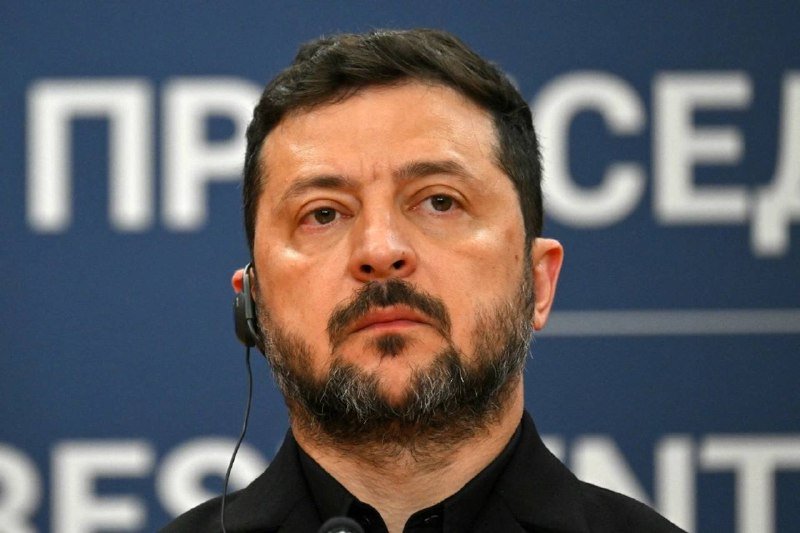
On 23 August 2026, two statements crossed the wire within five hours of each other and described the same war from opposite ends of a chessboard. At 09:17 UTC, the Polymarket X account posted a flash alert: Vladimir Putin had warned that Ukraine had opened "Pandora's Box" with strikes on economic targets inside Russia. By 15:30 UTC, CGTN's official feed carried Volodymyr Zelenskyy's response in English-language reporting: a wartime vote, he said, is impossible under current conditions. By 20:04 UTC, Polymarket's markets desk had reframed the exchange as a binary for traders, posting that Zelenskyy had rejected calls for wartime elections and warned such a vote could "destroy" Ukraine.
The point of the exchange is not who said what first. It is that the two most powerful political voices in the war are now publicly arguing that the conflict has crossed a threshold beyond which the usual political instruments no longer work. Ukraine says ballots cannot be safely cast. Russia says retaliation cannot be safely bounded. Read together, they describe a frozen war with no domestic political off-ramp in Kyiv and no strategic off-ramp in Moscow.
What Zelenskyy actually said
CGTN's 23 August 2026 report frames Zelenskyy's position in plain terms: under martial conditions, with frontline regions under bombardment, with millions of citizens displaced abroad and millions more under occupation, an election cannot be organised as a legitimate act of state. The headline that Polymarket's desk attached to the same line of reporting went further, paraphrasing the Ukrainian president as warning that a wartime ballot could "destroy" Ukraine itself, an unusually severe formulation for a sitting head of state talking about his own constitutional process.
This is the political subtext: a vote held now would not settle who governs Ukraine. It would settle who the West believes governs Ukraine, and at what price in legitimacy. The available source items do not specify the length of Zelenskyy's current term, the date his mandate began, or the procedural status of Ukraine's electoral framework under martial law; Monexus has not independently established those details from the cited posts. The reporting on the table establishes only the political claim he made on 23 August 2026: that a ballot cannot be held under current conditions, and that holding one could "destroy" the country. Telling allies that the ballot cannot be held is also, in effect, asking them to underwrite the prolongation of his mandate without the messy optics of a formal extension.
The "Pandora's Box" frame, and what it implies
Putin's language is the harder one to read. The phrase that Polymarket and Investing.com both carried on 22 and 23 August invokes an irreversible rupture: once a category of action is normalised, it cannot be put back inside the box. In context, the Russian framing targets Ukrainian strikes on economic infrastructure inside Russia, the kind of long-range attacks that have increasingly hit refineries, rail nodes and fuel depots over the past year.
The structural implication, in this publication's read, is that Moscow is preparing to argue, in front of both its domestic audience and sympathetic foreign observers, that escalation is no longer Ukraine's choice alone to make. If Kyiv's long-range strike campaign has crossed a threshold, the Russian counter-argument runs, then the rules of the war have changed and any future negotiation must take that change as given. Monexus analysis: this is the same diplomatic grammar Moscow has historically used to declare a new normal and then bargain from inside it.
The counter-narrative Kyiv is not making loudly enough
The Western wire line treats Zelenskyy's position as defensive realism: you cannot run a vote when half the country is under bombardment and the ballot boxes would be inside the blast radius. That is the obvious reading and it has real evidentiary weight.
The less comfortable reading, which this publication will state plainly, is that a wartime ballot could also have produced an unfavourable verdict. Zelenskyy won his first presidential election with a large margin against a deeply unpopular incumbent; the cited sources do not specify his vote share or the precise margin. A refusal to hold a vote, dressed up in the language of martial necessity, removes the political risk that an open ballot would expose. The sources on the table do not include Ukrainian polling from 2025 or 2026, so any claim about the current standing of the Zelenskyy administration among Ukrainian voters would be unsupported; Monexus flags that gap rather than fill it.
This is not a charge of bad faith. It is a description of the political incentive structure every wartime leader faces. Monexus finds that a piece of analysis the Western wire has so far declined to print: the no-election position is simultaneously a security position and a survival position, and the cited reporting on 23 August 2026 does not resolve which weighting Zelenskyy himself is putting on each.
What is actually being negotiated
Stripped of rhetoric, the 23 August exchange is about who controls the pace of the war. Zelenskyy's "no vote under these conditions" tells allies and adversaries that the Ukrainian political clock is paused. Putin's "Pandora's Box" tells the same audience that the military clock cannot be paused. The two positions are not symmetric. A paused political clock can be restarted; a broken military escalation ladder cannot be un-broken.
Monexus analysis: what we are watching is the deliberate de-risking of the Ukrainian political front while the Russian side takes deliberate escalatory risk on the military front. Each side is choosing the dimension of the conflict where it believes it holds the stronger hand. The danger for outside observers is treating either statement as rhetoric rather than strategy.
The honest uncertainty is at the edges. The CGTN report paraphrases Zelenskyy's position rather than quoting him at length, and the Polymarket posts are summary alerts compiled by a markets desk rather than transcripts. The sources do not specify whether Zelenskyy proposed a specific alternative to elections, a postponement timetable, or a constitutional workaround. They do not specify what specific Ukrainian strikes provoked the latest "Pandora's Box" framing from Moscow. What we have, on the public record as of 23 August 2026 UTC, are two leaders publicly insisting that the war has rules the other side is breaking. Neither statement moves the fighting. Both move the framing of what comes after.
Monexus framed this against the grain of the day's wire, which treated the two statements as separate beats. Read together, they are a single argument about the end-state of a war that neither capital currently has a political instrument to end.
Wire provenance
This editorial synthesis draws on the following public wire/social posts:
- https://news.cgtn.com/news/2026-08-23/news-1PQkBJrKBby/p.html
- https://x.com/CGTNOfficial/status/2091548517407805852
- https://x.com/Polymarket/status/2091617609489756239
- https://x.com/Polymarket/status/2091454648703967718
- https://www.investing.com/news/commodities-news/putin-says-ukraine-opened-pandoras-box-with-strikes-on-economic-targets-4872370
Follow the event.
These dated source records provide context. They do not retrospectively verify this archive article.
A dated voting record is evidence of one decision. Use the original UN record before turning it into an alignment label.
Visual explainer · historical vote of 2022-03-02 →- https://news.cgtn.com/news/2026-08-23/news-1PQkBJrKBby/p.html
- https://x.com/CGTNOfficial/status/2091548517407805852
- https://x.com/Polymarket/status/2091617609489756239
- https://x.com/Polymarket/status/2091454648703967718
- https://www.investing.com/news/commodities-news/putin-says-ukraine-opened-pandoras-box-with-strikes-on-economic-targets-4872370