Tehran names 45 tankers in Hormuz as Friday US-Iran accord looms
Hours before a reported Geneva accord signing, Iran's Strait Authority names 45 vessels for alleged Hormuz violations and warns of fines and detention, sharpening the leverage Tehran can deploy if Friday's deal falters.
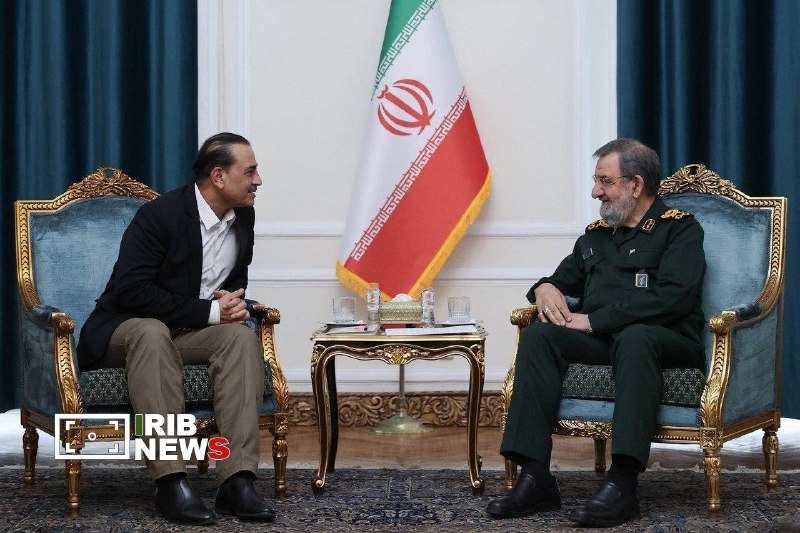
On 24 August 2026, Iran's Strait of Hormuz Authority published a list of 45 commercial tankers it said had breached Tehran's transit regulations, warning that any vessel ignoring the rules from now on could face fines and detention. The announcement landed in the same news cycle as a Middle East Eye post reporting that both Washington and Tehran had confirmed a peace accord would be signed in Geneva on Friday, and inside a wider Israeli-Iranian shadow fight in which Prime Minister Benjamin Netanyahu publicly accused Iran of attempting to assassinate one of his sons. Read together, the three threads sketch a chokepoint diplomacy in which regulatory force, treaty ceremony, and assassination accusations are all on the table at once.
The substantive question is what the blacklist actually changes. The thread evidence as published on 24 August describes a published list of named vessels, threatened penalties including fines and detention, and an extension of those penalties to ships moving cargo on behalf of blacklisted hulls. Read narrowly, that is a regulator publishing an enforcement roster under a new institutional label. Read broadly, it is a notice to shipowners, insurers, and charterers that Iran intends to govern the strait the way a sovereign governs territorial waters, with named targets, rather than negotiate passage through case-by-case diplomacy.
What the new Authority actually said
The Strait Authority's directive, relayed by The Cradle Media on 24 August, frames the blacklist as enforcement of existing Iranian rules. Vessels that have ignored Hormuz regulations, the Authority said, will face "restrictions, including fines and detention." Investing.com reported the same day that the list names 45 tankers specifically, and its headline frames the threatened penalties as fines and confiscation. Middle East Eye confirmed the same blacklist on 24 August, adding Tehran's warning that it would act against future transits and against any vessel moving loads on behalf of those already flagged.
The relays differ on whether the threatened penalty set runs to confiscation as well as fines and detention. The Cradle Media, an outlet aligned with the Iran-axis, reproduces the Strait Authority's own wording, which specifies fines and detention; Investing.com's headline adds confiscation; Middle East Eye's X post on the same day frames the regime as applying to future transits and to vessels moving loads with the blacklisted hulls. On the precise scope of the threatened penalties, the visible wire text is not unanimous. The number of named vessels, 45, and the basic mechanism, fines plus detention for listed ships and reach extended to cargo transfer partners, are consistent across the three relays.
Why the timing reads as deliberate
Middle East Eye reported on 24 August that both the US and Iran had confirmed a peace accord would be signed in Geneva on Friday. The available source items do not specify which Friday in 2026 the ceremony falls on, do not name the venue beyond "Geneva," and do not carry a first-party readout from either Washington or Tehran beyond MEE's framing of confirmation. The confirmation as reported is a single-source relay in the thread.
That confirmation is the obvious counterweight to the blacklist, and the obvious reason Tehran might want to publish a list rather than act at sea: a regulator with a public roster is in a different negotiating position than one that has to improvise enforcement on the water. The timing matters because the same day that Iran puts names on a list, Netanyahu publicly accuses Iran of an assassination attempt on a member of his family, relayed by Clash Report on 24 August. If Israeli decision-makers conclude that Iran is simultaneously a regulatory aggressor in the strait and an assassination threat on Israeli soil, the political bandwidth for concessions on the Israeli side narrows quickly.
The available source items do not specify which of Netanyahu's sons was the alleged target, or when the alleged attempt occurred. The thread carries the accusation as a political fact, not a corroborated event.
Monexus assessment: what the blacklist actually does
This publication's read is that the list's first-order effect is reputational and procedural, not kinetic. Iranian regulators have not, on the thread evidence as published on 24 August, been shown physically intercepting any of the 45 named vessels; the move is a written warning backed by a published roster, which lets insurers, charterers, and flag states begin pricing Iranian regulatory risk into war-risk calls without a single ship having been stopped. Monexus assessment: that is the instrument. A blacklist that compels defensive behaviour from third parties, simply by being published, is leverage that does not require a boarding.
The extension to vessels moving cargo from blacklisted hulls is, on the available evidence, the more novel lever. Middle East Eye's X post on 24 August frames Tehran's warning as covering any vessel transferring loads with the listed ships, and that framing lets Iranian authorities extend reach beyond the 45 named hulls to any tonnage in the same commercial orbit, without naming additional targets. Monexus assessment: that secondary reach is the regulatory innovation inside the announcement, and it is the part most likely to be tested by shipowners and insurers before the Friday ceremony.
The alternative reads
The most plausible counter-reading is that this is bureaucratic housekeeping by a regulator establishing a public record, not coercion dressed as regulation. A new Strait Authority, as The Cradle Media describes it on 24 August, needs to demonstrate it can enumerate non-compliant traffic. Naming 45 vessels and warning of fines is, on that reading, a routine port-state announcement that happens to land on a high-stakes day. If that read holds, the Friday accord proceeds, the list sits in a database, and nothing is detained.
That reading is consistent with the facts as published on 24 August, but it underweights three things visible in the thread. First, the secondary-penalty clause extending Iranian reach to vessels moving cargo from listed ships is more elastic than a clerical task. Second, the announcement's proximity to the Geneva signing is, on the available dates, too tight to read as coincidence. Third, the Israeli accusation of an Iranian assassination attempt on a Netanyahu family member, public the same day, raises the political cost of any conciliatory posture on the Israeli side, and therefore raises the value to Tehran of holding a coercive instrument in reserve, on either side of the signing.
A third, more sceptical read treats the blacklist as a probe: Tehran is testing how shipowners, insurers, and any foreign naval responders behave when Iranian regulators publicly enumerate targets. Voluntary compliance with the blacklist would establish a precedent that outlasts any one accord. Defiance, and the absence of US or Gulf state protection at sea, would establish a different precedent, also durable.
What the next 72 hours will quietly decide
If the Geneva accord holds and is signed on Friday as Middle East Eye reported, the blacklist becomes a negotiating artefact: a list to be narrowed in exchange for whatever Tehran is asking for in writing, or quietly shelved under a "confidence-building" rubric that the thread evidence does not yet specify. If the accord slips, the 45 vessels become the first cohort of a regulatory regime that can be widened at Iranian discretion, and Hormuz transit costs re-price accordingly for Asian and European buyers.
The narrow technical question, whether Iran will physically intercept a listed tanker before Friday's ceremony, is not answered by the available source items. The wider question, whether the new Strait Authority's writ is treated as authoritative by global shipping, is what the next 72 hours will quietly decide.
Filed under the Monexus energy desk on 24 August 2026. Where wire relays differed in framing, the Monexus read privileges the Strait Authority's own wording as relayed by The Cradle Media, and treats Investing.com's headline reference to confiscation and Middle East Eye's secondary-penalty framing as parallel rather than primary evidence. The Cradle Media is an outlet aligned with the Iran-axis whose reporting is used here for its reproduction of the Strait Authority's published list; Investing.com and Middle East Eye confirm scope and timing.
Wire provenance
This editorial synthesis draws on the following public wire/social posts:
- https://www.investing.com/news/commodities-news/iran-threatens-45-tankers-with-fines-confiscation-in-hormuz-escalation-4873062
- https://t.me/ClashReport/93520
- https://www.middleeasteye.net/live/live-us-and-iran-confirm-peace-accord-signing-set-friday-geneva
- https://x.com/MiddleEastEye/status/2091918871779246303
- https://t.me/thecradlemedia/66736
- https://www.investing.com/news/commodities-news/iran-threatens-45-tankers-with-fines-confiscation-in-hormuz-escalation-4873062
- https://t.me/ClashReport/93520
- https://www.middleeasteye.net/live/live-us-and-iran-confirm-peace-accord-signing-set-friday-geneva
- https://x.com/MiddleEastEye/status/2091918871779246303
- https://t.me/thecradlemedia/66736