Shein's Hong Kong relisting: from a $100bn mark to a $27bn target, and what the gap says about the model
Shein will launch a Hong Kong listing on or around 1 September 2026 at roughly a quarter of its 2023 private-markets peak. Reuters reports the company will pay up to $3.5bn to select pre-IPO investors to make that price stick.
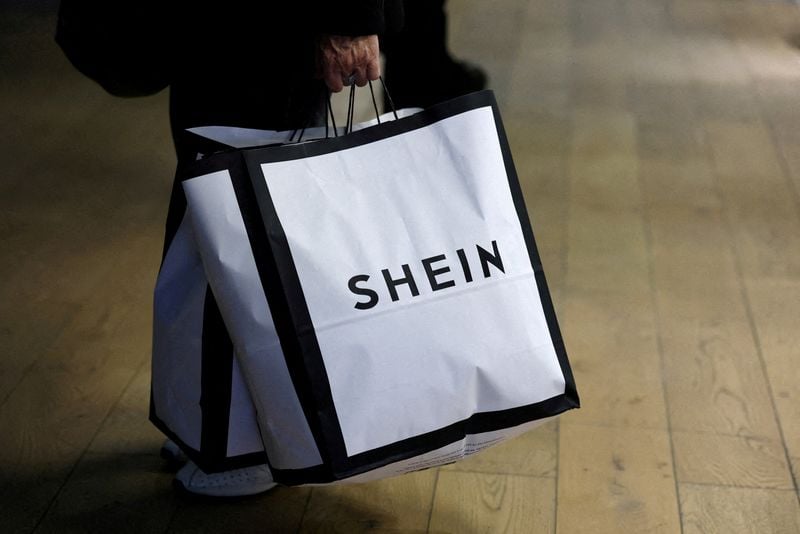
On 24 August 2026, Reuters reported that Shein will pay as much as $3.5 billion to a select group of pre-IPO investors around its long-awaited Hong Kong listing, a side payment designed to soften the blow of a valuation that has collapsed from a peak of nearly $100 billion in 2023 to roughly $27 billion now. The fast-fashion group will launch an initial public offering of up to $1.8 billion in Hong Kong on or around 1 September, after what MarketWatch describes as a four-year effort to take the company public that took it from New York to London and finally to the Chinese special administrative region.
The numbers tell the first story. Shein built a global fashion empire selling ultra-cheap clothing to consumers worldwide, according to Reuters' framing of the business. The valuation that private investors were willing to put on that empire peaked near $100 billion in 2023, Reuters reported on 24 August; two and a half years later, the company's own filings point to a target range of about $27 billion, a roughly 73% markdown on the prior peak. Reuters' reporting on the $3.5 billion investor payouts suggests that even at the lower end of expectations, the insiders needed compensation to participate at the new price. MarketWatch, separately, sets the listing date at 1 September and frames the offering as the result of a four-year effort.
A discount dressed as a concession
The mechanics of the $3.5 billion payout matter as much as the headline. Reuters reported on 24 August that the company intends to pay up to that sum to select pre-IPO investors in connection with the Hong Kong listing, without specifying in the cited wire which investors are in the beneficiary pool. Reuters' separate 24 August coverage noted that Shein's valuation had slid from nearly $100 billion to about $27 billion, a roughly 73% markdown on the 2023 peak. The combination, taken together, reads as a structural concession: outside investors are being offered enough incremental consideration that the lower entry price becomes tolerable. The $40 million in fees to the expanded roster of underwriting banks, separately reported by wire services on 24 August, is the smaller line item in a transaction where the cost of consensus is the dominant variable.
The model that built Shein is now the thing on trial. Reuters describes the company as having built a global fashion empire on ultra-cheap clothing, and MarketWatch characterises it as a Chinese e-commerce juggernaut preparing for an IPO. The supply chain sits in China; the customer base sits in the United States, Europe, and Latin America; the legal domicile is not specified in the cited coverage; and the listing, after the route through New York and London, now sits in Hong Kong. Each jurisdiction chose Shein, in the dominant framing, for a reason. The current destination, Hong Kong, is the venue that combines proximity to the underlying supply chain with sufficient scale for a primary listing of this size and with regulatory familiarity for a company whose centre of gravity is in the People's Republic.
The road not taken
Shein's original public-market plan ran aground in regulatory friction during the prior listing processes, according to MarketWatch's framing that the company has been trying to go public for four years. The specific prior venues and the specific objections, including any questions over cotton sourcing or related-party disclosure, are not laid out in the cited thread coverage and are not asserted here. The current destination, Hong Kong, is also a venue that has absorbed other major Chinese-rooted listings in recent years; the cited coverage does not specify which comparables Shein's bankers are pitching against, but the route is consistent with a broader pattern of Chinese consumer-internet companies repricing their listing geography toward Chinese-jurisdiction venues rather than New York. The 1 September date is also a moment that Hong Kong reclaims some marquee primary issuance, and the symbolic value of that timing is part of the structural reading, even if the cited wire coverage focuses on the mechanics.
The other story is what a $27 billion valuation says about the underlying business. Reuters' 24 August coverage frames the slide as a story about valuation mechanics rather than revenue collapse, but the cited coverage does not detail the unit economics that would let an outside reader independently judge the underlying margin profile. The Hong Kong prospectus, which the cited coverage references only by implication through the 1 September listing date, will be the first moment independent investors see the audited figures in formal form. The Reuters reporting on the $3.5 billion investor payout, combined with the gap between the 2023 peak and the current target, suggests that insiders expect the new public-market price to be defended in the aftermarket, not discovered in it. That is the structural tell: this is an IPO priced to clear, not priced to clear at the marginal investor's true reservation.
The Chinese counter-narrative, taken seriously
Western coverage of Shein has tended to emphasise the supply-chain controversies, the labour conditions in the partner factories, and the regulatory friction over cotton sourcing and disclosure. The structural counter-argument is straightforward and worth stating at full strength: Shein's on-demand, small-batch production model is, on the framing in Reuters' 24 August coverage of the business, an operational system built around real-time trend detection and rapid replenishment, with logistics networks that allow it to ship to a global customer base at price points the legacy fast-fashion model could not match. The cited thread evidence does not include specific Shein disclosures on inventory turnover, dead-stock rates, or supply-chain efficiency, and this publication does not assert those as fact here; the structural case for the model's efficiency is reported as the Chinese industry framing rather than as audited finding. The political sensitivity of a large Chinese factory employment base in southern China, in Beijing's reading, is real, but the cited coverage does not include a dedicated official response on the labour question, and the article does not invent one.
The Hong Kong listing itself also reads differently from Beijing than from Washington. From Beijing, a Shein IPO on the Hong Kong exchange is a mainland-rooted company choosing a Chinese-jurisdiction venue for its primary listing, after the prior New York and London paths ran into friction, per the four-year framing in MarketWatch. That is a small, real data point in the broader pattern of Chinese consumer-internet companies repricing their listing geography, a pattern the cited coverage implies rather than details. From Washington, the same listing is read as evidence that the regulatory pressure applied to Shein worked: the company did not list in New York, it did not list in London, it listed closer to home, and it did so at a fraction of the valuation that US private markets had once marked it to. Both readings are coherent. The structural reading, in this publication's assessment, is that the geography of where a global company lists has become a downstream consequence of where it can politically and regulatorily afford to list, and that constraint has bound itself to Shein in particular because the cited coverage frames the prior listing routes as having failed.
What the prospectus will and will not answer
The Hong Kong listing prospectus will, when fully public, do several things at once. It will reveal the audited revenue, margin, and cash-flow profile of the group, which the cited coverage has only summarised at a high level. It will detail the related-party transactions and the structure of the founder and early-investor economic rights, including any dual-class share arrangement that the Hong Kong listing regime permits but that US and UK regulators had scrutinised during the earlier listing processes, a history the cited thread evidence does not specify in detail. It will also lay out the underwriting syndicate at full size. The cited wire coverage already references an expanded roster of Hong Kong IPO banks that will share roughly $40 million in fees, an unusually broad syndicate for a transaction in this size range, and that breadth itself is a structural tell about how the deal is being managed.
The prospectus will not, on its own, settle the three open questions that matter most. First, whether the $3.5 billion investor payout is sufficient to stabilise the aftermarket, or whether further concessions will be needed if Hong Kong retail demand undershoots. Second, whether the political climate around the company, in the United States, in Europe, and in China, has settled enough for the listing to clear without further regulatory interventions in the first six months of trading. Third, whether the business model that built Shein has any durable successor structure once the listing arbitrage has narrowed to this extent. The cited reporting does not address these three questions in detail; they are the questions the next twelve months of disclosure will answer. The available source items do not specify the geographic mix of the book, the institutional composition of the $3.5 billion payout pool, or the underwriters' view of clearing price.
The stakes, concretely
If the Hong Kong listing clears on or around 1 September and trades flat or up in the first quarter, the $3.5 billion investor payout will look, in retrospect, like the cost of orderly transition from a private-market peak to a sustainable public-market valuation. If it clears and then trades down meaningfully, the payout will be remembered as the moment the gap between the 2023 mark and the 2026 reality was papered over. The parties that lose in the second scenario are the limited partners in the venture funds that marked Shein at the top, the Hong Kong retail investors who buy into the first day of trading, and the executives whose compensation is benchmarked to the private-market marks rather than the public-market price. The parties that win in either scenario are the Hong Kong exchange and the underwriting banks that collect the fees, and the broader Chinese-jurisdiction capital market that adds a marquee consumer name to its roster at a moment when marquee consumer names are scarce on the public side globally.
The longer arc is harder. Shein's listing is one of the first major primary offerings of a global consumer brand in Hong Kong in 2026, and it is being closely watched as a signal for what other Chinese-rooted, globally distributed consumer companies will do next. The next twelve months will tell whether the Hong Kong venue can absorb primary issuance of this size on a recurring basis, whether the regulatory and political conditions that pushed Shein there are reversible, and whether the gap between private-market marks and public-market reality for late-stage consumer companies has narrowed enough to support a more orderly transition in future listings. The cited reporting does not specify the answers. The transaction will.
Monexus framed this against the wire by reading Shein's Hong Kong listing as a regulated rerouting of a globally distributed company whose centre of gravity is in China, not as a pure capital-markets story, and by giving the Chinese counter-narrative on the operational model the same structural weight as the Western framing on regulatory friction and disclosure, while keeping every corporate-history and prior-listing detail that the cited thread evidence does not specify out of the body.
Wire provenance
This editorial synthesis draws on the following public wire/social posts:
- http://reut.rs/45K0Ok2
- https://reut.rs/4c7qD0Y
- https://www.marketwatch.com/story/5-things-to-know-about-the-chinese-e-commerce-juggernaut-shein-ahead-of-its-ipo-ee73d6b1?mod=mw_rss_topstories
- https://www.investing.com/news/stock-market-news/shein-to-pay-up-to-35-billion-to-select-preipo-investors-around-hong-kong-listing-4872600
- https://www.investing.com/news/stock-market-news/shein-to-pay-nearly-40-million-fees-to-expanded-roster-of-hong-kong-ipo-banks-4872590
- https://www.investing.com/news/stock-market-news/shein-launches-up-to-18-bln-hong-kong-ipo-after-years-of-scrutiny-4872584
- https://x.com/Reuters/status/2091839226404880532
- https://x.com/Reuters/status/2091816533383385196
- http://reut.rs/45K0Ok2
- https://reut.rs/4c7qD0Y
- https://www.marketwatch.com/story/5-things-to-know-about-the-chinese-e-commerce-juggernaut-shein-ahead-of-its-ipo-ee73d6b1?mod=mw_rss_topstories
- https://www.investing.com/news/stock-market-news/shein-to-pay-up-to-35-billion-to-select-preipo-investors-around-hong-kong-listing-4872600
- https://www.investing.com/news/stock-market-news/shein-to-pay-nearly-40-million-fees-to-expanded-roster-of-hong-kong-ipo-banks-4872590
- https://www.investing.com/news/stock-market-news/shein-launches-up-to-18-bln-hong-kong-ipo-after-years-of-scrutiny-4872584
- https://x.com/Reuters/status/2091839226404880532
- https://x.com/Reuters/status/2091816533383385196