Trump's 50% auto-tariff threat opens a second front on the Canada-US electricity grid
At 16:42 UTC on 24 August 2026, Reuters reported President Trump warning that US tariffs on Canadian cars, trucks and parts would rise to 50% starting in January. A Polymarket post later relayed a separate threat to cut electricity exports to the United States.
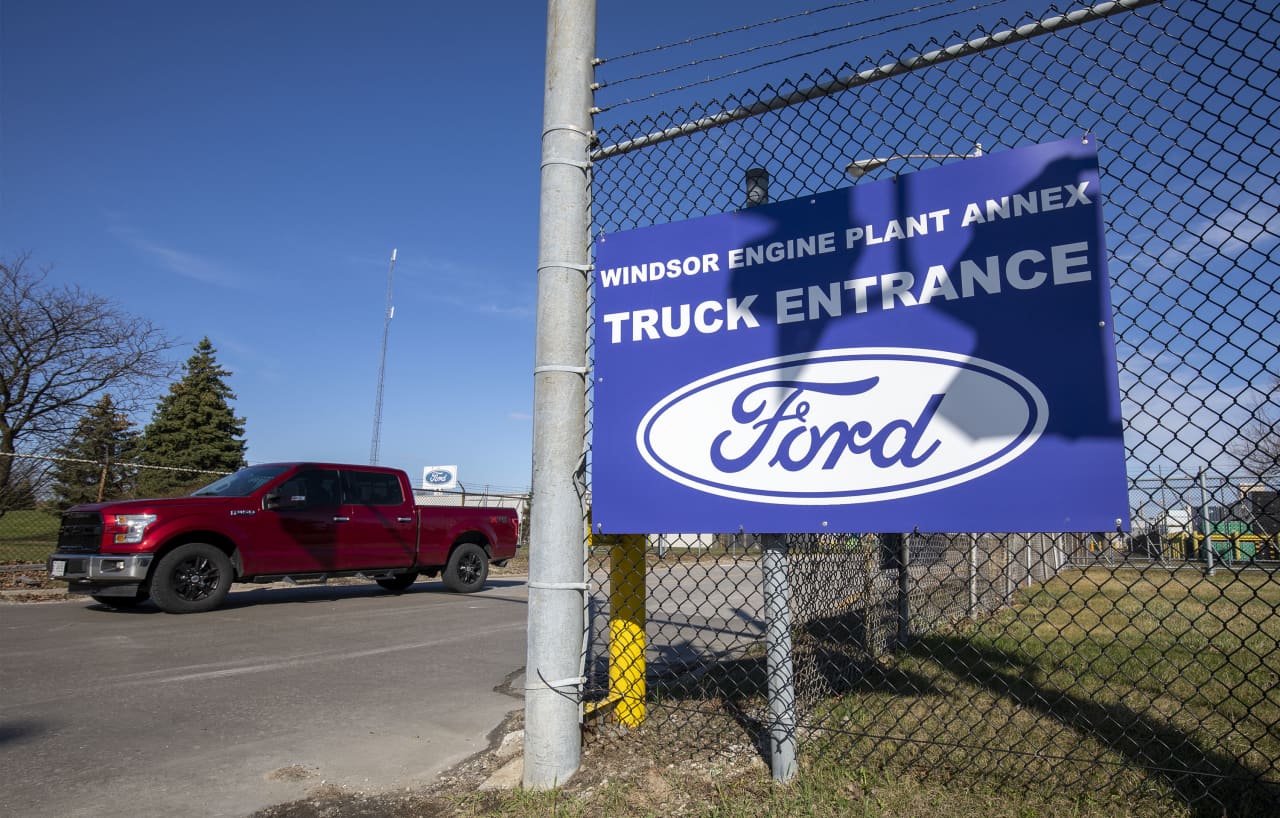
At 16:42 UTC on 24 August 2026, Reuters reported on X that President Donald Trump was increasing pressure on Canada by warning that US tariffs on Canadian cars, trucks and automotive parts would rise to 50% starting in January. Just over an hour later, the Polymarket account posted another headline, this one stating that Canada had threatened to "cut electricity" to the United States. The two signals belong to different parts of the bilateral relationship, but together they suggest that the dispute is moving beyond a conventional tariff negotiation.
The timing matters. The Reuters post came more than four months before the threatened tariff increase, leaving room for bargaining, reversal or further definition. The electricity post carried no effective date or operational details. It is therefore best understood as a report of political signalling, not proof that a curtailment plan has been ordered. Monexus analysis: the significance lies less in either measure having been fully implemented than in Washington and the reported Canadian response widening the list of economic relationships vulnerable to retaliation.
The tariff calculation
Reuters's 16:42 UTC post describes a proposed tariff of 50% on cars, trucks and automotive parts imported from Canada, with the increase due to start in January. The source item does not state the exact day, year or duration of the increase, nor does it specify which vehicles, components or existing exemptions would be affected. Those omissions matter because a headline tariff rate does not establish the eventual cost borne by manufacturers, suppliers, dealers or consumers.
The market nevertheless reacted before those details were settled. At 13:50 UTC on 24 August, Investing.com reported that US automaker stocks fell after Trump announced a Canada tariff hike. The available item does not provide company-by-company percentage declines, trading volumes or the length of the sell-off. Monexus assessment: that gap limits any claim about which automaker suffered the most. What the source establishes is narrower and still consequential: investors treated the announcement as a negative development for US automakers.
The immediate economic logic is straightforward enough to explain the reaction. A higher border tax on vehicles and parts changes the calculation for any business model built around inputs and production moving across the Canada-US border. The source items do not describe the operational structure of those supply chains, however, so the precise exposure cannot be calculated from the available evidence. The defensible conclusion is smaller: even an announcement with a future effective date was sufficient to put pressure on the listed shares of US automakers.
A dispute widened by security language
At 17:43 UTC on 24 August, the Telegram channel ClashReport relayed remarks attributed to US Vice-President JD Vance. The excerpt described Canada as a country that had "underinvested in its military" and that "quite literally would get invaded by a foreign country were it not for the umbrella of protection provided by the United States." Because the item is a relay rather than a first-party transcript, it supports the narrow claim that ClashReport published those words with Vance attributed as the speaker; it does not independently establish the setting, full context or accuracy of the remarks.
The burden-sharing argument nevertheless changes the tone of the tariff dispute. A narrow commercial measure can be justified by reference to trade policy. A claim that Canada is not contributing enough to its own defence recasts the disagreement as a broader accounting of what the bilateral relationship costs the United States. Monexus reads this as part of the escalation: the commercial instrument is being placed inside a wider political argument about status, contribution and protection.
A separate Polymarket post supplied another indication of that shift. At 13:51 UTC, it stated that Trump had declared Canada "will be treated like a state no longer." As with the electricity headline, the available source is a social-media account reporting political language, not a first-party legal or policy document. The post does not specify what treatment would replace the existing arrangement, whether the words referred to trade measures or to something broader, or what authority would implement the change. It supports the fact of the reported statement, not the claim that a new legal status had already taken effect.
Read together, the Vance and Trump headlines point to a negotiation framed around more than tariffs. One invokes defence underinvestment; the other unsettles Canada's treatment as a neighbouring state. Monexus analysis: such language can be coercive even when administrative details remain unsettled, because companies price not only enacted rules but also the possibility that familiar trading arrangements will become less predictable.
Electricity enters the bargaining
The Polymarket account's 16:58 UTC post stated that Canada threatened to "cut electricity" to the United States. That is the most dramatic of the day's reported signals, but also the least operationally defined. The item does not name an official, identify a province or utility, provide a curtailment amount, set a date or describe whether any measure had been authorised.
The available evidence therefore does not support a claim that a formal order to interrupt electricity trade had been issued. It supports only the narrower proposition that a Polymarket post reported a threat. Monexus assessment: that distinction prevents analysis from turning a headline into a completed policy. Without an identified authority or mechanism, the threat cannot be treated as evidence of imminent physical disruption.
Even so, the reported reference to electricity shows how quickly a bilateral trade dispute can touch everyday commerce. A tariff announcement affects a published list of products. A threat against a utility input carries an implicit warning that retaliation could be felt through infrastructure and household costs, but the supplied sources do not quantify those costs or identify affected locations. The pattern is clear at the level of signalling: Washington has threatened a higher tariff, while the Canadian response has been reported in terms of a possible cross-border energy lever.
The stronger counter-reading is that the electricity post may be amplification rather than new policy. Prediction-market social accounts can draw attention to rapidly developing stories, but the item supplied here is not accompanied by a government order, utility notice or detailed report from a primary institution. That makes it useful evidence of a reported escalation in rhetoric, not independent verification of an implemented energy measure. The dominant framing holds only within those limits: the dispute has widened, but the physical consequences remain unspecified.
What the calendar leaves open
Three uncertainties now shape the business outlook. The first is the tariff itself. Reuters reported a 50% rate beginning in January, but the source item does not provide the exact date, year, duration, product coverage or exemptions. Until those details are established, neither the eventual revenue effect nor the precise burden on any automaker can be stated with confidence.
The second is the reported electricity threat. The Polymarket post contains no implementation timetable and no named Canadian authority. Monexus analysis: the lack of operational detail weakens the case for treating disruption as imminent, while the specificity of the word "cut" ensures that the issue will remain part of the bargaining atmosphere.
The third is the political framing. Vance's reported remarks connect the trade dispute to defence contributions, while Trump's reported statement challenges Canada's existing treatment. Neither relay includes the full speech, transcript or policy document. Their evidentiary value is consequently limited to what was publicly attributed on 24 August, not to the legal effect or broader intent behind the words.
For US automakers, the clearest market signal is already visible: Investing.com reported a fall in their stocks after the tariff announcement. For Canada, the electricity headline signals that retaliatory pressure may extend beyond goods covered by a tariff notice. Monexus finds that the calendar to watch is the January implementation window reported by Reuters, while any first-party tariff text, electricity directive or full transcript would do more to settle the dispute than another round of political headlines.
Desk note: Monexus used Reuters for the tariff report, Investing.com for the automaker-stock reaction, and the Polymarket and ClashReport items strictly as relays of political signalling. The article does not treat the electricity headline as proof of a formal curtailment order.
Wire provenance
This editorial synthesis draws on the following public wire/social posts:
- https://x.com/Reuters/status/2091929262357901544
- https://www.investing.com/news/stock-market-news/us-automaker-stocks-fall-after-trump-announces-canada-tariff-hike-93CH-4873730
- https://x.com/Polymarket/status/2091933084966957056
- https://x.com/Polymarket/status/2091886217583280581
- https://t.me/ClashReport/93545
- https://x.com/Reuters/status/2091929262357901544
- https://www.investing.com/news/stock-market-news/us-automaker-stocks-fall-after-trump-announces-canada-tariff-hike-93CH-4873730
- https://x.com/Polymarket/status/2091933084966957056
- https://x.com/Polymarket/status/2091886217583280581
- https://t.me/ClashReport/93545