CIA Director Ratcliffe lands at Vnukovo: a surprise Moscow visit that breaks a four-year silence
A US Air Force C-17A from Riga touched down at Moscow Vnukovo on the morning of 25 August 2026 carrying CIA Director John Ratcliffe, the first known visit by a sitting CIA chief to Russia since William Burns travelled there in late 2021.
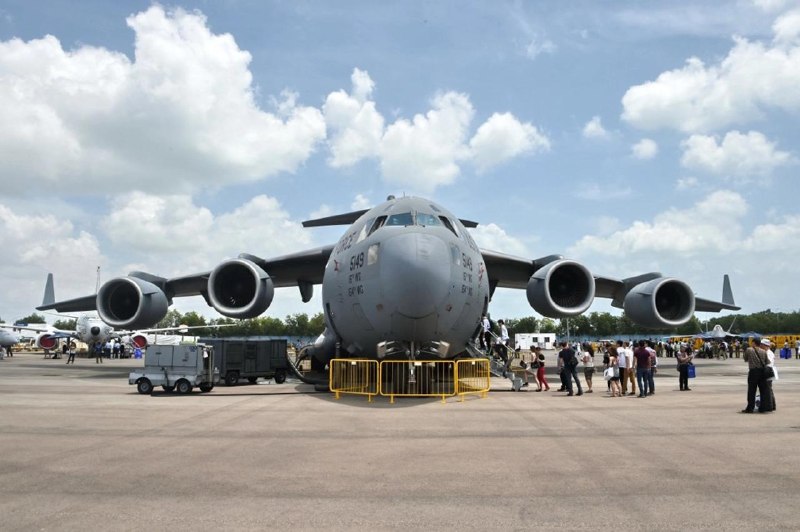
A US Air Force C-17A Globemaster III took off from Riga on the morning of 25 August 2026 and set down several hours later at Moscow's Vnukovo Airport, carrying a passenger the American intelligence community had not sent into Russia in nearly five years: CIA Director John Ratcliffe. CBS News correspondent Jennifer Jacobs reported the visit first; a US official confirmed it to Axios within the hour. By mid-afternoon UTC, the story had migrated from cable chyrons to encrypted chat rooms, with the open-source accounts @GeoPWatch, OSINTdefender and Status-6 all picking at the flight's origins and routing. The trip is the first known visit to Russia by a serving CIA director since William Burns flew to Moscow in late 2021, days before the full-scale invasion of Ukraine, to warn Russian leadership against launching it, according to the OSINTdefender account.
That antecedent matters. Burns's trip was a last-ditch message, delivered in person because no other channel could carry the weight. Ratcliffe's trip lands in a different posture: a war already three and a half years old, a transactional White House looking for off-ramps, and an intelligence relationship that has thinned to near-zero public visibility. The choice of a US military aircraft, the unusual use of Riga as a stepping-stone, and the Vnukovo destination together suggest a visit engineered for opacity and deniability until the media broke it, exactly the kind of choreography that defines sensitive liaison work in 2026.
What we know, and what was leaked
The flight itself was the giveaway. Open flight-tracking analysts at @GeoPWatch flagged the C-17A routing from Riga to Vnukovo in mid-morning UTC, describing the movement as "extremely unusual" for US military aviation into the Russian capital. OSINTdefender, reposting the same track, identified the aircraft and the passenger; Status-6 added the historical context that no sitting CIA director had made a comparable unannounced Moscow trip since Burns in late 2021. Within two hours, the wire had caught up: CBS's Jennifer Jacobs reported the visit, Axios confirmed it with a US official, and France 24 carried both citations into the European morning. By 15:34 UTC, Kyiv Post's official channel had republished the Jacobs dispatch verbatim, a fair measure of how the story had already saturated the diplomatic-bubble timeline.
What neither the open-source trackers nor the wires have established is the agenda. The cited reports describe "several high-level meetings" and a programme of talks, but the counterpart on the Russian side has not been disclosed in the available reporting. On the question of Russian confirmation, the Kremlin explicitly stated that it had "no information" about the flight or any scheduled US meetings, as carried in the ClashReport midday summary. The available source items do not specify whether Ratcliffe is meeting Russian intelligence chiefs, political figures at the Kremlin, or the foreign ministry, or some combination of the three.
The Burns precedent, and what the thread actually says about it
The cleanest historical comparator is the Burns trip itself, and it is worth dwelling on what the available sourcing actually establishes. According to OSINTdefender, the last time a CIA director made an unannounced, surprise visit to Moscow was in late 2021, when Burns travelled there to warn Russian leadership against launching an invasion. Status-6, in a parallel post, frames that earlier trip in slightly different terms, describing Burns as having met Russian officials "at the Kremlin." The available thread evidence does not specify the exact counterpart on the Russian side, the date within late 2021, or the substance of what was communicated beyond the warning framing. Read in the strict terms of the cited posts, the Burns trip was a director-level surprise visit whose defining feature was its timing: days before an invasion the US intelligence community judged imminent.
A Ratcliffe trip in August 2026 operates in a fundamentally different information environment. Russia is more than three and a half years into the war that the Burns-era warning failed to prevent. The United States and Russia maintain some form of intelligence liaison on Ukraine-adjacent matters, but the public footprint of that channel has narrowed dramatically and is largely mediated through third-country intermediaries and back-channel lines rather than director-level travel. That a CIA chief has now been sent at all is a signal that whatever Washington wants to communicate is too sensitive for those thin pipes, and too important to delegate. Whether the message is an ultimatum, a proposal, or a price-tag for some future understanding, the available sourcing does not let us say.
What the routing tells us
The use of a US military C-17A and the Riga stepping-stone are themselves a kind of statement. State Department and White House advance teams usually route senior officials into Moscow on commercial charter or via allied capitals; a direct military flight from a NATO frontline state into a Russian capital airport is a choreography that announces, "this is official, this is American, and we are not pretending otherwise." The landing at Vnukovo, one of Moscow's principal airports handling government, diplomatic and certain commercial movements, is consistent with that posture, though the available source items do not specify whether Vnukovo was chosen for its government-and-diplomatic profile specifically. The flight was also tracked almost in real time by open-source accounts, which suggests the routing was not designed to evade observation so much as to make the trip's existence undeniable once it was reported. The leak path that surfaced the visit ran through CBS News and a US official speaking to Axios; Russian state media does not appear in the available reporting as the originating source for the disclosure.
There is a second, less flattering read of the same facts. A surprise Moscow trip can also be a piece of theatre staged for Washington's domestic audience, or for third parties watching the war, in which the value of the visit is not what is said in the room but the fact that the room was entered at all. Both readings are consistent with the available evidence, and neither can be ruled out from the open sourcing.
Stakes, and what to watch
The immediate stakes sit on three clocks. The first is the Ukraine file itself. Any direct US-Russia intelligence channel that bypasses Kyiv is, by definition, a channel that Kyiv cannot read; whether the Trump-era administration's transactional posture on the war makes that a feature or a bug depends on what comes out of the meetings, and the available sourcing does not let us say. The second clock is the bilateral reset, or absence of one: a sitting CIA director in Moscow is the most senior US intelligence presence in Russia since the war began, and the optics alone move the relationship off its post-2022 floor. The third clock is the third-party audience, principally Beijing, which will read the trip for signals about Washington's bandwidth for parallel tracks.
What to watch over the next 48 to 72 hours, on Monexus's reading: any Russian read-out from the foreign ministry or the Kremlin; any US read-out from CIA, ODNI, or the National Security Council; the tone, if any, of the next round of US-Ukraine consultations, which will give a sense of whether Kyiv was briefed in advance; and the flight track of the C-17A on its return leg, which will indicate whether Ratcliffe is heading back to Washington via Ramstein or staying in the region. None of these signals resolves the question of what was said in the room. Together they triangulate it.
On what the public record does and does not say: the Kremlin has stated it has "no information" about the flight, per the ClashReport midday summary, and the available source items do not specify the Russian counterpart, the meeting agenda, or the duration of the stay. Monexus assessment: the public posture of the trip, and the leak path that surfaced it, suggest a meeting whose existence Washington wanted to acknowledge but whose substance it is not yet ready to defend in public.
Desk note: Monexus treated the open-source flight-tracking thread as the lead indicator, then elevated the CBS and Axios reports as the confirming wires. French state outlet France 24 carried the same citations into continental coverage. We have resisted speculating on substance absent sourcing; the substantive question is what the CIA chief is carrying into the room, and on that the public record, including the Kremlin's own "no information" line, is silent.
Wire provenance
This editorial synthesis draws on the following public wire/social posts:
- https://t.me/Kyivpost_official/39021
- https://t.me/Kyivpost_official/39019
- https://www.france24.com/en/europe/20260825-cia-director-ratcliffe-visits-moscow-us-media-reports
- https://t.me/osintlive/566650
- https://t.me/osintlive/566639
- https://t.me/osintlive/566629
- https://t.me/GeoPWatch/38795
- https://t.me/ClashReport/93634
- https://t.me/Kyivpost_official/39021
- https://t.me/Kyivpost_official/39019
- https://www.france24.com/en/europe/20260825-cia-director-ratcliffe-visits-moscow-us-media-reports
- https://t.me/osintlive/566650
- https://t.me/osintlive/566639
- https://t.me/osintlive/566629
- https://t.me/GeoPWatch/38795
- https://t.me/ClashReport/93634