An oil-tanker strike off Oman, an Iranian vow against widened US sanctions, and a ledger that will not name an attacker
Three Telegram channels attribute a 24 August strike off Oman to Iran; the first-party UKMTO report describes an unknown projectile, and the wire has named no vessel, no attacker and no on-the-record Iranian claim of credit.
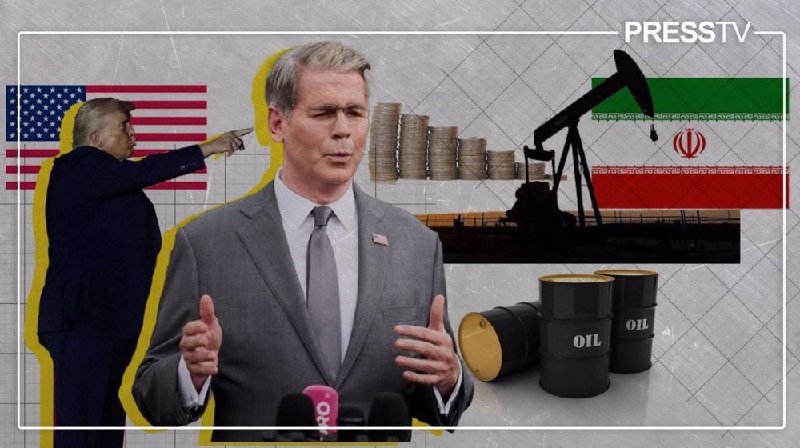
At 22:12 UTC on 24 August 2026, a Telegram channel that tracks BRICS-related security traffic posted a single line: an oil tanker had been attacked in the Strait of Hormuz. By 22:46 UTC, a second channel carried a longer version: a tanker had been struck nine nautical miles off the coast of Oman, transiting the southern corridor under a US military escort, with the corridor itself labelled "illegal." A third channel repeated the location and escort detail within minutes. By 01:10 UTC on 25 August, Reuters reported that Iran had vowed to retaliate after the United States widened sanctions. By 02:03 UTC, an X account associated with the prediction-market platform Polymarket posted the line: "Iran declares it is 'fully prepared' for U.S. sanctions." The sequence is tidy. The attribution is not.
The pattern on display is not brinkmanship in the classic sense. Brinkmanship requires a price one side is willing to pay that the other side believes it will not pay. What the past 24 hours show is something closer to a slow-bleed escalation: a kinetic incident at sea, a rhetorical counter-threat from Tehran, a sanctions package designed to raise the cost of the next incident, and a public posture that the cost will simply be absorbed. Each move is calibrated. None of them are decisive, and the working attribution of the strike itself remains unsettled on the public record.
What the channels said, and what they did not
The three Telegram posts are the entry point. Middle East Spectator posted at 22:46 UTC on 24 August that a tanker had been struck nine nautical miles off Oman in the southern corridor, describing the vessel as under a US military escort and labelling the corridor "illegal." @Megatron_ron carried the same location and escort description minutes later. @BRICSNews added the shorter bulletin at 22:12 UTC flagging an attack in the strait without the escort detail. The available source items do not specify the vessel's name, flag, owner, cargo, the nature of the damage, or the weapon used. The cited posts attribute the strike to Iran through framing rather than through any on-the-record Iranian admission, and the Iran-aligned channels describe the strike but do not, in the source material, claim credit on behalf of any Iranian official.
Monexus analysis: what is missing is as consequential as what is present. No vessel identification. No casualty count. No weapon description. No on-the-record Iranian claim. The first-party UKMTO report carried elsewhere in the wire cycle describes an "unknown projectile," a formulation that materially cuts against the working attribution embedded in the channel headlines. Until either UKMTO or a named government source narrows the language, the strike sits in a space where Iran-skeptical outlets treat it as Iranian by default and Iran-aligned outlets treat it as Iranian by assertion, and neither side has yet produced the receipt.
The sanctions reply, and the Iranian counter
Reuters reported at 01:10 UTC on 25 August that Iran had vowed to retaliate after the United States widened sanctions. The Reuters item, as carried in the source feed, links the Iranian vow to the sanctions widening; the source feed does not itself establish a causal link from the maritime strike to the sanctions package. The 02:03 UTC Polymarket-affiliated post reads "Iran declares it is 'fully prepared' for U.S. sanctions." The source feed does not specify whether that line represents an Iranian declaration on the record from a named official or a characterisation by the account itself, and this article has not independently established which. Read together, the sequence is a rhetorical escalation timed to the sanctions move, not a documented admission of responsibility for the maritime strike.
Monexus analysis: the sequence reads less like a single crisis than like two overlapping clocks. The first is the kinetic clock at sea, where each incident is met with a response posture, and each posture is met with a probe. The second is the financial clock, where the US Treasury widens the designation list and Iran widens the rhetoric. Neither clock is resolving on the available evidence. Both are accumulating.
Why the Western framing keeps underestimating the corridor
The dominant wire framing treats Iranian action in the strait as a function of the sanctions regime: tighten the screws, and the maritime harassment stops. The evidence of the last 24 hours does not, on its own, settle the causal arrow. The sanctions widening reported by Reuters arrived as the policy backdrop against which Tehran issued its vow to retaliate; the source feed does not establish that the sanctions package was designed in direct response to the 24 August maritime strike. The Iranian counter-threat, in turn, is calibrated to the widening as the proximate trigger.
That is not a defence of any Iranian strike on commercial shipping. Striking tankers in a chokepoint, regardless of escort status, is a serious escalation with commercial and environmental consequences that fall on third-party crews, insurers, and importing economies. Israeli and Western security concerns about Iranian naval posture in the strait are legitimate and long-standing, and they are not manufactured. What the framing undercounts is the structural fact that Iran's usable leverage in any negotiation with Washington runs primarily through the corridor, and that the corridor is also the place where Iran's military is most willing to be seen acting. A sanctions architecture that does not price in that asymmetry is not a deterrent; it is a stress test.
Stakes, and what remains genuinely uncertain
The honest ledger is short. Confirmed in the source material is the timing of the maritime incident (evening of 24 August 2026, off Oman, southern corridor), the framing of a US escort in two Telegram channels, an Iranian vow to retaliate against widened US sanctions per Reuters, and a Polymarket-affiliated post reading "Iran declares it is 'fully prepared' for U.S. sanctions." Not confirmed in the source material is the identity of the vessel, the nature of the damage, the identity of the attacker, the specific scope of the new US sanctions package, whether the Iranian vow is on the record from a named official, and whether the "fully prepared" line is an Iranian declaration or an account characterisation. The cited posts contain no claim of an Iranian official on-the-record admission of responsibility for the strike, and this article has not independently established one. First-party UKMTO reporting carried elsewhere in the wire cycle describes an "unknown projectile," a framing that materially narrows what the channels' attribution can be said to support on the public record.
The structural pattern, on the available record, is an escalation that neither side is trying to win quickly, and a strike that the public record has not yet named. That is the part the briefings tend to leave out, and it is the part that determines whether the next 72 hours look like a sanctions spiral, a controlled de-escalation, or a longer sequence in which the corridor keeps doing the talking while the wire keeps arguing about who spoke first.
Desk note: Monexus framed the 24 August incident and the 25 August sanctions reply as a single escalation sequence while working the attribution question as the article's load-bearing uncertainty. Iranian responsibility is asserted by Iran-adjacent Telegram channels but is not admitted on the record by any named Iranian official in the source feed, and first-party UKMTO reporting carried elsewhere in the wire cycle describes an "unknown projectile," a contradiction this article treats as material rather than ornamental. The wire cycle had not, at time of writing, named the vessel or published a US or Omani official attribution.
Wire provenance
This editorial synthesis draws on the following public wire/social posts:
- https://reut.rs/45QrHTk
- https://x.com/Reuters/status/2092056937684750701
- https://t.me/Middle_East_Spectator/36039
- https://t.me/megatron_ron/16573
- https://t.me/bricsnews/17845
- https://t.me/bricsnews/17846
- https://x.com/Polymarket/status/2092070204956434592