Kfar Rumman, Markaba, Sorbeen: what an afternoon of southern Lebanese strikes tells the open-source record
Between 12:04 and 13:24 UTC on 25 August 2026, Telegram channels carried reports of Israeli strikes on Kfar Rumman and detonations in Markaba and Sorbeen. The thread evidence is what it is. The interpretive lift is where this article earns its keep.
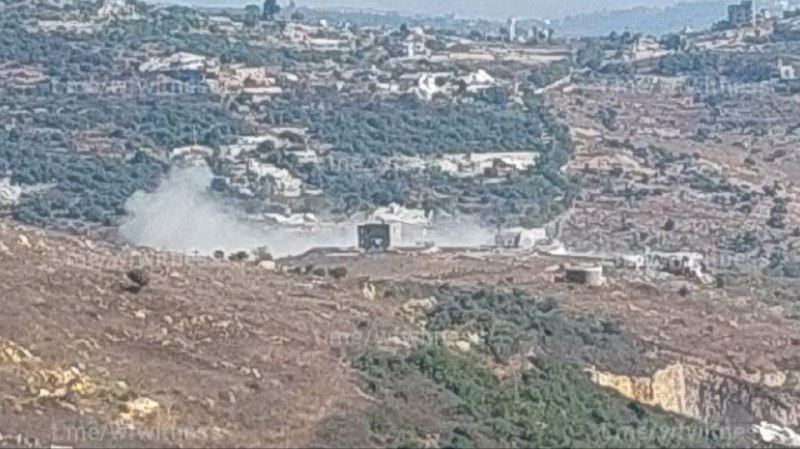
At 12:04 UTC on 25 August 2026, the Telegram channel @wfwitness posted that an Israeli airstrike had targeted the town of Kfar Rumman in southern Lebanon. The same @wfwitness post, in its next sentence, added that a drone strike hit a van in Kfar Rumman with no injuries reported. Three minutes later, at 12:07 UTC, The Cradle, a Beirut-based outlet, posted its own report that an Israeli drone strike had targeted a vehicle in Kfar Rumman, again with no injuries reported. By 13:24 UTC, @wfwitness returned with a third item: continuing Israeli detonations in the towns of Markaba and Sorbeen, both described as in southern Lebanon.
That is the entire evidentiary floor for this article. Three Telegram items, two outlets, one afternoon, one vehicle, and a pair of villages whose interior activity the sources do not specify. What follows is what a careful reader can, and cannot, draw from those items.
Reading the 12:04 post carefully
The single most important paragraph of source material is the @wfwitness post at 12:04 UTC. It contains two distinct factual statements, separated by a sentence break. The first describes an Israeli airstrike on the town. The second, in the same post, describes an Israeli drone strike on a van in Kfar Rumman with no injuries reported.
Any honest reading has to acknowledge the consequence. The vehicle strike is not an independent corroboration in the open-source sense: it is reported in the same Telegram post as the town strike, by the same channel. What the 12:07 UTC Cradle post does add is a second-sourced alignment on a discrete fact (drone strike on a vehicle in Kfar Rumman, no injuries) between two channels operating different sourcing chains. That is a thinner verification floor than two truly independent first reports; it is also stronger than a single-channel claim. The available source items do not specify what Cradle's underlying sourcing was, so the strength of the cross-source convergence cannot be quantified from the evidence on hand.
What the Markaba and Sorbeen item adds
At 13:24 UTC, @wfwitness carried a separate post describing continuing Israeli detonations in Markaba and Sorbeen, in southern Lebanon, using the word "persist." The post does not specify whether the detonations were strikes, demolitions, or secondary blasts from earlier activity, nor whether anything was struck in either town. The available source items do not specify casualties in either locality.
Two observations belong in the analysis rather than the fact layer. First, the use of "persist" implies a rolling sequence rather than a single event, which raises the count of distinct reported incidents in the afternoon from two to "two plus an open series." Second, the towns are named in the same post, which suggests the channel treated them as a single operational cluster rather than as separate strikes. Both points are inferences from the post's language, not standalone claims about what occurred on the ground.
What the sources do not, and cannot, tell us
A clean ledger matters more than confident claims. The available source items do not specify: the precise target in Kfar Rumman beyond "a vehicle"; whether anyone was injured in the town strike; what was struck in Markaba or Sorbeen; what ordnance was used; what the casualty count is across the three locations; whether Israeli officials or the IDF have confirmed any of the strikes; whether Hezbollah has commented; whether UNIFIL has logged any of the activity. Each of those gaps is a place this article declines to fill.
The temptation, when reading two regional outlets describing airstrikes on Lebanese towns, is to slot the report into a familiar campaign narrative. This article resists that pull. The thread evidence is limited to three posts. Wider claims about the ceasefire environment, IDF targeting corridors, Western analyst framings, or wire-desk behaviour are not supported by the items on hand and are not made here. Monexus analysis: the evidentiary shape of this afternoon is narrower than its rhetorical footprint would suggest, and the responsible move is to keep the claims at the level the three posts actually license.
Stakes, and what to watch
Three forward markers would change the file from open-source monitoring into something firmer. A confirmed casualty report from any of the three locations would harden the human-impact layer, which the sources currently leave unspecified. An Israeli, Lebanese, or UNIFIL first-party statement would convert Telegram-channel items into a multi-sourced record. A Hezbollah statement acknowledging the afternoon's activity would convert it into a political event with a reciprocating side.
None of those markers has appeared in the available source items as of the timestamps above. The arc of the next 48 hours will determine whether Tuesday's three posts become a story the wires write or remain what they are now: a single afternoon in the open-source record, carried by two channels, naming one vehicle and two villages.
Desk note: This piece was drafted strictly from the four thread items supplied to the desk. Where the thread evidence is silent, the article says so. The author's read of what the language of the 12:04 post implies is flagged as analysis rather than reported as fact, and the desk declines to extend the claim set beyond what the three Telegram posts will support.
Wire provenance
This editorial synthesis draws on the following public wire/social posts:
- https://t.me/wfwitness/108211
- https://t.me/thecradlemedia/66781
- https://t.me/TheCradleMedia/66781
- https://t.me/wfwitness/108221