Iran says Hormuz stays shut until U.S. lifts blockade; Tehran and Oman claim a revenue-sharing deal
Iran's Revolutionary Guards say they and Oman have agreed how to split control and revenues from the Strait of Hormuz, but that the chokepoint stays closed until Washington drops its naval blockade and fighting in Lebanon ends.
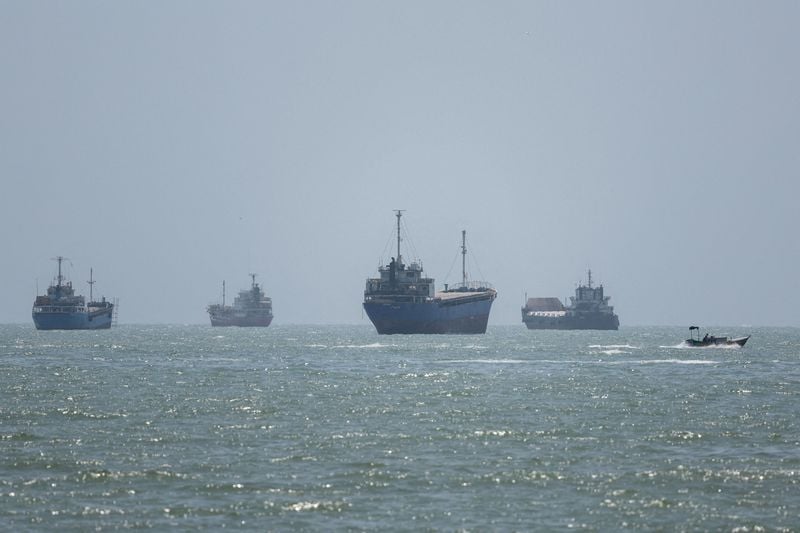
Iran's Islamic Revolutionary Guard Corps announced on 26 August 2026 that Tehran and Muscat had agreed on how to divide control and revenues from the Strait of Hormuz, the narrow corridor through which a large share of seaborne crude leaves the Persian Gulf. Hours later, Tehran made clear the deal changes nothing about transit: the strait stays closed until the United States lifts its naval blockade and the wider war ends, including the fighting in Lebanon.
Monexus analysis: read together, the two announcements are a single negotiating posture. Tehran is offering a managed, revenue-sharing arrangement for the waterway it currently holds, but tying any reopening to U.S. political concessions. The message to oil markets, and to Washington's regional allies, is that the chokepoint is now a bargaining chip with two prices attached: an economic one (the Hormuz toll regime) and a political one (Lebanon and the blockade).
Two announcements, one posture
The IRGC statement, carried by Iranian state media and relayed by Polymarket's news desk at 13:46 UTC on 26 August, framed the Oman arrangement as a fait accompli. Within four hours, a second line landed: Iran told market-watchers and shipping analysts that the strait would not reopen until Washington ended what Tehran called its naval blockade and until fighting in Lebanon stopped.
CNBC reported at 12:08 UTC on 26 August that Iran was accusing the United States of standing in the way of a Hormuz deal even as Iran-Oman talks progressed, and that the two sides were "approaching a deal to secure safe transit through the Strait of Hormuz and future administration of the vital economic artery." An investing.com wire at 12:18 UTC added that the Revolutionary Guards had confirmed the revenue-and-control framework with Oman. The closing condition, that the U.S. lift its blockade and that the Lebanon track end, came in via unusual_whales and the OSINTdefender Telegram channel at 15:37 and 17:17 UTC.
The sequencing matters. Tehran does not normally publish a transit deal on the same day it announces the corridor is shut. Doing so reframes the closure from a wartime disruption into a price tag: safe passage becomes conditional on a U.S. policy retreat.
What the Oman track actually is
The available wire reporting is consistent on the structure and vague on the numbers. The IRGC says the two states have agreed on how to split control and revenues. CNBC describes the package as a deal "to secure safe transit... and future administration" of the strait. investing.com's bulletin adds the Guards' confirmation but does not publish a tariff schedule, a throughput cap, or a revenue-split formula.
That leaves three concrete questions unanswered in the cited items. Who collects the toll: Iran, Oman, a joint authority, or a third-party escrow? Who enforces compliance against shippers: IRGC naval units, Oman's Royal Navy, or a private security regime underwritten by insurers? And who pays: flag-state governments, charterers, or cargo owners? Without those answers, the deal reads more like an architecture diagram than an operating agreement.
Oman has historically played the role of neutral conduit between Tehran and the Gulf's western-facing monarchies, and between Iran and the United States. A bilateral track that pulls the revenue mechanism out of a multilateral framework, and out of U.S. reach, fits that pattern. It also fits a pattern the cited items do not name: corridor politics, the practice of converting a transit bottleneck into a bilateral revenue stream that bypasses the incumbent order's settlement layer.
The blockade condition, and what it does to oil
Tehran's tying of reopening to the U.S. blockade, and to a halt in Lebanon, raises the political cost of any unilateral Western move to escort tankers through Hormuz. If transit can only resume on Iranian terms, then escort missions don't reopen the strait; they merely contest Iranian enforcement of a closure that is now, by Tehran's account, contractual.
A Polymarket contract tracked on 26 August at 13:47 UTC priced a 41 percent probability that Iran would charge Hormuz transit fees by year-end. Read against the IRGC announcement, that contract is no longer a speculative scenario. It is a market's working assumption that a toll regime will be in place within months, and that some volume of shipping will pay it rather than fight through.
The wider market consequence is asymmetric. Producers on the Gulf's western shore lose pricing leverage when their crude cannot move at world-clearing speed. Buyers in Asia, the largest single destination for Gulf crude, face either higher delivered prices or a forced re-routing through longer pipelines and terminals outside the strait. Iranian and Omani fiscal accounts gain a new line item if any of that traffic is tolled. The U.S. treasury and U.S. naval planners inherit a bill they did not previously have.
What stays contested
The cited reporting does not specify whether the U.S. has acknowledged the Oman track, rejected it, or is treating it as a bilateral matter outside its remit. It does not specify the status of the "naval blockade" Iran cites, including whether Washington characterizes current operations as a blockade, a sanctions enforcement regime, or a maritime interdiction. It does not specify how the Lebanon track is being negotiated, by whom, or on what timeline. And it does not specify whether Omani officials have publicly confirmed the IRGC's description of the deal in the same terms.
Monexus assessment: until those four points are nailed down by first-party statements from Muscat and Washington, the Iran-Oman framework should be read as a framework, not a contract. The blockade condition, and the Lebanon linkage, are doing the diplomatic work. The toll regime is the prize.
For oil desks, the operating question is no longer whether Hormuz transits at war prices. It is whether any transits at all happen this quarter, and who gets paid when they do.
This article drew primarily on Telegram relays of Iranian state media and on Western wires (CNBC, investing.com) that published the IRGC announcement within the same hour. Where a claim could only be sourced through a social relay, the certainty has been lowered in line.
Wire provenance
This editorial synthesis draws on the following public wire/social posts:
- https://x.com/unusual_whales/status/2092637442616799415
- https://poly.market/u5XCryh
- https://x.com/Polymarket/status/2092609872416141798
- https://x.com/Polymarket/status/2092609733001617541
- https://www.investing.com/news/commodities-news/iran-and-oman-reach-agreements-on-share-of-hormuz-and-revenues-revolutionary-guards-say-4877105
- https://www.cnbc.com/2026/08/26/us-iran-war-trump-hormuz.html
- https://t.me/osintdefender/20023
- https://t.me/OSINTdefender/20023
- https://x.com/unusual_whales/status/2092637442616799415
- https://poly.market/u5XCryh
- https://x.com/Polymarket/status/2092609872416141798
- https://x.com/Polymarket/status/2092609733001617541
- https://www.investing.com/news/commodities-news/iran-and-oman-reach-agreements-on-share-of-hormuz-and-revenues-revolutionary-guards-say-4877105
- https://www.cnbc.com/2026/08/26/us-iran-war-trump-hormuz.html
- https://t.me/osintdefender/20023
- https://t.me/OSINTdefender/20023