Israeli airstrike on Arab Salim kills one woman as south Lebanon logs six strikes in an hour
The Lebanese Ministry of Health, cited at 15:02 UTC on 27 August 2026, says one woman was killed and six wounded in an Israeli airstrike on Arab Salim, with The Cradle Media tallying six separate strikes across three locations in the preceding hour.
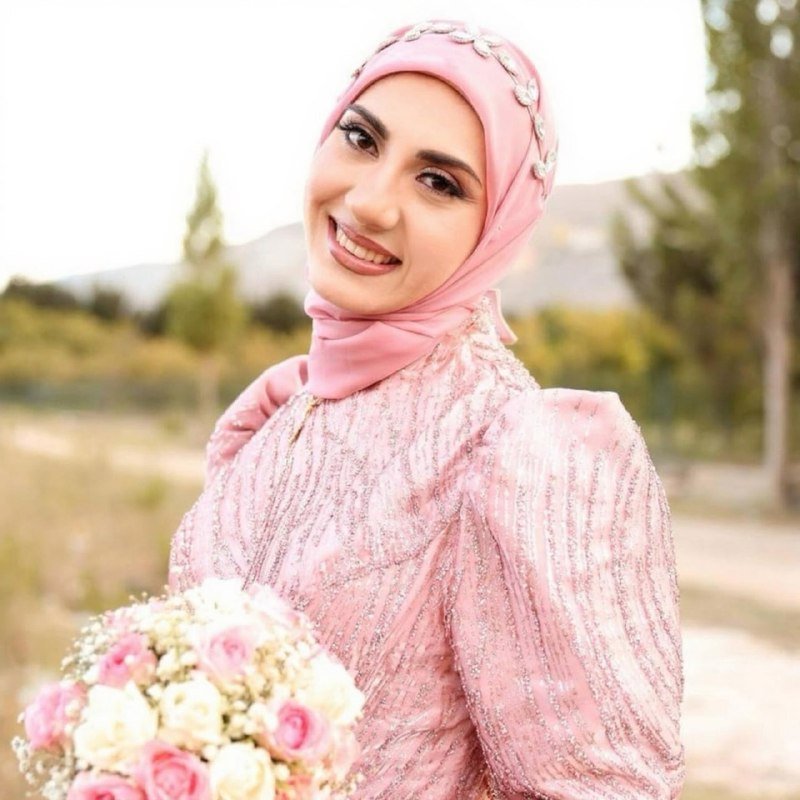
The Lebanese Ministry of Health said one woman was killed and six others injured in an Israeli airstrike on the town of Arab Salim in southern Lebanon on 27 August 2026, an account relayed through Liveuamap at 15:02 UTC and echoed within minutes by regional outlets across the political spectrum. PressTV named the dead woman as Saja Sharara and framed her as a bride-to-be. The Cradle Media's running tally separately logged six Israeli attacks in the preceding hour, attributing the casualty identification to the same Ministry of Health. Palestine Chronicle described the dead woman as a newlywed who had reportedly married just two days earlier.
The pattern matters more than the single strike. Within the span of an hour, the regional channel The Cradle Media logged six Israeli attacks in south Lebanon: two airstrikes by warplane on Arab Salim, one airstrike by warplane on Nabatieh al-Fawqa, two drone strikes on Nabatieh al-Fawqa, and a drone strike between Nabatieh and Kfar Rumman. Multiple Telegram feeds, each with their own editorial slant, converged on the same arithmetic. The story is what that arithmetic implies about the operating tempo on a single day, and what the human record around it does not let us say.
This is not a one-off. The 27 August strikes sit inside an Israeli air campaign against south Lebanon that has been running in some form since the opening of the war in Gaza in October 2023, with a brief ceasefire in late 2024 and renewed exchanges since. The arithmetic Monexus can verify from the cited posts is the hourly strike tally, the casualty count for Arab Salim, and the victim's identification as carried in PressTV's wording. Everything beyond that is inference.
The human story, and the sources behind it
PressTV, an Iranian state outlet, named the dead woman and gave her first name and family name, describing her as a bride-to-be. The Lebanese Ministry of Health, cited by Liveuamap at 15:02 UTC, gave the wider count: one dead, six wounded. The Cradle Media's own Telegram post on the hourly strike tally attributed the naming of the woman killed to the Lebanese Ministry of Health. Palestine Chronicle framed the casualties inside a broader picture of airstrikes, shelling and incursions across south Lebanon on the same day, and described the dead woman as a newlywed who had reportedly married just two days earlier.
The Monexus assessment is that the victim's name as Saja Sharara first appears in PressTV's wording and is then relayed through The Cradle Media's post as the Ministry of Health's identification, rather than as The Cradle's independent finding. The marital framing as a bride-to-be or newlywed is foregrounded most heavily in PressTV's wording and in Palestine Chronicle's framing. The cross-source convergence on the name is real but the underlying provenance is narrower than three independent outlets naming her; it is PressTV's first publication with the others carrying that identification forward. Readers should hold that distinction in mind.
The structural question is what an Israeli strike on a populated town in southern Lebanon is meant to achieve at this point in the war's timeline. The available source items do not specify what, if any, military target was named for the 27 August strikes, nor do they describe an Israeli military statement on the specific incident. Any reading of intent therefore rests on inference, not on cited Israeli comment in the thread.
Six strikes in one hour, across three locations
The Cradle Media's running tally for the hour before 14:52 UTC was specific and carried in two of its Telegram posts: two airstrikes by warplane on Arab Salim, one airstrike by warplane on Nabatieh al-Fawqa, two drone strikes on Nabatieh al-Fawqa, and a drone strike between Nabatieh and Kfar Rumman. Six separate attacks in roughly sixty minutes, on Arab Salim, on Nabatieh al-Fawqa, and on the area between Nabatieh and Kfar Rumman. The arithmetic of an hour like this is not, by the standards of the south Lebanon front since 2023, an outlier. What the cited posts do support is the geographic spread: fixed-wing aircraft and drones, in sequence, on towns and adjacent areas in south Lebanon on the same day.
For Beirut, the tempo matters because it sets the political weather inside the Lebanese state. For UNIFIL and the ceasefire monitoring architecture that has run since 2024, it sets the operational weather. For the displaced communities of south Lebanon, most of whose villages have emptied and refilled several times over the past two and a half years, it sets the calendar by which they decide whether to return, whether to leave, and whether to count a strike as part of a campaign or as the start of one. The available reporting does not specify whether the Lebanese caretaker government in Beirut issued a statement in response to the 27 August strikes, or whether UNIFIL recorded the strikes as a violation of any ceasefire mechanism still in force. A reader should treat both as open questions rather than as evidence of silence.
What Monexus verified, and what we could not
Verified across multiple sources: An Israeli airstrike hit Arab Salim in south Lebanon on 27 August 2026, killing one woman and wounding six, per the Lebanese Ministry of Health relayed through Liveuamap at 15:02 UTC. The Cradle Media's running tally at 14:52 UTC logged six separate Israeli attacks in the preceding hour across Arab Salim, Nabatieh al-Fawqa, and the area between Nabatieh and Kfar Rumman: two airstrikes by warplane on Arab Salim, one airstrike by warplane on Nabatieh al-Fawqa, two drone strikes on Nabatieh al-Fawqa, and a drone strike between Nabatieh and Kfar Rumman. Palestine Chronicle's reporting at 13:57 UTC described Israeli airstrikes, shelling and incursions across south Lebanon on the day in question.
Convergence on the victim's identification: PressTV's Telegram post names the dead woman as Saja Sharara. The Cradle Media's Telegram tally carries the name forward while explicitly attributing the identification to the Lebanese Ministry of Health. Palestine Chronicle's Telegram and website reporting describes the dead woman as a newlywed who had reportedly married just two days earlier. The name is consistent across the feeds, but the underlying provenance is PressTV's first publication with The Cradle and Palestine Chronicle carrying that identification.
Not established by the cited posts: The specific military target claimed by Israel for the 27 August strikes; any IDF statement on the incident; whether evacuation warnings preceded the strikes; the casualty toll inside any specific building; the broader casualty count for south Lebanon on 27 August beyond the Arab Salim strike; any response from the Lebanese caretaker government in Beirut or from UNIFIL; the governorate boundaries or administrative districts of Arab Salim, Nabatieh al-Fawqa, and Kfar Rumman.
The stakes, plain
If the 27 August pattern is a single bad hour, the diplomatic and humanitarian arithmetic of south Lebanon adjusts modestly: another family displaced, another wedding postponed, another round of condolences from Beirut and from the Lebanese diaspora. If the 27 August pattern is the start of a wider operation, the arithmetic is different. The south Lebanon displacement system has finite capacity. The Lebanese state, working through a caretaker cabinet in 2026, has limited bandwidth to absorb a new surge of internal displacement while managing a financial crisis that has run for the better part of a decade. And the November 2024 ceasefire architecture, to the extent it still holds, was built for a slower tempo than the one the cited posts describe.
Three things to watch in the next 48 to 72 hours. First, whether the Israeli military publishes a statement on the 27 August strikes naming a target. Second, whether the Lebanese Ministry of Health revises its casualty figures upward as field reports consolidate. Third, whether the November 2024 ceasefire monitoring mechanism, in any remaining form, records the strikes as violations. The Monexus desk will treat each of those data points as confirmatory evidence on whether the Arab Salim strike is a single event or the opening movement of a new campaign.
Desk note: Monexus framed this as a structural escalation story anchored to a single, dated incident and an hourly strike tally, rather than as a casualty piece. The victim's identification by name is consistent across three Telegram feeds of differing editorial alignment, but the underlying provenance is PressTV's first publication with The Cradle Media and Palestine Chronicle carrying that identification forward; the wedding-related framing is foregrounded most heavily by PressTV and Palestine Chronicle and is held distinct from the broader casualty count, which is supported by the Lebanese Ministry of Health and corroborated by regional reporting streams.
Wire provenance
This editorial synthesis draws on the following public wire/social posts:
- https://lebanon.liveuamap.com/en/2026/27-august-14-lebanese-ministry-of-health-one-woman-killed
- https://t.me/Liveuamap/12319
- https://t.me/thecradlemedia/66895
- https://t.me/TheCradleMedia/66895
- https://t.me/PalestineChronicle/4076
- https://www.palestinechronicle.com/israeli-strike-kills-newlywed-woman-as-attacks-escalate-across-south-lebanon/
- https://t.me/presstv/204393
- https://lebanon.liveuamap.com/en/2026/27-august-14-lebanese-ministry-of-health-one-woman-killed
- https://t.me/Liveuamap/12319
- https://t.me/thecradlemedia/66895
- https://t.me/TheCradleMedia/66895
- https://t.me/PalestineChronicle/4076
- https://www.palestinechronicle.com/israeli-strike-kills-newlywed-woman-as-attacks-escalate-across-south-lebanon/
- https://t.me/presstv/204393