The gas pump is now the war room
Trump told reporters the US is not talking to Iran as the White House readies refiners for price pressure. The two statements are not in conflict. They are the policy.
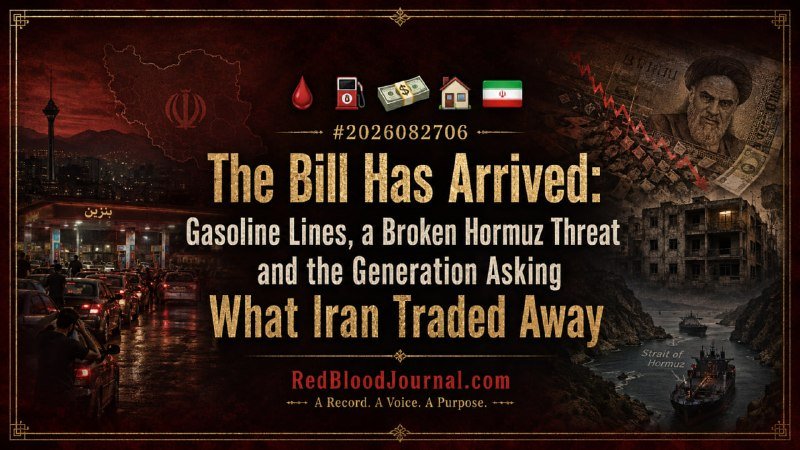
On 27 August 2026, the White House sent a deliberately mixed signal. President Donald Trump told reporters that the United States is not in talks with Iran, even as his administration prepares to convene refiners and fuel retailers to manage the price fallout from that same posture heading into the November midterms. The two messages are not contradictory. They are the same policy expressed in two registers, one aimed at Tehran, the other at American consumers.
A Reuters dispatch filed 22:35 UTC captured the diplomatic register: no talks, an economic war in focus. By 22:32 UTC, channels close to the BRICS news ecosystem were circulating the sharper line, Trump calling Iran "a failing nation." By 22:37 UTC, the Two Majors Telegram channel was already framing the sequence as the president "working out his frustrations." Read together, the day's three signal vectors point in one direction. The administration is leaning into coercion rather than negotiation, and bracing the domestic fuel market for what that costs.
The meeting that tells you the policy
The single most revealing item in the day's wire is not a presidential quote. It is a meeting notice. Per Investing.com's commodities desk reporting 18:24 UTC, Trump will sit down with refiners and fuel retailers as Iran war pressures gas prices ahead of midterms. That is the kind of scheduling decision a White House only takes when it expects retail gasoline to move against the administration in the final weeks before an election. The choice of counterparties sits at the consumer-facing end of the value chain, which is where price shocks become political.
If the administration's posture were truly oriented toward a settlement, the meeting would read differently. You summon refiners and retailers when you are preparing to deploy the strategic petroleum reserve, when you are negotiating fuel-content waivers, or when you are signalling the industry to hold the line on margins. All three are pressure-management tools. None of them requires Iran to be at the table.
The Iran file: coercion, not diplomacy
Iran's security chief publicly denied on 27 August an alleged plot against one of Trump's sons, in a separate story carried by Investing.com's economy desk at 19:38 UTC. The denial sits awkwardly against the day's harder-edged rhetoric from Washington. Monexus assessment: the most natural read of the day's signal cluster is that the administration has decided a maximum-pressure posture is more useful than a deal, at least until the November vote. An economic war that is visibly biting the Iranian economy gives the president a story to tell voters about toughness. A negotiated settlement would give that story away.
The available source items do not specify Tehran's internal motivations for issuing the denial, and this article has not independently established whether the denial reflects a calibrated diplomatic posture, routine crisis-management messaging, or something else inside the Islamic Republic's information strategy. That uncertainty belongs on the page.
What "economic war" actually means in oil markets
The phrase "economic war in focus" is the wire's shorthand for what the administration calls maximum pressure and what the oil market calls a supply premium. In practice, that means sanctions enforcement against Iranian crude exports, secondary-sanctions pressure on foreign buyers, periodic seizure or shadow-fleet interdiction operations, and the implicit threat of escalation against Iranian production infrastructure if any of the above falters. None of those instruments requires the kind of negotiation that would entail a written agreement, which is consistent with Trump's stated position that the United States is not talking to Iran.
The cost of that posture lands in two places. Inside Iran, it suppresses export revenue and forces rationing of foreign currency. Inside the United States, it prices a risk premium into wholesale gasoline during the highest-volume driving months and the highest-visibility election season. The administration's meeting with refiners is an acknowledgement of the second cost.
Stakes, and what to watch
The immediate stakes are mechanical. Watch for a strategic petroleum reserve announcement timed to coincide with elevated retail prices, watch for any EPA waiver on summer-grade fuel blending, and watch for renewed secondary-sanctions designations on Chinese refiners processing Iranian crude. Any one of those is a tell that the administration is actively managing the price curve. The absence of all three, through the labour-day weekend, would be a tell of a different kind: that the White House has concluded the political cost of a price spike is preferable to the strategic cost of softening on Iran.
Iran, for its part, has the narrower set of moves. It can tighten inspections of IAEA monitors, accelerate uranium enrichment at declared facilities, or sponsor a calibrated escalation through proxies. The denial of the alleged plot against Trump's son is one item in that signal set. The available source items do not specify which option Tehran's leadership has chosen, and this article has not independently established the state of internal debate inside the Islamic Republic.
The honest summary is that on 27 August 2026, the gas pump and the war room have become the same room. The administration's posture is internally coherent once you accept that coercion, not negotiation, is the product being sold, and that the price of selling it will be paid at the pump. The November midterms will, in effect, be a referendum on whether American voters thought the price was worth it.
Desk note: Monexus framed this as an economic-warfare story with an oil-market transmission belt, rather than a diplomacy story with a fuel-cost subplot. The reverse is the more common wire framing, and the reversal matters for how the next 60 days of price moves will be read by voters.
Wire provenance
This editorial synthesis draws on the following public wire/social posts:
- https://reut.rs/3UYrV8x
- https://www.investing.com/news/commodities-news/trump-to-meet-refiners-fuel-retailers-as-iran-war-pressures-gas-prices-ahead-of-midterms-sources-say-4880014
- https://www.investing.com/news/economy-news/irans-security-chief-denies-alleged-plot-against-trumps-son-93CH-4880056
- https://www.investing.com/news/commodities-news/trump-says-the-us-is-not-talking-with-iran-as-economic-war-in-focus-4880012
- https://t.me/bricsnews/17914
- https://t.me/two_majors/82459
- https://reut.rs/3UYrV8x
- https://www.investing.com/news/commodities-news/trump-to-meet-refiners-fuel-retailers-as-iran-war-pressures-gas-prices-ahead-of-midterms-sources-say-4880014
- https://www.investing.com/news/economy-news/irans-security-chief-denies-alleged-plot-against-trumps-son-93CH-4880056
- https://www.investing.com/news/commodities-news/trump-says-the-us-is-not-talking-with-iran-as-economic-war-in-focus-4880012
- https://t.me/bricsnews/17914
- https://t.me/two_majors/82459