The Venezuela oil deal is not what it looks like
Washington is reportedly close to a deal that would give it a stake in Venezuelan crude. The more revealing question is what Caracas gets in return.
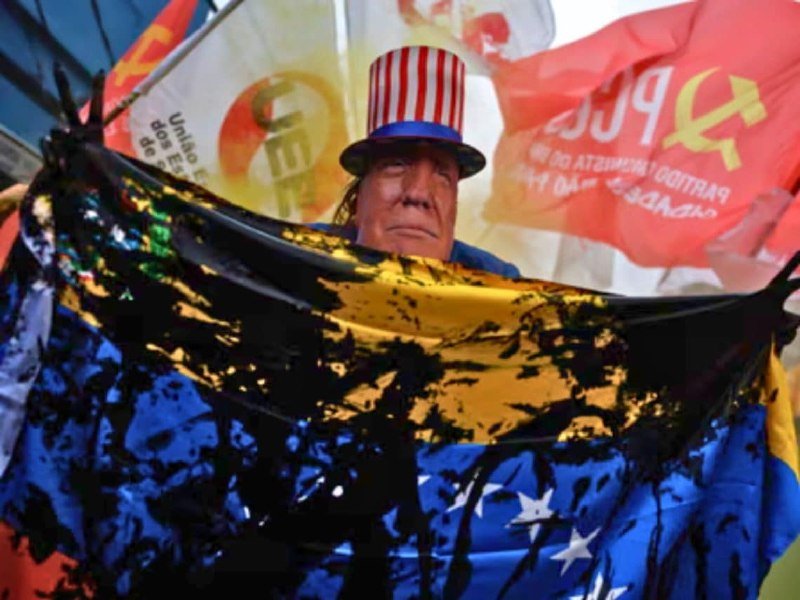
On 27 August 2026, Axios reported that Washington and Caracas are in talks over what the outlet called a "massive" arrangement under which the United States would receive an ownership stake in Venezuelan oil fields, with the framing echoed within hours by Investing.com's commodities desk and a Polymarket post citing Axios directly. The deal, as described in those initial reports, would also reportedly allow the U.S. to expand its access to Venezuelan reserves, with Axios's language, as relayed by the Polymarket X account on the same day, characterising the arrangement as "historic" and as one that could "more than double American oil reserves."
The most revealing question is not how much crude is on the table. It is what Caracas is being asked to trade for it, and what the price of that trade will be for Venezuelans who have spent a decade living under sanctions.
The shape of the deal as reported
The reporting, as it stands on 27 August 2026, is thin on contract mechanics and heavy on atmosphere. Two details stand out. First, the proposed vehicle is described as an equity-style arrangement: an ownership stake in the fields themselves, per the Axios-sourced summary relayed by Investing.com. Second, the scope is framed as "historic" in scale, with the Polymarket X account citing Axios's language on 27 August that the deal could "more than double American oil reserves," a claim whose arithmetic depends on which reserve accounting is being used and which Venezuelan blocks are in scope, neither of which the public reporting has yet specified.
That vagueness is itself the story. The headlines have arrived first, and the conditions are still being negotiated behind them. Monexus analysis: read together, the available inputs describe a deal whose precise contract architecture is not yet on the public record.
What Caracas actually wants
The Venezuelan government's incentive structure is straightforward to read. Years of U.S. sanctions on state oil revenue have thinned the country's primary income stream. Any deal that unlocks U.S. operators, U.S. service companies, and U.S.-domiciled shipping insurance is, in effect, a deal that revives the rentier compact the Bolivarian project was built on, only this time with a foreign shareholder at the table. Caracas's negotiating leverage is real precisely because it has limited alternative buyers at scale: Chinese and Russian refiners can absorb volumes, but they cannot underwrite a multi-decade field redevelopment or write the political-risk insurance a Western IOC needs before it deploys capital. Monexus analysis: that asymmetry is the operative fact in the room.
The Caracas calculus, then, is straightforward to read on the available evidence: monetise geology in exchange for sanctions relief and the partial normalisation of the oil sector.
The political price, hidden in the sub-clauses
The harder question is political. The available source items do not specify which U.S. conditions are live in this round of talks, whether detainee releases, electoral calendar commitments, or revenue-transparency mechanisms are on the table.
What a Polymarket contract on the same day priced at a 17% probability is telling: the market does not believe a Venezuelan election will be scheduled this calendar year. The market may be wrong, but it is the cleanest signal we have of how thin the confidence is that any political-concession track is part of this particular package. Monexus analysis: if Caracas is unwilling to pay in political opening, the implicit price is that the U.S. is willing to accept crude for sanctions relief alone, which is a different and less defensible deal than the one being sold in headlines.
What a stake really buys Washington
The U.S. side's framing, as relayed through Axios, leans on reserve numbers. That framing flatters a domestic political audience but obscures the operative value of the arrangement. Equity in producing fields gives Washington something a contract doesn't: a seat at the table on production levels, on which customers get prioritised when markets tighten, and on the disposition of revenue. Monexus analysis: read this way, the deal is not principally about barrels. It is about leverage inside OPEC+ deliberations, about the price-setting influence the U.S. ceded as shale growth plateaued, and about a sanctions architecture that can be re-tightened the moment Caracas misbehaves. In short, it is the institutionalisation of a veto.
That is a defensible American interest, and it is one worth naming. It is also worth naming what it costs: a U.S. veto over Venezuelan economic policy, in exchange for partial sanctions relief that will flow mostly to the regime and the foreign operator, not to Venezuelan households whose real incomes collapsed during the period the sanctions were biting.
The reading this desk lands on
Monexus assessment: the headline that "America gets Venezuelan oil" obscures the more important headline, which is that Caracas gets sanctions relief and Washington gets a permanent lever. Both sides are getting what they actually want. The constituency that is not at the table is the Venezuelan electorate, which is precisely why the Polymarket contract on an election this year sits where it does.
The available source items do not specify the contract's draft terms, the counterparties on the Venezuelan side, or which U.S. officials are personally carrying the file. Until those names and clauses surface, the working assumption should be that the political conditionality is light, the equity stake is real, and the 2026 election calendar is not part of the price.
Desk note: Wire coverage on 27 August 2026 has converged on the headline framing supplied by Axios. Monexus has read those same inputs and pushed the framing one step past the barrel count, toward the governance question the wires have so far left implicit.
Wire provenance
This editorial synthesis draws on the following public wire/social posts:
- https://www.investing.com/news/commodities-news/us-nears-deal-to-secure-longterm-access-to-venezuelas-oil-reserves-sources-say-4880291
- https://t.me/rnintel/65807
- https://x.com/Polymarket/status/2093068784571715996
- https://poly.market/xqS8tmK