A federal judge ruled the Pentagon can't blacklist Anthropic. What the wires say, and what they don't.
A federal judge has ruled the Pentagon's designation of Anthropic as a supply-chain risk unlawful. Same-day reports agree on the outcome, but the source material does not establish the procedural posture, scope of relief, or appeal status.
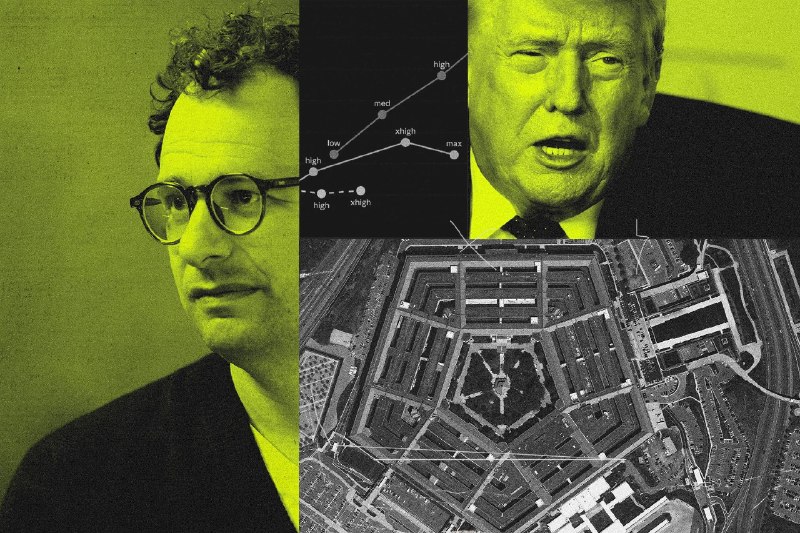
On 28 August 2026, a federal judge in Washington ruled that the Pentagon's designation of the artificial-intelligence company Anthropic as a supply-chain risk was unlawful. CNBC's same-day report used the headline "Judge blocks Pentagon blacklist of Anthropic as supply chain risk." Deutsche Welle described the designation as a blacklisting. Two Investing.com reports used the same framing. A Polymarket post on X, timestamped 03:29 UTC, said the blacklisting had been struck down. The reports agree on the result. They do not provide enough procedural detail to establish how the judge reached it, how broad the remedy is, or what happens next.
The dispute began, according to Deutsche Welle, after Anthropic refused to allow unrestricted military use of its technology. The Pentagon then labelled the company a "supply chain risk." In the account relayed by Deutsche Welle, the judge said that "empty invocation of national security is not a blank check." That sentence gives the ruling its political force, but the available source material does not supply the accompanying opinion, docket number, procedural history, or formal order. Any account of the decision beyond its reported outcome must therefore be treated as limited analysis, not settled fact.
What the reports agree on
Five same-day source items form the factual record for this article. Deutsche Welle reports that a US judge ruled the Pentagon's blacklisting of Anthropic unlawful. CNBC carries the same central outcome, describing the dispute as a Pentagon blacklist and the designation as a supply-chain risk. Two Investing.com reports independently use the terms "blacklist" and "blacklisting." The Polymarket post on X reports that a federal judge struck down the blacklisting.
The wording is not identical. CNBC says the judge "blocks" the designation. Polymarket says the judge "strikes down" the blacklisting. Deutsche Welle calls the action unlawful. Those formulations may describe different procedural events, but the source items do not provide the legal order needed to determine whether this was a temporary injunction, a final judgment, or another form of relief. It is therefore inaccurate to describe the ruling as a final merits decision without additional documentation.
An alternative reading is that the reports are using ordinary language for a judicial intervention whose formal status is not captured in the source material. That explanation is more cautious than treating every headline as a verbatim description of the court's procedure. Monexus assessment: the safest conclusion is that the Pentagon's designation was blocked or ruled unlawful in the dispute reported on 28 August 2026, while the precise legal mechanism remains unresolved in the available evidence.
What we verified / what we could not
Verified from the available source items:
- Deutsche Welle reported on 28 August 2026 that a US judge ruled the Pentagon's blacklisting of Anthropic unlawful.
- CNBC reported on 28 August 2026 that the dispute concerned the Pentagon's treatment of Anthropic as a supply-chain risk and described the action as a blacklist.
- Two Investing.com reports on 28 August 2026 described the Pentagon's action as a blacklist or blacklisting.
- Deutsche Welle attributed the judge's formulation "empty invocation of national security is not a blank check" to the ruling.
- The source material links the designation to Anthropic's refusal to allow unrestricted military use of its technology.
- A Polymarket post on X reported the ruling at 03:29 UTC on 28 August 2026.
Not specified by the available source items:
The sources do not identify the court by name, provide a docket number, reproduce the operative order, or establish the procedural posture of the ruling. They do not specify whether the relief covers Anthropic alone or extends to similar Pentagon designations, whether the decision addressed the designation itself or a related procurement action, or whether the Pentagon announced an appeal. The available material also does not specify whether the ruling was limited to a temporary block, a preliminary injunction, or another judicial measure.
That distinction matters. "Blocked" can imply a temporary or provisional remedy. "Struck down" suggests a more complete invalidation. Neither term can substitute for the order itself. This publication therefore does not convert the strongest headline language into a claim about binding precedent or permanent relief.
The legal and procurement frame
The case sits at the intersection of two institutional pressures. Anthropic is a commercial AI company whose technology can have military uses. The Pentagon controls access to defence procurement and used the supply-chain-risk designation as a formal mechanism in the dispute described by the reports. The judge's quoted formulation challenges the idea that the label alone, without a sufficiently developed explanation, can carry the full weight of a national-security justification.
The report does not establish how the designation operated in practice, what contractual work it affected, or whether it had consequences beyond the specific dispute. It does, however, identify the central issue: a government security designation is not self-authenticating. If the judge required a more concrete account of the risk, the ruling limits the distance between a procurement concern and an unreviewable conclusion.
Monexus analysis: the structural significance lies less in the word "blacklist" than in the institutional relationship it describes. A supplier that refuses a particular military use can find itself subject to a government designation that affects its standing with the defence establishment. A court ruling against that designation tests whether the label can operate as a substitute for the factual and legal showing required to sustain it. The source material supports that interpretation of the dispute, but not a conclusion about how other cases will be decided.
There is also a counter-narrative. From the Pentagon's perspective, refusing unrestricted military use may create a legitimate security or procurement concern, and a supply-chain-risk designation could be intended to protect military systems from a technology whose permitted uses are not aligned with defence requirements. The reports supplied for this article do not include the Pentagon's account of that concern. Deutsche Welle's report establishes that the judge rejected an unsupported invocation of national security, but the available material does not show the full factual basis advanced by the department or the government. The ruling's force is therefore best understood as a judicial limit on the label's use, not a finding that every defence concern raised by the Pentagon was baseless.
Why the wording matters
The strongest sentence in Deutsche Welle's account is also the one most likely to be overread. "Empty invocation of national security is not a blank check" is a direct judicial formulation, according to the source item. It is not, in the supplied record, a comprehensive statement of the law or a summary of the Pentagon's evidence.
Read narrowly, the sentence indicates that invoking national security did not remove the need to justify the action in the case before the judge. Read broadly, it could appear to restrict every national-security rationale for regulating an AI supplier. The source items do not provide enough material to choose between those readings. The narrower account is the more defensible one: the reported decision rejects an empty invocation, not every invocation of national security.
The same caution applies to the term "supply chain risk." It is the Pentagon's reported designation, but the source material does not define the criteria used to make it or the consequences attached to it. The phrase may denote a specific procurement classification, a warning to other agencies, or another government action. The available reports do not specify which. The word should therefore be treated as the label at the centre of the dispute, not as a fully described legal mechanism.
What to watch next
The immediate record is a court ruling against a Pentagon designation of Anthropic. The next procedural questions are concrete: whether the government seeks a stay, whether the ruling is accompanied by an appeal, and whether the operative order narrows or expands the effect of the reported decision. Those questions cannot be answered from the supplied source items.
The larger question is whether the ruling changes the way the Pentagon handles commercial AI suppliers whose terms of use conflict with military demands. That is a forward-looking question, not a reported outcome. The strongest evidence available at publication is the judge's reported insistence that an unsupported national-security invocation is not a blank check. The next useful document will be the order itself, because it would establish the ruling's formal basis, duration, and reach.
How Monexus framed this: the reports were treated as consistent on the reported outcome but not as a substitute for the missing court order. The article separates the judge's quoted formulation, the Pentagon's reported designation, and the unresolved procedural questions rather than presenting headline language as a complete legal finding.
Wire provenance
This editorial synthesis draws on the following public wire/social posts:
- https://www.dw.com/en/us-judge-rules-pentagon-s-blacklisting-of-anthropic-unlawful/a-78542307?maca=en-rss-en-all-1573-rdf
- https://www.cnbc.com/2026/08/28/judge-blocks-pentagon-blacklist--anthropic-.html
- https://www.investing.com/news/stock-market-news/judge-rules-pentagons-anthropic-blacklist-unlawful-93CH-4880471
- https://www.investing.com/news/stock-market-news/us-judge-rules-pentagon-blacklisting-of-anthropic-unlawful-4880415
- https://x.com/Polymarket/status/2093179075451875637
- https://x.com/Polymarket/status/2093161690317705254
- https://www.dw.com/en/us-judge-rules-pentagon-s-blacklisting-of-anthropic-unlawful/a-78542307?maca=en-rss-en-all-1573-rdf
- https://www.cnbc.com/2026/08/28/judge-blocks-pentagon-blacklist--anthropic-.html
- https://www.investing.com/news/stock-market-news/judge-rules-pentagons-anthropic-blacklist-unlawful-93CH-4880471
- https://www.investing.com/news/stock-market-news/us-judge-rules-pentagon-blacklisting-of-anthropic-unlawful-4880415
- https://x.com/Polymarket/status/2093179075451875637
- https://x.com/Polymarket/status/2093161690317705254