US sanctions UAE branch of Banque Misr as Iran war hits six-month mark
Treasury moves against a UAE-domiciled branch of Egypt's state-owned Banque Misr on the half-year mark of the US-Iran war, as prediction markets put the odds of an Iranian Hormuz toll at 39%.
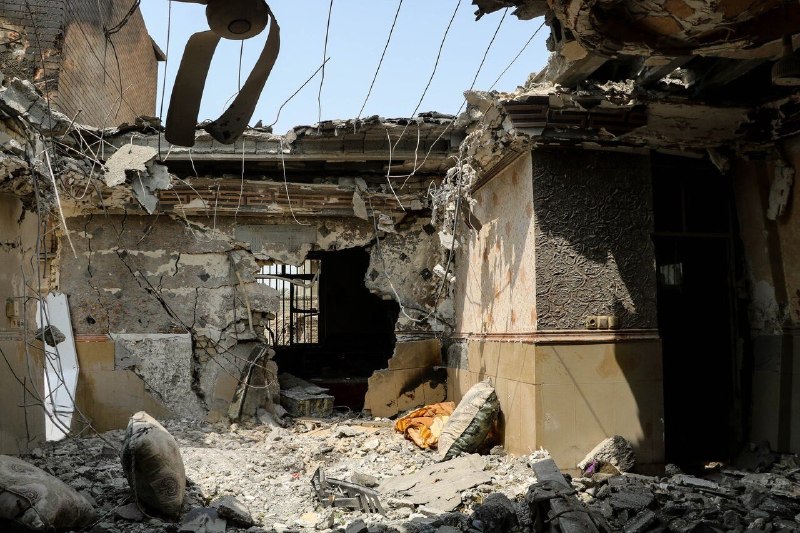
The US Treasury on 28 August 2026 moved to sanction the United Arab Emirates branch of Banque Misr, Egypt's state-owned commercial bank, over allegations that the branch served as a conduit for Iranian finance. The action lands on the six-month anniversary of the wider US-Iran war and signals that Washington intends to treat the Gulf financial plumbing, not just the battlefield, as a front in that conflict.
Treasury's designation is the sharpest illustration yet of a policy that has spent half a year exporting pressure on Tehran into the ledgers of third-country banks. Its target, the Banque Misr UAE branch, sits inside a jurisdiction that has spent the last decade branding itself as the region's safest intermediation hub. That the branch was chosen, rather than the parent in Cairo, is itself a signal: Washington is reaching for the pressure point where it can hurt Egyptian revenue without severing the bilateral relationship outright.
A bank branch as pressure point
Banque Misr was founded in 1920 and remains majority-owned by the Egyptian state. Its UAE branch, operating from the Abu Dhabi and Dubai corridors, handles a meaningful share of Egypt's trade-finance flows into the Gulf and South Asia. Treasury alleges that branch-level processing moved funds tied to Iranian entities under US designation. Reuters, citing the Treasury announcement on 28 August 2026, frames the move as part of a broader squeeze on financial nodes that sit just outside Iran's borders.
The action is calibrated. Sanctioning a foreign branch of a foreign state-owned bank is an unusually aggressive instrument; doing so against a Gulf branch of an Egyptian bank adds a diplomatic layer. Cairo depends on Gulf deposit flows and on the UAE as the principal market for Egyptian debt issuance in recent years. Treasury has, in effect, raised the cost of doing business in dirhams for Iran's partners, while leaving a corridor open for Cairo to wind down what Washington says is the offending activity. The framing matters: this is the kind of designation designed to produce private-sector compliance inside the targeted bank, not the kind that ends a relationship.
A six-month war, measured in ledgers
The half-year mark is a useful yardstick. In February 2026 the conflict reopened around disputed inspection access in the Strait of Hormuz; by spring, shipping insurance rates through the strait had reset upward and Western underwriters had rerated the Gulf as a war-risk zone. Since then, the US-led campaign has been waged as much through designations, secondary sanctions guidance and shipping seizures as through airstrikes. Treasury's move on 28 August fits that pattern.
The prediction market Polymarket, posting on 28 August 2026, priced a 39% probability that Iran would impose transit fees on commercial shipping through the Strait of Hormuz. The number is a thermometer, not a forecast. It captures how traders are reading Tehran's remaining leverage: with the conventional fight increasingly costly, the strait is the asset that converts military parity into revenue without a further escalation. A Hormuz toll would also be the kind of policy Iran has signalled it is willing to use before, during periods of severe external pressure. Monexus assessment: the market is pricing not whether Iran wants to charge a toll, but whether the political space inside Tehran to do so is open in the next quarter.
The counter-narrative from Cairo and the Gulf
The official Egyptian line is unlikely to concede the framing. Cairo will read Treasury's designation as an extraterritorial reach into a sovereign financial institution and will press for a quiet unwinding rather than a public quarrel. The UAE is a more delicate partner to alienate: Abu Dhabi has spent years cultivating compliance-first credibility in Washington, and a Treasury action against a UAE-domiciled branch is also a quiet reminder to Emirati banks that the safe-haven branding is contingent.
Iran's read, in turn, is that the sanctions pressure validates its strategy of financial deniability. The very fact that Treasury had to reach into a UAE branch of an Egyptian bank to choke off Iranian access suggests that direct channels are already degraded and that Tehran is succeeding at routing through third-country nodes. That is the Iranian argument in plain language: you have to sanction a Cairo-Abu Dhabi bank because we are not using Iranian banks anymore.
Stakes and what to watch next
If Treasury's designation holds, the immediate losers are the small set of Egyptian commercial clients whose trade-finance lines through the Banque Misr UAE branch are now friction-laden. The next-order losers are the Iranian entities the Treasury says were being served; the next-order winner is any rival Iranian financial channel that benefits from the rerouting. The largest structural loser, in the medium term, is the UAE's pitch that its banks sit outside the US sanctions perimeter. That pitch is now demonstrably conditional.
Two dates are worth watching. First, any Egyptian Central Bank or Banque Misr corporate filing that discloses the operational impact of the designation, expected in the days following the 28 August action. Second, the next Polymarket repricing of the Hormuz toll question, which will move on shipping-incident reports, Iranian parliamentary statements and oil-tanker insurance quotes. If the toll probability climbs past 50%, the wider market is signalling that Tehran has decided to monetise the strait rather than hold it as a deterrent.
Monexus assessment: the six-month mark is being marked, on both sides, by a turn toward financial instruments. The Treasury action is one half of that turn; the Polymarket pricing is a working-class thermometer for the other. The war is no longer only a question of who strikes whom, and where. It is now a question of which ledgers still clear, and which ships still float.
Desk note: Monexus framed this piece around the financial-instrument phase of the conflict rather than the military phase, on the read that Treasury's designation and the Hormuz-toll prediction market together define the next quarter more than any tactical update from the battlefield would.
Wire provenance
This editorial synthesis draws on the following public wire/social posts:
- https://reut.rs/4gBw1ur
- https://x.com/Reuters/status/2093441026304122882
- https://www.cnbc.com/2026/08/28/treasury-uae-banque-misr-sanctions-iran.html
- https://poly.market/hqlMmnP
- https://x.com/Polymarket/status/2093441902561411525
Follow the event.
These dated source records provide context. They do not retrospectively verify this archive article.
Separate what the nuclear watchdog reported from what it could not determine after the June 2025 strikes.