Judge finds Trump retaliated illegally against Anthropic over Pentagon AI dispute
A federal judge ruled on 28 August 2026 that the Trump administration illegally retaliated against Anthropic after the AI lab refused to deploy its models for lethal autonomous warfare and mass surveillance. The ruling lands as Anthropic opens a new front: AI agents in the physical laboratory.
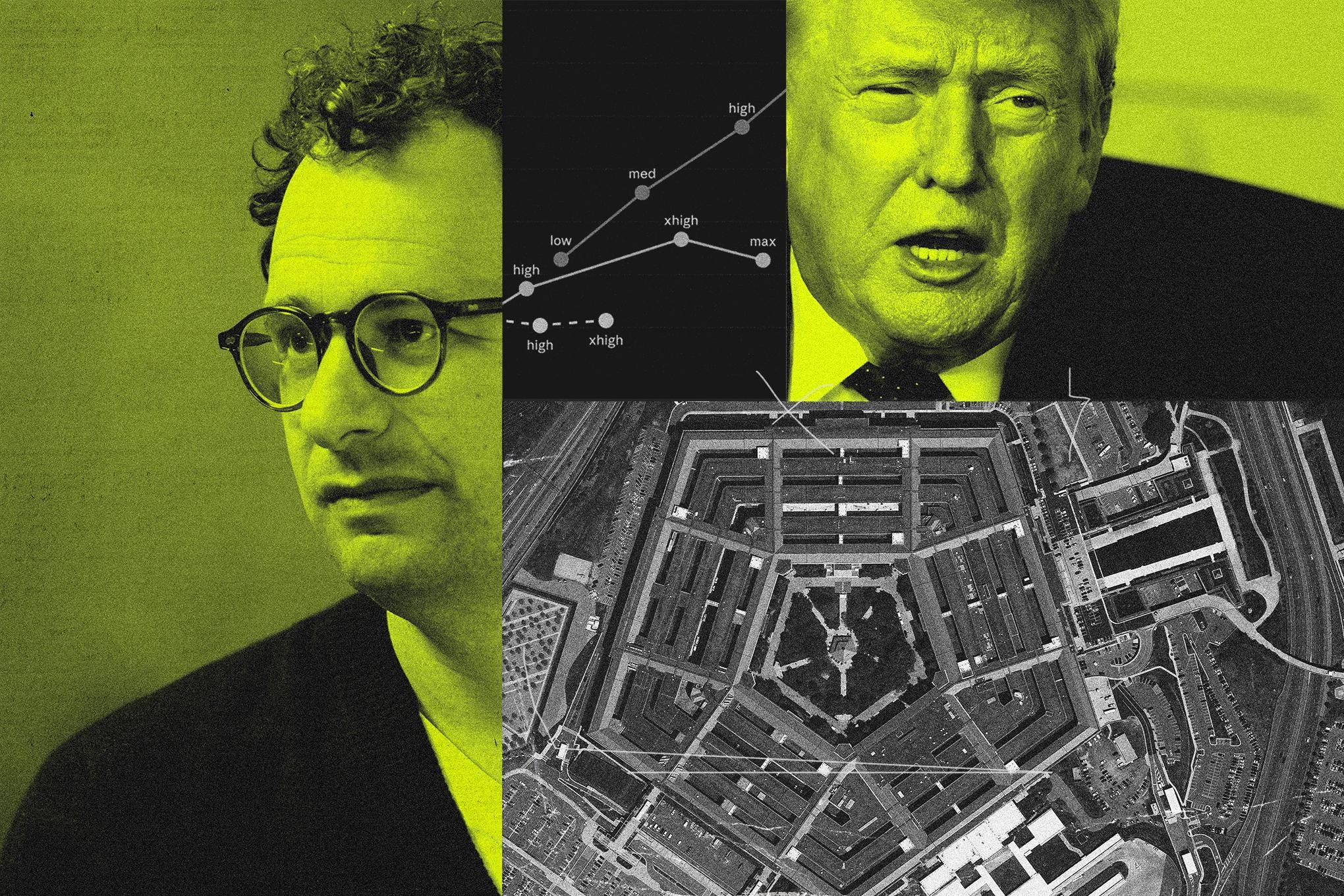
A federal judge ruled on 28 August 2026 that the Trump administration acted unlawfully when it blacklisted Anthropic, the AI lab, after the company refused to let the Pentagon deploy its models for lethal autonomous warfare and domestic mass surveillance. The decision, reported by the BBC and Ars Technica within hours of filing, marks the first reported instance in which a US court has found the executive branch retaliated against a frontier-AI vendor over a dispute about military use of its models (BBC News, 28 August 2026; Ars Technica, 28 August 2026).
The ruling matters beyond one company. It reframes the relationship between Washington and a small group of AI vendors who hold the technical capacity to make autonomous targeting decisions, and it does so at a moment when Anthropic is also pushing its agents out of the laptop and into the wet lab, with a new standard for controlling microscopes, robotic arms and lasers (TechCentral, 28 August 2026). The court's reasoning, the company's posture, and the Pentagon's next move will set the terms under which American-built AI enters both the battlefield and the bench.
What the judge actually found
According to Ars Technica's reading of the ruling, the administration moved against Anthropic after the company publicly set red lines on lethal autonomous warfare and mass surveillance, then engaged in commercial activity with the Pentagon on its own terms. Ars Technica characterises the court's holding as a finding that the blacklisting was retaliation for those refusals (Ars Technica, 28 August 2026).
The BBC's account emphasises the broader institutional stakes. The AI startup has been "at loggerheads with the Pentagon" over how its models may be used by the US military, and the blacklisting was the administration's response when Anthropic refused to widen the aperture (BBC News, 28 August 2026). The available reports do not specify the legal doctrine the court applied beyond unlawful retaliation; the dispute is framed as a procurement clash rather than a constitutional holding. Monexus analysis: the gap between the headline framing and the constitutional specifics in the cited reports is itself part of the story; readers should expect fuller legal characterisations to emerge once the opinion is filed in full.
What Anthropic refused
Two specific uses sit at the centre of the dispute, per the Ars Technica account. First, lethal autonomous warfare. Second, mass surveillance. The available reporting identifies these as the use cases Anthropic declined to support (Ars Technica, 28 August 2026).
Monexus analysis: "lethal autonomous warfare" can plausibly be read as weapons systems that select and engage targets without a human in the loop, and "mass surveillance" as the bulk processing of communications or video to identify individuals for state action, but those are editorial definitions, not characterisations drawn from the cited reports. Anthropic's public posture, as reported, is that it will work with the Pentagon on terms that stop short of those two uses, and that position held up in court (Ars Technica, 28 August 2026; BBC News, 28 August 2026). The practical reading is that a vendor can publish red lines, refuse work that crosses them, and still claim protection when the executive branch retaliates; the cited reporting treats that position as the one the court vindicated, without spelling out the doctrinal label.
The new lab standard
The court ruling was not the only Anthropic story of the week. TechCentral reported on 28 August 2026 that the company has published a new interoperability standard that lets AI agents operate laboratory hardware, including microscopes, robotic arms and lasers, in addition to running software (TechCentral, 28 August 2026). The work positions Anthropic alongside a wider industry effort to make agentic systems useful in the physical world, not only on screens.
The standard is significant for two reasons. It extends the agentic paradigm into environments where errors carry physical consequences, and it does so under a brand that has just won a court order protecting its right to refuse certain government uses. A vendor that can credibly say no to lethal autonomy, and can ship agents into a biology lab the same week, occupies an unusual position in the US AI landscape.
The Pentagon's next move
The administration has several options. It can appeal, settle, narrow the blacklisting, or rewrite the procurement language to specify use cases rather than vendors. Each path implies a different theory of how the executive branch should engage a private AI supplier that refuses part of its mandate. The available source items do not specify whether the Department of Defense has commented on the ruling or indicated it will seek a stay pending appeal.
The wider signal for the defence-industrial base is harder to ignore. Monexus analysis: if Anthropic's red lines survive appeal, rivals who have accepted wider use cases will face a market in which "we will not build this" is a defensible commercial position with court backing. That is a structural change to how the Pentagon buys AI, and it arrives at a moment when the administration is also reported to be moving on space: on 28 August 2026, the Trump administration ordered the creation of a US space academy for military use, per Investing.com's headline (Investing.com, 28 August 2026). The Investing.com source does not provide further detail in the available reporting.
What remains contested
Three points of uncertainty sit on top of the ruling. First, the scope of remedies: the BBC and Ars Technica accounts do not specify whether the court ordered specific relief, such as contract reinstatement or access restoration, leaving the practical question of contracts and access for another day. Second, the appeal: a finding of unlawful retaliation is appealable, and an administration that has framed AI policy as a sovereignty issue may press the case upward.
Third, and least visible, is the question of how other AI vendors will read the opinion. The court has, in effect, drawn a line between a company's stated use policies and political activity. Whether that line holds in a second case, against a vendor with a thinner paper trail of public statements, is an open question. The available source items do not specify whether other frontier-AI labs, including OpenAI, Google DeepMind, or xAI, have issued statements in response to the ruling.
The decision is also part of a busier-than-usual week for the Trump administration's litigation calendar. On 29 August 2026, a separate federal judge rejected the president's bid to move his New York hush-money criminal conviction to federal court, a ruling Al Jazeera and a Reuters X post reported (Al Jazeera, 29 August 2026; Reuters via X, 29 August 2026). Two adverse rulings in two days, in two different courthouses, do not amount to a pattern. Monexus analysis: they do suggest that the administration's strategy of moving politically charged disputes into friendly venues is running into a judiciary that is paying attention.
Stakes
The clearest winner is Anthropic, which retains both its commercial red lines and a court order saying the executive branch cannot punish it for them. The clearest loser, in the short term, is the Pentagon's preferred model of procurement by accommodation, in which vendors compete on willingness rather than capability. The medium-term question is whether defence procurement officers will now write contracts that specify use cases in advance, leaving vendors to compete on execution rather than ethics, or whether they will continue to treat refusal as an obstacle to be removed.
The structural reading is this: the United States is building its AI industrial policy on the assumption that frontier capability will be available to the state on whatever terms the state sets. The Anthropic ruling says that assumption is contestable, and that contest has legal weight. Whether that weight holds on appeal will determine whether 2026 ends with AI procurement looking like defence procurement in any other domain, or whether it stays an exception, fought case by case.
Desk note: Monexus framed this as a procurement-and-retaliation case, not a constitutional doctrine case. The wire consensus treated the ruling as a story about the Pentagon; Monexus treated it as a story about how a private vendor's red lines become enforceable in court.
Wire provenance
This editorial synthesis draws on the following public wire/social posts:
- https://www.bbc.co.uk/news/articles/cm2q7z5mlrmo?at_medium=RSS&at_campaign=rss
- https://arstechnica.com/tech-policy/2026/08/trump-blacklisting-of-woke-anthropic-deemed-illegal-by-federal-judge/
- https://techcentral.co.za/anthropic-moves-ai-agents-out-of-software-and-into-the-lab/285474/
- https://www.investing.com/news/economy-news/trump-orders-creation-of-us-space-academy-for-military-use-93CH-4881717
- https://www.aljazeera.com/news/2026/8/29/us-judge-rejects-trumps-bid-to-switch-hush-money-case-to-federal-court?traffic_source=rss
- https://reut.rs/3UmruVv
- https://x.com/Reuters/status/2093488884046811580
- https://www.bbc.co.uk/news/articles/cm2q7z5mlrmo?at_medium=RSS&at_campaign=rss
- https://arstechnica.com/tech-policy/2026/08/trump-blacklisting-of-woke-anthropic-deemed-illegal-by-federal-judge/
- https://techcentral.co.za/anthropic-moves-ai-agents-out-of-software-and-into-the-lab/285474/
- https://www.investing.com/news/economy-news/trump-orders-creation-of-us-space-academy-for-military-use-93CH-4881717
- https://www.aljazeera.com/news/2026/8/29/us-judge-rejects-trumps-bid-to-switch-hush-money-case-to-federal-court?traffic_source=rss
- https://reut.rs/3UmruVv
- https://x.com/Reuters/status/2093488884046811580