Six months of war and sanctions: Iran's economy under pressure as the Gulf rewires its security map
Reuters reports that war and intensified US sanctions are grinding down Iran's economy, while an Al Jazeera analysis published the same day argues Gulf states are layering new security partnerships alongside the American role rather than replacing it.
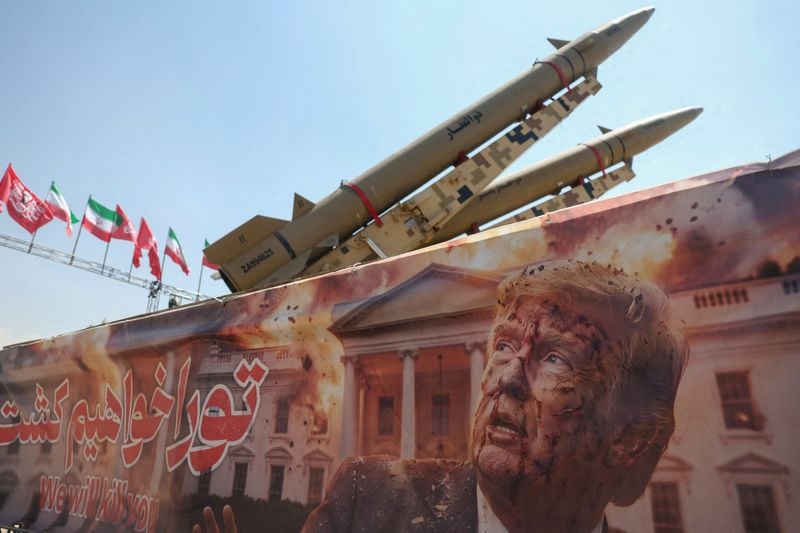
The Iranian rial was already weak when the shooting started. Reuters reported on 29 August 2026 that the war and a fresh round of US sanctions are weighing on Iran's economy in parallel, with the country's productive capacity cut by strikes and its foreign-currency revenues throttled by financial isolation. Tehran's response, as relayed by wire services on 28 and 29 August, has been to rebrand Washington's policy in the language of international law.
That is the immediate story. The structural one sits across the Gulf. An Al Jazeera opinion piece published on 29 August 2026, six months into what the article calls "the Iran war," argues that the six Gulf monarchies are stacking overlapping security partnerships that complement, rather than replace, the United States' role in the region. The economic squeeze and the security rebalancing are happening on the same day, and the coincidence is the news.
The squeeze, in the Reuters framing
Reuters' 29 August dispatch frames the situation as two tourniquets applied at once. War has reduced what Iran's factories, refineries, and ports can produce. Sanctions have reduced what the country can sell abroad and what it can settle through the dollar-clearing system that still anchors most global trade. The reporting, as cited in the 29 August thread, describes a population paying the cost at the petrol pump and the bakery; the precise GDP contraction or rial exchange rate is not specified in the version available, and Monexus has not independently established either figure. What the headline and excerpt do establish is direction: downward, and visibly.
The "Operation Economic Outcast" framing, which Iranian officials have used to describe the US sanctions package, ties the economic pressure to a named US campaign rather than to a generic tightening, according to wire relays dated 28 August 2026. That detail matters for the diplomatic argument, because it gives Tehran a label to attack. Iranian officials have called the package "crimes against humanity" and urged third countries not to enforce it, and have separately accused the United States of "state terrorism," per Polymarket wire relays dated 28 and 29 August 2026 respectively.
Tehran's counter-frame
The Polymarket relays contain headlines but not body text; the substance of any Iranian official statement, including which official or body issued it, is not specified in the available thread evidence. Monexus analysis: read in that light, the public Iranian posture on 28-29 August amounts to a deliberate vocabulary inversion, with Tehran borrowing the legal language of international humanitarian law to reframe Washington as the outlaw rather than the enforcer. The "state terrorism" label is consistent with Iran's broader rhetorical effort to depict US policy as a violation of sovereignty, and the "crimes against humanity" formulation extends the same argument into the universalist register of UN-era human rights law.
The operational ask in the Polymarket "crimes against humanity" relay is narrow on its face: urge other countries not to enforce the sanctions. What it does not specify, in the available thread evidence, is which countries Iran has addressed, whether any capital has publicly responded, or what specific non-enforcement steps Tehran has requested. Monexus analysis: in practice, an Iranian appeal for non-enforcement is an appeal addressed to the governments with the largest trade books and the most non-dollar settlement capacity, Beijing and Moscow first, Ankara and the Gulf alongside, because those are the states with the ability to keep buying Iranian crude and to keep routing finance through non-US-clearing channels. That is a structural inference about who the message is for, not a description of stated Iranian requests.
What the Gulf is building alongside Washington
The Al Jazeera opinion piece of 29 August 2026 reads the Gulf picture as one of complementarity rather than replacement. Two decades of US-centred security architecture, carrier groups, Patriot batteries, CENTCOM as the single regional theatre commander, are not being dismantled. What is being added, in the piece's reading, are bilateral pacts, intra-Gulf defence coordination, and defence-industrial partnerships that sit alongside the American framework and give Arab capitals more redundancy if Washington's attention drifts.
Monexus analysis: the practical effect is that the Gulf states are behaving like clients who expect their principal's bandwidth to be finite, and who are pricing that expectation into their procurement and their diplomacy. Saudi Arabia, the UAE, Qatar, Oman, Kuwait, and Bahrain have not publicly stepped out of the US-centred order. They have, in the Al Jazeera framing, started hedging inside it. The hedging is structural rather than confrontational, which is why it has so far drawn less of the public attention that more dramatic realignments usually attract.
Two things follow for Iran. First, the more Gulf capitals diversify their security partnerships, the less diplomatic weight Tehran can mobilise through any single one of them; the channel of influence narrows rather than widens. Second, the harder the US economic pressure lands, the more reason Gulf states have to keep their distance from Iran, since association with a sanctioned economy carries enforcement risk of its own. Both moves point the same way.
Monexus assessment: what the day adds up to
Three patterns are visible in the cited 28-29 August evidence, and they hold together because the timing is the timing. First, Reuters and Investing.com both report that US sanctions are tightening on an economy already damaged by war, and the reporting frames this as the design rather than as incidental. Second, Iran's response on 28-29 August is a rhetorical escalation in the legal-language register, "crimes against humanity," "state terrorism", with the Polymarket relays giving the headlines but not the underlying statements. Third, the Al Jazeera analysis of the same day argues that the Gulf is layering new security architecture onto, rather than replacing, the American one.
Where the evidence thins is downstream. The cited sources do not name a date for any restart of talks, do not specify a venue, and do not confirm which third-country capitals, if any, have publicly committed to non-enforcement. The Polymarket relays in the thread carry headlines only; this article has not independently established the body text of the underlying Iranian statements, the identity of the officials who made them, or the operational specifics of "Operation Economic Outcast" beyond what the wire headlines convey. Two dates to watch: any official Iranian foreign ministry readout of the "crimes against humanity" statement that names the addressees, and any public Gulf statement on whether it will continue to enforce the secondary sanctions architecture as currently configured.
Monexus framed this as a regional-architecture story with an economic subplot, rather than as a sanctions-only or war-only piece, because the Reuters/Al Jazeera/Investing.com thread of 28-29 August points to two parallel movements whose coincidence on the same day is the news.
Wire provenance
This editorial synthesis draws on the following public wire/social posts:
- https://reut.rs/4xDC1Ks
- https://www.aljazeera.com/opinions/2026/8/29/six-months-into-the-iran-war-a-new-gulf-security-architecture-is-emerging?traffic_source=rss
- https://www.investing.com/news/stock-market-news/war-weighs-on-irans-economy-as-us-intensifies-sanctions-4881923
- https://x.com/Polymarket/status/2093503002254450762
- https://x.com/Polymarket/status/2093410915391602713
- https://reut.rs/4xDC1Ks
- https://www.aljazeera.com/opinions/2026/8/29/six-months-into-the-iran-war-a-new-gulf-security-architecture-is-emerging?traffic_source=rss
- https://www.investing.com/news/stock-market-news/war-weighs-on-irans-economy-as-us-intensifies-sanctions-4881923
- https://x.com/Polymarket/status/2093503002254450762
- https://x.com/Polymarket/status/2093410915391602713