Qusra is burning, again
Israeli settlers have besieged a Palestinian home in the West Bank village of Qusra and set fire to surrounding land. The pattern is not new; the reporting on it is.
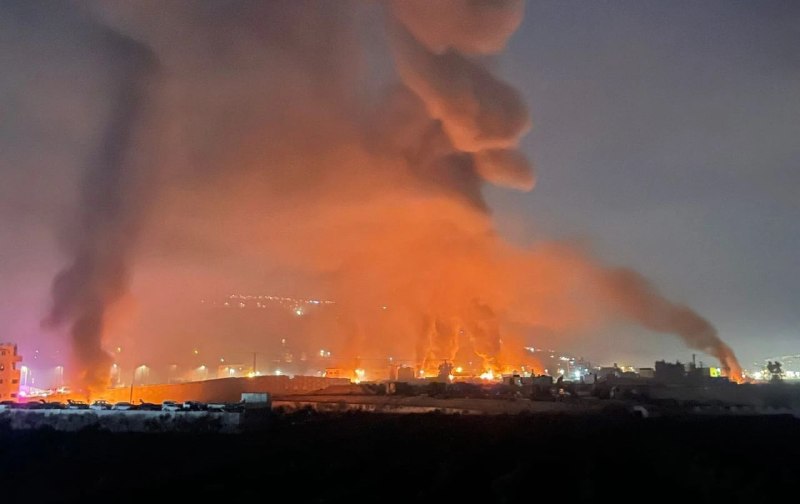
On Friday afternoon, residents of the Palestinian village of Qusra watched Israeli settlers surround a family home while others moved through the surrounding fields with fire. Reuters reported the attack at 16:01 UTC on 29 August 2026, citing witnesses, and Middle East Eye carried accounts about twenty-eight minutes later saying residents were trapped inside the property as the blaze spread to nearby land. The Israeli military and border police said they had responded to clashes involving "Israeli rioters" in Qusra, the same phrasing Middle East Eye relayed from official channels. The word "rioters" is doing remarkable work in that sentence.
Qusra is not an abstraction. It is a small hillside village in the Nablus governorate of the occupied West Bank, and Middle East Eye's reporting describes it as having been besieged for several weeks at the time of Friday's attack. The siege is the visible peak of a longer pattern: arson against Palestinian farmland, intimidation of households, and a security apparatus that arrives after the damage is done and describes the attackers with language borrowed from municipal policing.
A pattern, not an incident
A figure cited by The Cradle Media assigns settlers direct responsibility for roughly 90 percent of West Bank arson attacks since 2023, with occupation troops accounting for the remaining fires that devastated Palestinian territories and displaced thousands of families from their lands. The number is striking in itself; what makes it more so is the institutional response it sits inside. Reuters describes the perpetrators as "Israeli settlers." Middle East Eye calls them "Israeli rioters." The Israeli military and border police statement, carried in Middle East Eye's live coverage, calls them "Israeli rioters" too. The vocabulary flattens what is, on the ground, an organised and recurring campaign of land-clearance by fire into a category of disorder that implies equivalence between the arsonist and the family watching the crops go up.
Monexus reads this as a deliberate framing choice. Read in plain terms: when the official statement describes a settler siege of a Palestinian home using the same word it would use for a street brawl in Tel Aviv, the framing itself becomes a policy choice. It removes the siege from the file of occupation policy and relocates it to the file of crowd control.
The wire line and the line underneath
The Reuters wire and the Middle East Eye live blog disagree on nothing factual and disagree on everything tonal. Reuters reports the attack, names Qusra, attributes the violence to settlers, and stops. Middle East Eye adds the texture: that residents are trapped, that the fire has reached surrounding land, that the village has been under pressure for weeks. Both are accurate, in their register. The difference is what each wire considers its job to be.
This publication's assessment is that the Reuters line is the line that gets you a paragraph in a Western morning brief, and the Middle East Eye line is the line that gets you a column. The first tells you something happened; the second tells you what kind of something.
What the numbers do not capture
The 90 percent figure is not a body count and does not pretend to be. It is a denominator: of all West Bank arson events recorded since 2023, who set them. It says nothing about the household in Qusra on Friday afternoon watching smoke rise from the olive grove behind the house, nothing about the children kept home from school, nothing about the harvest that will not come. It also says nothing about the settlers themselves: who funds them, which outposts they come from, what the chain of accountability is between a Molotov cocktail thrown over a fence and a desk in the civil administration.
The available source items do not specify those details. What they do specify, cumulatively, is that the question is being asked less often than the answer would justify.
The stakes on the ground
If the trajectory continues, the harvest in and around Qusra is the first casualty, then the trees, then the case for the village remaining on the map in anything but name. International coverage will continue to file the incident, relay the official statement, and move on. The next siege, when it comes, will look like this one in the lede and read like this one in the body, and the file will thicken by exactly one entry.
There is a counter-narrative available: that settler violence is the work of a fringe, that the security services treat it as criminality, that the courts eventually process it. The Israeli military and border police statement on Friday is the purest expression of that counter-narrative in the available record, and it is worth taking seriously. It is also worth noting that the same framing has appeared, in roughly the same words, around similar incidents for years. The 90 percent figure outlasts the framing. The olive trees do not.
Desk note: This publication carried the Reuters wire wording on actor and the Middle East Eye wording on duration and trapping; we framed the official language choice as the analytical centre of the piece rather than burying it in a quote, because the language is the policy.
Wire provenance
This editorial synthesis draws on the following public wire/social posts:
- https://x.com/Reuters/status/2093730708241969569
- https://x.com/MiddleEastEye/status/2093737766563537067
- https://x.com/MiddleEastEye/status/2093730957488521570
- https://t.me/TheCradleMedia/67013