Iceland said no. Brussels should listen.
Reykjavik voters have rejected restarting EU accession talks. The result is a small country's verdict on a continent that keeps asking small countries to join something they no longer recognise.
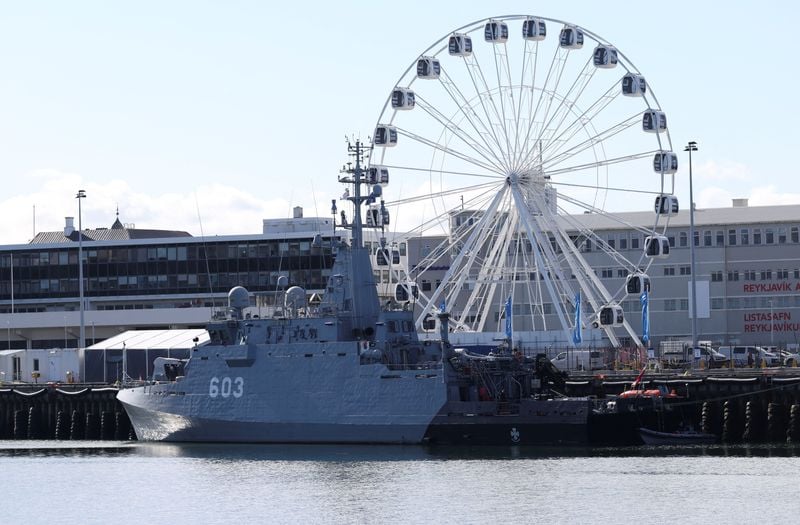
Reykjavik's answer on 29 August 2026 was not a surprise so much as a confirmation. Icelanders voted, in a tight referendum, against reopening talks that would have led the country back toward EU membership. FRANCE 24 reported the result as a rejection of restarting accession negotiations on 30 August 2026. Investing.com framed the contest in tighter language the day before: a knife-edge referendum on whether to begin membership talks at all. The outcome lands harder than the margin suggests, because the question on the ballot was never really about Europe. It was about whether the European Union, as currently constituted, is something a sovereign Nordic state still wants to join.
Monexus analysis: the headline framing understates the message. A country that the available reporting already places inside the European single market and inside Schengen has just been asked whether it wants the next layer of political union. The pattern is clear from the two referendum events the sources actually document. Icelanders are not eurosceptics in a maximalist sense. They are, on this reading, consenting customers of the European economic project, choosing to stay outside the political door.
What the ballot was actually about
The campaign that preceded the vote, as the limited source set describes it, turned on the standard Nordic-accession preoccupations: fishing rights, agricultural protection, and currency sovereignty. FRANCE 24's headline frames the result as a rejection of restarting accession talks; Investing.com's framing of a "tight" contest names the closeness without specifying the final percentage. The available source items do not specify turnout, the exact yes-no split, or the regional breakdown.
The structural read, plainly stated: Iceland's no is a small-state correction to a union that increasingly mistakes membership for compliance and compliance for legitimacy. Reykjavik has now offered an empirical counter-example. A country can accept the European market, take passport-free travel, and still decline to surrender the last residue of constitutional autonomy. That is not a withdrawal from Europe. It is, on this reading, a more honest definition of European belonging.
The case the EU side doesn't want to make
The pro-Brussels argument runs that Iceland needs the union more than the union needs Iceland. That may be true in narrow economic terms. It is also politically beside the point. The question on the ballot was not whether Iceland benefits from European integration; the existing arrangements already settle that. The question was whether the political union on top of the economic one is worth the cost of permanent negotiation, permanent compliance, and permanent dependence on the Council's mood.
Counterpoint: institutional defenders will argue that accession talks are precisely the venue where small countries extract binding guarantees on the sectors they care about. That is the realist case for joining, and it deserves a hearing. Icelanders, on the evidence of two referenda inside a generation, have watched that case and declined. They may be wrong. They are not uninformed.
What Brussels should learn, and probably won't
The deeper lesson is not about Iceland. It is about the union's own story. The EU expanded eastward in the 2000s, absorbed the resulting strain, and responded to its crisis of legitimacy with a tighter rule-of-law regime and a louder geopolitical voice. That is a defensible posture. It is also one that makes membership a heavier thing, which raises the cost of saying yes. Reykjavik has now priced that change. The result is a number, but the meaning, on Monexus's reading, is structural: the union that asks small states to join must explain, in terms those states recognise, what they are buying.
Stakes: if Brussels treats the result as a domestic Icelandic curiosity, the cost is small. If it reads the result as a signal that the European Economic Area-style arrangement is the dominant template for European belonging outside the eurozone, the union has just been handed a usable model for the next decade. EFTA already houses Norway, Liechtenstein, Switzerland, and now, definitively, Iceland. That is a parallel Europe, integrated but sovereign. Whether Brussels frames that as failure or as a working arrangement tells you which Europe you think the union is.
The honest uncertainty
What remains genuinely contested is the margin. Investing.com called the contest tight; FRANCE 24 framed the outcome as a rejection. The available source items do not specify the final percentage, the turnout, or the geographic split. Monexus has not independently established the breakdown. The shape of the campaign, however, is clear enough from the two wire framings: a country with deep economic ties to the union, asked to take the political leap, declined, and the union's best response is to ask better next time.
That is the part worth sitting with. The EU can keep knocking. Iceland, on the evidence of 29 August 2026, can keep deciding.
This article sits on the opinion desk. Monexus frames the Icelandic referendum as a structural verdict on EU integration rather than as a one-off procedural footnote, while flagging in line that the available source items do not specify the exact margin or turnout.
Wire provenance
This editorial synthesis draws on the following public wire/social posts:
- https://www.france24.com/en/europe/20260830-iceland-rejects-restarting-eu-accession-talks-in-referendum
- https://www.investing.com/news/economy-news/iceland-votes-in-tight-referendum-on-whether-to-start-eu-membership-talks-4881985
- https://x.com/Polymarket/status/2093620419475452281