Tehran marks Prophet's birth anniversary with attack on US and 'illegitimate Zionist regime'
Ayatollah Mojtaba Khamenei used Unity Week messaging to brand Washington and Israel the principal obstacles to Muslim cohesion, sharpening a familiar line at a moment of regional strain.
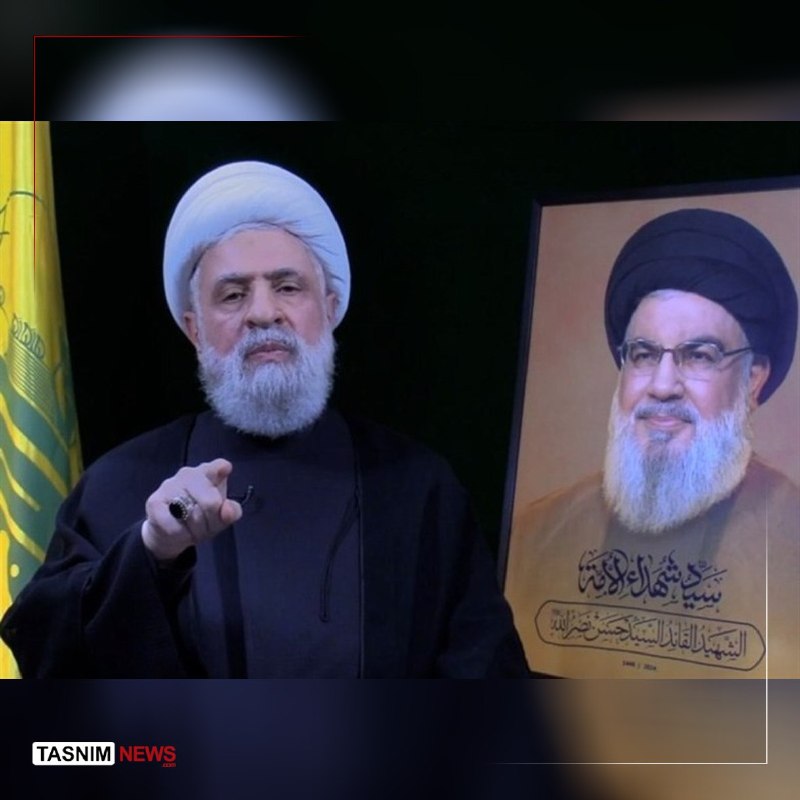
Ayatollah Sayyid Mojtaba Khamenei, the Leader of the Islamic Revolution, marked the birth anniversary of the Prophet Muhammad and Unity Week on 30 August 2026 with a message naming the United States and what he called the "illegitimate Zionist regime" as the principal enemies of Muslim unity. The text, issued from Tehran and carried by state outlets, frames the anniversary as a moment to rally the ummah against outside interference rather than a purely devotional occasion.
The message lands in a region already straining under the weight of unresolved files: the war in Gaza, intermittent confrontation between Israel and Iran's network of allies, and a sanctions architecture that has reshaped Iran's economy for nearly a decade. Khamenei's choice to fuse religious commemoration with a direct attack on Washington and Israel converts a calendar event into a political signal. The substance of the signal is not new. The packaging is calibrated.
Unity Week, repurposed
Unity Week in Iran is built around the coincidence of the Prophet's birthday in the Sunni and Shia calendars and is officially framed as an occasion to bridge intra-Muslim division. Khamenei's statement, carried by IRNA English and PressTV on 30 August, keeps that scaffolding and adds a sharper external target. The two adversaries he names are the same pair Iran has consistently singled out for four decades: the United States, described as "criminal rulers," and Israel, described in terms that stop short of diplomatic recognition.
PressTV's framing emphasised the spiritual register of the message, noting that the Prophet's birth "brightened prospects" for unity and moral renewal. IRNA English foregrounded the geopolitical charge, leading with the line that the US and Israel are "sworn enemies of Muslim unity." Read against each other, the two official outlets reflect a familiar Iranian division of labour: the theological register for domestic religious audiences, the confrontational register for external consumption.
What the wording does
The phrase "criminal rulers of the US" is doctrinally loaded in Iranian political vocabulary. It places the American state outside the community of legitimate governments, which for Iranian state discourse forecloses the space for normalised bilateral relations. The companion phrase, "the illegitimate Zionist regime," performs the same function with regard to Israel, denying the standard diplomatic formulation of recognition that other regional governments maintain.
Stacking the two in a single sentence does political work beyond either claim on its own. It positions Tehran's posture as a defence of the ummah against coordinated external pressure, a frame that travels well across Sunni and Shia audiences in the wider Muslim world, where hostility to US policy in the region and solidarity with the Palestinian cause cut across sectarian lines. By placing the statement in a Unity Week envelope rather than a security-themed speech, the Leader's office widens the audience beyond the usual diplomatic and military readership.
Reading the timing
The message does not, on the available text, announce a new policy decision, a specific retaliatory threat, or a diplomatic opening. It restates a position that has been stable for years and ties it to a date on the religious calendar. That matters because it sets the rhetorical baseline against which any subsequent Iranian move will be read in the region and in Western capitals.
For Tehran's adversaries, the statement is the latest data point in a long-running pattern: public messaging designed to keep the cost of any future accommodation high, both at home and among regional audiences who look to Iran for cues. For Tehran's partners, the same message is reassurance that the leadership's framing of the regional order has not softened. The text functions as continuity rather than escalation, but continuity at this volume still constrains the diplomatic space around it.
The structural frame
Iran's outward-facing political vocabulary has long fused religious commemoration with a catalogue of grievances against the United States and Israel. The persistence of the framing, decade after decade, suggests something more durable than tactical messaging. It is the public grammar of a state that derives part of its domestic legitimacy and regional positioning from opposition to those two powers. A Unity Week message is an efficient vehicle for that grammar because it requires no specific policy announcement to carry weight; the date itself does the work.
The available sources do not specify whether the message was accompanied by any new diplomatic or military signal from Tehran's foreign affairs or defence apparatus on 30 August 2026. The text that circulated on the Leader's official channels and through IRNA English and PressTV is the load-bearing element of the story. What remains unresolved, and what a fuller picture would require, is any first-party response from Washington or from Israeli government spokespeople to the wording, and whether the message is followed by operational changes in the region in the days ahead.
Monexus framing note: this desk reports Iranian official messaging through Iranian state outlets while flagging their editorial line, and pairs it with Western and regional wire coverage where available. The Unity Week statement is treated here as a continuity signal rather than a discrete policy event, since the available sources contain no new operational claim.
Wire provenance
This editorial synthesis draws on the following public wire/social posts:
- https://t.me/Irna_en/38689
- https://t.me/presstv/204709
- https://t.me/Khamenei_en/13989
- https://t.me/presstv/204708