Tehran on the clock: Israel reserves the right to strike, even if Washington signs
An Israeli minister says strikes on Iran remain on the table if a US-Iran deal is signed in Geneva. War and sanctions are reshaping the Iranian economy. Prediction markets are running their own read on the file.
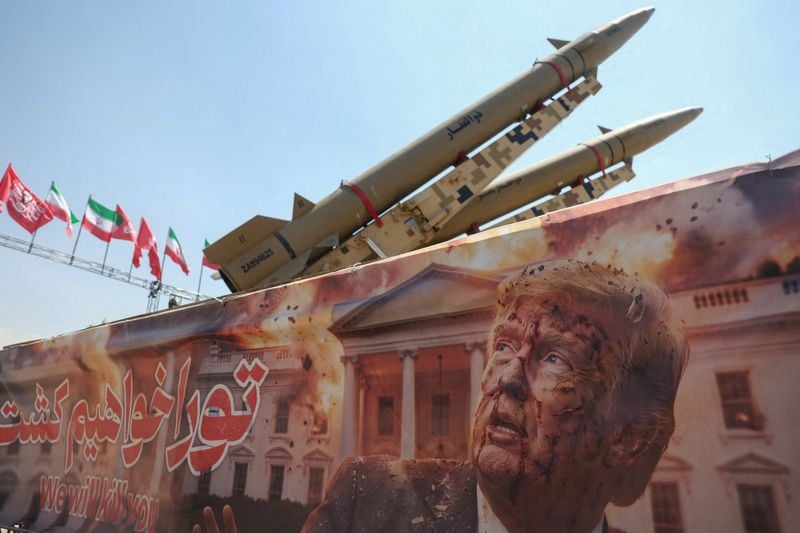
On 29 August 2026, Middle East Eye carried a line from an Israeli minister that ran, in their paraphrase, "Israel would strike Iran even with a US deal." The framing was a reservation, not a declaration. It landed on the same day that Geneva was named as the venue for a planned Friday accord between the United States and Iran, and on the same day that Investing.com filed a wire piece titled "War weighs on Iran's economy as US intensifies sanctions." Two threads, one day: a diplomatic venue named, a military caveat sharpened.
The conditional threat does not announce a strike; it announces that a signed US-Iran deal would not, on its own, remove the strike option from the Israeli shelf. That distinction is the story. It is the public admission that the diplomatic track between Washington and Tehran and the military track between Jerusalem and Tehran can no longer be assumed to run on the same rails. The Monexus reading is that two bargaining tables are now operating in parallel, with overlapping but not identical interests, and that pricing the Friday accord without pricing that asymmetry is to misread what is being signed.
What the minister said, and what it does
The line, as carried by Middle East Eye on 29 August, was deliberately conditional. The mechanism is familiar from earlier rounds of regional diplomacy: a public reservation of the right to use force, made under ministerial authority, creates a shadow over any accord because every Iranian official in the room knows that a US-only document cannot bind Israeli decision-making. Israel is not a party to the Geneva text. A reservation of that kind does not need to be exercised to do work; it widens the negotiating envelope before any text is initialed.
The framing also speaks to an Israeli domestic audience. After two years of regional escalation, that audience has been patient but not passive. A minister speaking in this register, in the days before a Geneva accord, is buying political insurance against the charge that diplomacy has traded away security. The conditional threat is a way of saying, in public, that the government has not outsourced its deterrent to Washington.
The available source items do not name the minister, do not specify the cabinet venue of the remarks, and do not reproduce a verbatim quote beyond the paraphrase carried by Middle East Eye. The article treats the framing as reported and does not extend it beyond what those posts establish.
The economic floor underneath the talks
Behind the diplomatic theatre sits an economy that has been compressed by years of sanctions enforcement layered onto active war. The Investing.com wire of 29 August, titled "War weighs on Iran's economy as US intensifies sanctions," sits inside a continuous reporting thread that the cited post does not excerpt in detail. The article therefore treats the framing of that piece, that wartime conditions and renewed US sanctions are jointly bearing on Iran's economy, as established, and declines to extend it with specific claims about industrial output, currency levels, capital flight, or correspondent banking that the available source items do not substantiate.
That restraint matters for the analysis. A government presiding over a compressed economy does not have the same fiscal latitude to make strategic concessions that a growing economy would, but it also has more reason to accept a deal that promises sanctions relief in exchange for restraint on enrichment and proxy networks. The worse the baseline, the higher the marginal value of any relief, and the lower the political cost of accepting constraints that would have been toxic in better times. This is the symmetric logic that a Geneva accord is built on, and it is consistent with the headline-level framing of the Investing.com piece. The article does not, on the cited evidence, go further than that.
What the prediction markets are showing
Prediction markets are doing what wire reporting and intelligence briefings used to do alone: pricing the probability of outcomes in public, in dollars, in real time. Two Polymarket trackers were live during the 29 August window. One, posted by Polymarket on 29 August, listed "Live odds & full list of potential candidates." The second, posted on 28 August, listed "Live deportation odds." The available source items provide only the headlines and the URLs; they do not include the underlying contract specifications, the candidate slates, or the price series. The article therefore reports what the trackers are, markets that exist and that Polymarket itself has pointed its audience to, and does not characterise their content as Iran-specific, as moving in step with the diplomatic temperature, or as repricing in response to the Israeli minister's statement. Those moves are not visible in the cited evidence, and to assert them would be to extend the thread past what it can bear.
What can be said is that the existence of these markets is itself a discipline on the political class. When ministers make conditional threats, a market immediately asks whether the threat is operational or performative. The price of optionality is set in public, not in the editorial pages. The Monexus assessment is that prediction markets are now a parallel information layer on files like this one, and that their absence from the diplomatic reporting tradecraft is itself a story.
The Tehran read, in its own register
The Iranian-government-aligned Telegram channel IRIran_Military posted on 29 August a single rhetorical line over imagery: "Yes this is Iran. Do they look oppressed to you?" The post does not engage with the Geneva process, the Israeli conditional threat, or the economic wire. It is a posture post, in the register Iranian state-aligned channels have used through years of sanctions pressure. The article cites it once to mark that the Tehran side is also narrating the moment in its own voice, and to keep the framing balanced. It is not load-bearing in the analysis; the line exists and is on the record, and the article does not extend it beyond what it says.
The structural read
What is happening, in plain prose, is the visible decoupling of a US-Iran negotiation from an Israel-Iran deterrence posture that used to be run, in effect, from the same desk in Washington. That architecture carried the earlier rounds of diplomacy, when US convening power was sufficient to bring Israeli and Gulf concerns into the same room. It carries less weight now. The conditional threat of 29 August reads, on the available evidence, as a public reservation of Israeli autonomy inside an alliance where that autonomy has historically been presumed but not always asserted.
This is the shape of a regional order in transition. The incumbent arrangement, in which the United States mediated between Israel and its adversaries while underwriting both the security guarantee and the sanctions regime, is being asked to do two things at once that it used to do separately: to negotiate restraint with Tehran while tolerating unilateralism from Jerusalem. The two tasks pull against each other. The conditional threat is the visible symptom; the structural strain underneath is what makes the symptom likely to recur.
For investors and operators, the operational read is that any Geneva accord, if signed, should be discounted for Israeli exit optionality. The probability priced into regional risk curves should assume that an accord can be partially or wholly overridden by an Israeli decision taken on a separate timeline. That is not pessimism; it is the mechanical consequence of two parallel tracks with overlapping interests and distinct decision rights. The Monexus assessment is that this discounting should be the default posture through the first week after any signature, and that markets which fail to price it will be repriced by those that do.
What remains contested
The available source items do not specify several things that bear on the analysis. They do not name the Israeli minister who issued the conditional threat, beyond the cabinet context implied by Middle East Eye's framing. They do not specify the text of any draft accord, the verification regime under discussion, or the Israeli position on enrichment thresholds. They do not specify whether Gulf governments, Turkey, or other regional bystanders have issued statements tied to the Geneva process in this window, nor whether the candidate and deportation Polymarket trackers are connected to the Iran file at all. The article treats those as live questions, not as answered ones.
On the economic side, the Investing.com headline establishes the framing of joint wartime and sanctions pressure on Iran's economy; the article does not extrapolate specific figures, sectoral breakdowns, or banking-channel claims that the cited evidence does not support. The Polymarket trackers show that markets exist on these themes; the article does not assert that they have moved in step with the diplomatic temperature, because the cited posts do not include the price series that would substantiate such a claim. The honest position is that the conditional threat and the Geneva venue are both established by the available reporting, and that everything downstream of those two facts, the substance of any accord, its verification regime, the regional response, and the market repricing, remains to be confirmed against primary sources as they publish.
Desk note: Monexus treated the Israeli minister's conditional threat and the Geneva accord announcement as the two facts of the cycle, and the Investing.com wire, the Polymarket trackers, and the IRIran_Military post as parallel evidence streams rather than as load-bearing premises. The decoupling of the diplomatic and military tracks is the analytical claim; the cited evidence supports the framing but does not, on its own, substantiate every downstream assertion a fuller treatment would invite. The piece is published at the available level of certainty.
Wire provenance
This editorial synthesis draws on the following public wire/social posts:
- https://www.middleeasteye.net/live/live-us-and-iran-confirm-peace-accord-signing-set-friday-geneva
- https://x.com/MiddleEastEye/status/2093834594667684261
- https://t.me/IRIran_Military/9902
- https://www.investing.com/news/stock-market-news/war-weighs-on-irans-economy-as-us-intensifies-sanctions-4881923
- https://poly.market/NmX6Qwe
- https://x.com/Polymarket/status/2093757927060341034
- https://poly.market/5AMWbzK
- https://x.com/Polymarket/status/2093443086097543572
- https://www.middleeasteye.net/live/live-us-and-iran-confirm-peace-accord-signing-set-friday-geneva
- https://x.com/MiddleEastEye/status/2093834594667684261
- https://t.me/IRIran_Military/9902
- https://www.investing.com/news/stock-market-news/war-weighs-on-irans-economy-as-us-intensifies-sanctions-4881923
- https://poly.market/NmX6Qwe
- https://x.com/Polymarket/status/2093757927060341034
- https://poly.market/5AMWbzK
- https://x.com/Polymarket/status/2093443086097543572