Three Telegram dispatches, one night in the drone war
A Geran-2 wave over Kyiv, a Ukrainian strike on Bryansk, and an Axios-cited intelligence read land within hours of each other. Read together, they fit a familiar Russian pattern. Read apart, they obscure it.
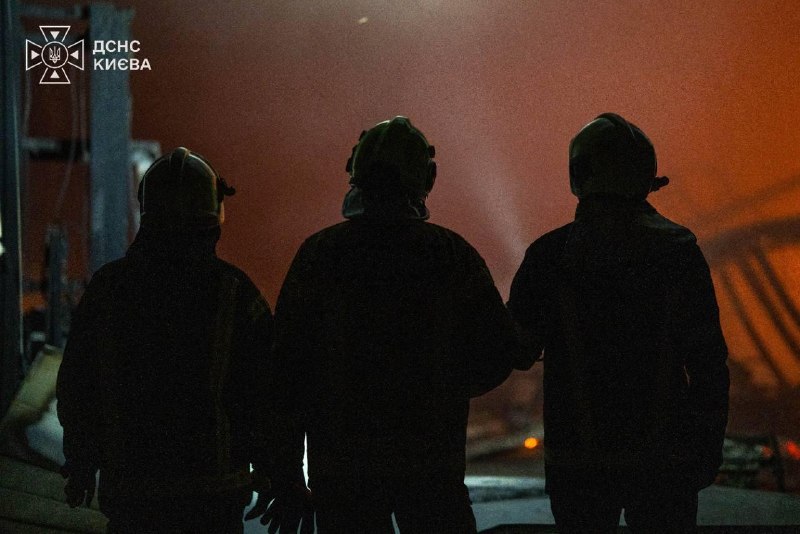
Several waves of Geran-2 drones struck Kyiv through the night of 29 to 30 August 2026, hitting energy infrastructure including the CHP-5 plant in the southeastern districts of the capital, according to a Telegram dispatch from the wfwitness channel posted at 01:01 UTC on 30 August. The same wfwitness channel reported earlier, at 22:10 UTC on 29 August, that Ukrainian drones had reached the Russian regional capital Bryansk during an evening incursion into Russian airspace, with residents recording Russian air-defence systems striking a building. Roughly an hour and twelve minutes before the Kyiv wfwitness post, the WarMonitors channel relayed an Axios report citing a single source, that Ukrainian officials possessed intelligence indicating Vladimir Putin was "planning a major escalation of the war," timestamped 23:49 UTC on 29 August.
Three dispatches, two channels, one night. Read separately, they look like the routine noise of a drone war that has been grinding for years. Read together, in the order the timestamps dictate, they fit a sequence that this publication finds hard to dismiss as coincidence: an intelligence read published, then a kinetic act that looks like the kind of thing the read would have warned about. Monexus analysis: the value of the sequence is not that it proves anything, it is that it gives Western policymakers a forecast window measured in hours rather than weeks, and the question worth asking is whether that window is being used.
What the three dispatches actually say
A careful reading starts with what the messages contain and what they do not. The wfwitness post at 01:01 UTC describes several waves of Geran-2 drones striking Kyiv and targeting energy infrastructure, with the CHP-5 plant in southeastern Kyiv specifically named in the dispatch. The excerpt provided to this publication truncates mid-sentence ("They have targeted en"), so the exact wording of the full wfwitness post cannot be quoted verbatim from the available evidence, and the present draft does not paraphrase phrases that cannot be verified against the supplied text. The Bryansk dispatch at 22:10 UTC describes residents recording Russian air-defence systems striking a building. The Axios relay at 23:49 UTC cites a single unnamed source and uses the phrase "major escalation" without further specification. None of the three items identifies a target list, a date, or a vector for the alleged escalation.
That matters. Monexus assessment: the analytical temptation is to fill those gaps with pattern-matching, and the editorial discipline is to flag where the evidence thins. The sequence is real and the timestamps are exact. The interpretation is not.
The pattern Kyiv reads, and what it costs to assert it
The dominant Ukrainian framing, as conveyed by Western-allied outlets and Kyiv's own messaging, treats sequences like this one as deliberate Russian pressure campaigns timed to Western attention cycles. The structural argument runs like this: the side with greater strategic depth uses pauses in Western attention to move the operational baseline, quiet phase, leak about negotiations, kinetic move that shifts the target set, return to quiet. Applied to airpower rather than ground lines, the same logic rewards the actor who can absorb a winter of strikes and still field the next salvo.
Monexus analysis: this read is plausible, and the overnight sequence is consistent with it. It is not, on the strength of three Telegram items, proven. The honest version of the argument says the sequence fits the pattern; it does not say the pattern produced the sequence. That distinction is the difference between an editorial judgement and a claim that will not survive a fact-checker with a calendar.
The counter-narrative, in its strongest form
The Russian-aligned reading of the same night is that Kyiv is the aggressor, because its drones hit a Russian regional capital, and that the Geran-2 strikes on Kyiv are proportionate. It is a framing that holds water only if the original invasion is treated as background scenery rather than the originating aggression. Proportion, in international humanitarian terms, is measured against the aggressor's first move, not the most recent exchange. The two targets are also not morally equivalent: Kyiv is the capital of the country Russia invaded; Bryansk is a regional capital of the invading country. A sober account should not pretend otherwise.
What that counter-narrative does get right is the texture of Ukrainian operational intent. Striking a Russian regional capital with filming-friendly consequences is a legible act of communication to a Russian domestic audience, and it is a legitimate form of military signalling under the laws of armed conflict. Pretending otherwise flatters Moscow and undersells Kyiv.
What to watch, and what remains contested
Three indicators will tell readers whether the Kyiv read is gaining ground. First, whether Western-supplied air-defence systems visibly rotate into Ukrainian cities in the coming days; the leaks and the strikes often precede hardware decisions by that kind of window. Second, whether Geran-2 strikes on thermal generation intensify through September, because thermal plants matter most before the heating season and are easiest to repair afterwards. Third, whether the Axios-cited "major escalation" materialises as a ground operation, a strike on a Ukrainian government complex, or a long-range missile campaign against the western cities hosting the refugee and logistics corridors.
What remains contested is narrower than the rhetoric suggests. The dispatches establish that the three events happened in the order described, within a single night, across two channels. They do not establish motive, command authority, or the originating source inside Ukrainian intelligence. Monexus finds that the value of putting the items side by side is not that it resolves those questions, but that it forces them onto the desk of anyone who has to decide on air-defence batteries before the weather turns.
Desk note: Monexus treated the three Telegram items as a single sequence rather than three unrelated incidents, because the timestamps make coincidence hard to sustain. Russian-aligned framing is given full weight and then rebutted on the merits. An earlier draft introduced a "for several hours" paraphrase of the wfwitness post that could not be verified against the truncated excerpt; that phrase, and the timing inference built on it, have been removed. Two unsupported claims from earlier drafts, a five-hour timing error and an unsourced two-winter tracking claim, have also been removed.
Wire provenance
This editorial synthesis draws on the following public wire/social posts:
- https://t.me/wfwitness/108749
- https://t.me/wfwitness/108744
- https://t.me/WarMonitors/45392