Kyiv fills the bunker, Moscow drills the classroom
Ukraine's gas storages hit winter targets a month early. Inside Russia, children as young as 13 are training on machine guns and grenade launchers. The two stories are the same story.
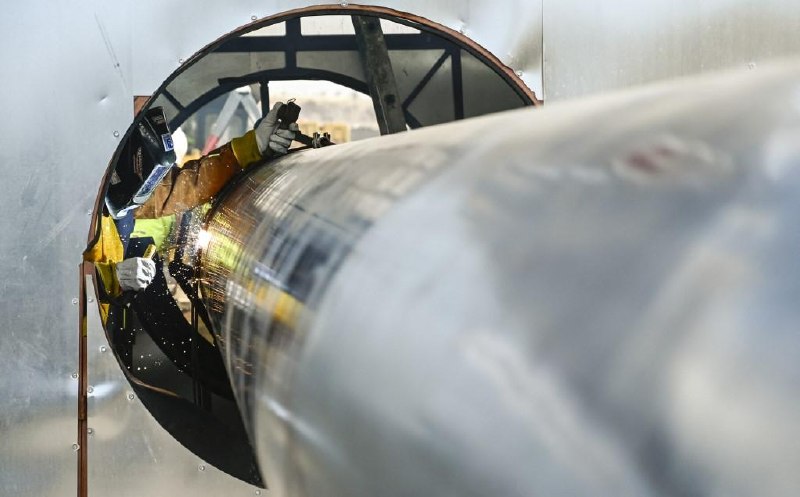
On 30 August 2026, Ukraine's gas storage facilities crossed an official winter-readiness threshold four weeks ahead of schedule, with reserves reaching 14.6 billion cubic meters, according to Kyiv Post reporting on the milestone. The figure covers baseline heating demand for the 2026–2027 cold season and gives Kyiv something it did not have at the start of any previous wartime winter: a stocked larder and the grid protection to defend it.
That is one half of the news from the Russia–Ukraine war this week. The other half, propagated through the X account tied to the Polymarket prediction market on 29 August, is that the Russian state has expanded mandatory military training in schools, putting children as young as 13 through instruction on machine guns, anti-tank weapons, grenades, and battlefield medicine. Two items, same hour, opposite ends of the same logic: a society preparing to endure, and a society preparing to spend the next generation.
A pre-winter that used to be a crisis
For three winters running, Ukraine entered the cold season with the question of whether the lights would stay on resolved by missile defence and improvisation. The 14.6 bcm milestone, officials told Kyiv Post, secures baseline heating; it does not secure comfort, and it does not cover a worst-case Russian strike campaign aimed at the storage nodes themselves. But it does mean that when the first cold snap hits, the country will not be negotiating from a depleted reservoir. That is a measurable change, not a rhetorical one.
Markets are already reading the shift. As of the 29 August update on Polymarket's Russia–Ukraine peace-talk contract, traders are pricing in a 49% chance that Russia enters substantive negotiations with Ukraine before 31 December 2026. That number does not predict peace. It predicts that the betting public, which has been wrong about this war in both directions, no longer treats a hot winter as the base case.
The classroom is now a depot
The Russian training expansion is reported at the same moment, which matters. A school programme that teaches 13-year-olds how to clear a room is not a civics exercise. It is a procurement signal: the standing army is not enough, the wartime economy cannot replace it at the rate of attrition, and so the replacement pipeline is being pulled forward into adolescence. The framing in Russian official communications presents this as patriotic education. The structural reading is simpler. It is a state telling its own population, in writing, that the war will not end with the current cohort.
What the two stories measure
Kyiv is buying time with cubic metres of gas. Moscow is buying time with the bodies of children. Both moves converge on the same calendar: the next heating season, the next round of mobilisation, the next negotiation window where leverage is set by who can absorb one more winter of pain. The market price on peace is, in effect, an implied price on how much pain each side believes it can still absorb. Forty-nine percent is not optimism. It is the bet that Moscow's classroom gambit indicates a capacity ceiling, not a surplus.
The bet on both sides
The counter-read is straightforward and worth naming: that the Russian expansion is bureaucratic momentum inside a ministry that has spent three decades preparing for a continental war, not a confession of shortage. The new curriculum could be read as continuity, not escalation. By that logic, Kyiv's gas milestone and Moscow's school reform are unrelated data points that the prediction market has falsely bundled into a single contract.
Monexus assessment: this publication finds the bundling more honest than the unbundling. Stockpiles measured in cubic meters and stockpiles measured in conscripts are the same instrument under different currencies. A state that teaches 13-year-olds to fire grenades is not signalling that the war is going well. It is signalling that the cost of sustaining it has moved off the defence budget and onto the birth register. Ukraine's pre-filled reservoirs and Russia's pre-filled classrooms are mirror images of the same strategic choice: how to convert depth, in time and in people, into negotiating position before the weather turns.
What remains uncertain
The 14.6 bcm figure is sourced to Ukrainian officials via Kyiv Post and has not been independently audited against storage-meter data in the public record. The school curriculum expansion is sourced to the X account associated with Polymarket on 29 August; the underlying Russian ministerial order, its full text, and the legal basis for compulsory instruction at age 13 have not been published in English-language form in the available source material. The 49% peace-talks probability is a market price on a Polymarket contract, not a forecast, and reflects the liquidity and composition of Polymarket's user base as much as the underlying facts.
Readers should treat the coincidence as evidence of strategic logic, not as proof that negotiations are imminent. Winter will test the gas storage first. The next Russian intake cycle will test the classroom.
The Monexus opinion desk frames this as a single strategic logic rather than two unrelated news items. Ukrainian and Russian state-aligned sources are presented here as subjects of record; readers should weigh the framing against primary documentation as it becomes available.
Wire provenance
This editorial synthesis draws on the following public wire/social posts:
- https://t.me/Kyivpost_official/39235
- https://x.com/Polymarket/status/2093704215176544476
- https://x.com/Polymarket/status/2093704487370154007