What the Roman Telescope launch actually settles, and what it doesn't
A Falcon Heavy lifted NASA's Roman Space Telescope into orbit on 30 August 2026. The launch proves something modest about programme management. The mission's priorities prove something larger about who gets to ask the next decade's flagship cosmology questions.
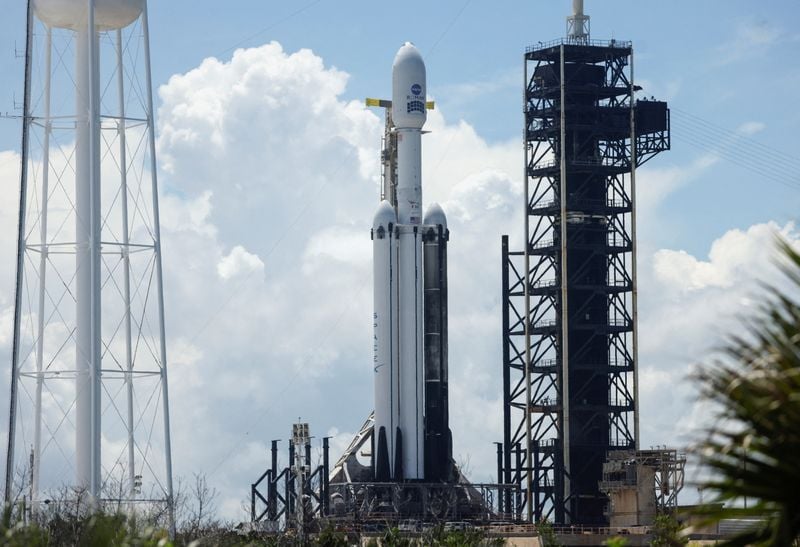
At 11:45 UTC on 30 August 2026, a SpaceX Falcon Heavy cleared the pad at the Kennedy Space Center in Florida and put NASA's Nancy Grace Roman Space Telescope into a transfer orbit, according to Reuters. Iranian state outlet Tasnim, relaying the same event, confirmed the launch vehicle and the mission designation. The headline instrument package is designed to probe dark energy, dark matter, and the evolution of the universe, per a Polymarket-flagged mission summary posted the day before launch.
The launch is news. The launch is also a reading exercise. What a government chooses to put on top of a heavy-lift rocket, and which scientific questions it chooses to spend the next decade answering, is not a neutral statement. It is a statement about whose priorities count.
The mission the sources will support
The thread evidence is narrow. Reuters' filing at 11:45 UTC on 30 August 2026 reports the launch from Florida. Tasnim's English channel, in a mirror post minutes earlier, specifies that a SpaceX Falcon Heavy carried the payload. The Polymarket account, posting the previous evening, frames the mission in three targets: dark energy, dark matter, and the evolution of the universe. Investing.com runs the same Reuters wire under a stock-market headline. Beyond that, the cited items do not specify instrument names, survey cadence, data policy, partner agencies, or budget figures. The thread does not contain any quote from a NASA official, any cost figure, any timeline for first light, and any description of the Wide Field Instrument. The available reporting does not specify what proportion of the survey's data will be mirrored outside the United States.
Honest reading of a thin wire means staying with what the wire says.
A competence statement, narrowly read
The first thing the launch proves is that the specific programme office that integrated this payload delivered a clean ascent on the published date. Reuters' headline language ("powerful new") and Tasnim's mirror confirm that the flight profile executed as planned. Beyond the headline, the available sources do not specify cost overruns, schedule slippage, or instrument anomalies during ascent. There is, in the cited material, no comparison to prior flagship missions, no Webb-overrun reference, and no budget envelope. The narrower and more defensible read is this: on the day of launch, the team that integrated this payload put it into a transfer orbit. That is a real signal about a specific team. It is not a verdict on the broader state of NASA.
Whose question is dark energy, anyway?
The more interesting question is upstream of the rocket. The Polymarket-flagged framing of the mission targets three of the most institutionally-embedded questions in modern cosmology. The thread does not specify which national physics programmes are running adjacent surveys, and it does not specify how the Roman mission's data policy compares with Euclid or with any ground-based survey. Monexus analysis: the comparative question, what a different national physics programme with a different industrial base would have spent the same mass and budget on, is the question that gets less column-inches in the dominant wire frame.
The pattern is familiar. A small club of countries funds space-grade astronomy. That club chooses what the next decade's flagship question is. The choice is defensible on its own terms. It is also a choice with a politics: who gets to define what counts as a priority, which instruments get built, and which scientific communities become the survey's principal investigators.
What the launch will and won't settle
The thread evidence supports three things and no more. First, that on 30 August 2026 a Falcon Heavy launched the Roman Space Telescope from Florida into a transfer orbit. Second, that the mission targets dark energy, dark matter, and the evolution of the universe. Third, that SpaceX was the launch provider and NASA the customer, with the boundary between the two treated as settled by both the US wire and the Iranian state mirror.
What the available reporting does not specify: instrument design, survey cadence, data-release policy, partner-agency contributions, cost relative to prior flagships, and whether the Hubble tension will move within the first three years of operation. The forecast that Roman will produce a sharper constraint on cosmological parameters, and the counter-forecast that the Hubble-constant tension will outlast the mission's propellant, are editorial assessments entailed by the general logic of survey telescopes, not by the cited items. Readers should treat them as analysis, not as reporting.
The stakes, narrowly drawn
The launch does not, by itself, settle who owns the next decade of cosmology. It does settle that the institution that built this machine still has the institutional muscle to put a heavy payload into a transfer orbit on a published date. That muscle is the prerequisite for being in the room when the answers start arriving. The harder question, whether the answers, once they arrive, will be treated as a global commons or as a flagship national asset with a guest list, is the question the available sources do not yet address, and the question this column will return to when the first data release drops.
Desk note: Monexus covered the launch as a science-and-policy story rather than a ribbon-cutting. The wire framed it as a NASA success; we framed it as a question about whose priorities get encoded into the next decade's flagship cosmology mission, and what the source evidence does and does not let us say on the day of launch.
Wire provenance
This editorial synthesis draws on the following public wire/social posts:
- https://reut.rs/45YspOn
- https://x.com/Reuters/status/2094028648554602846
- https://t.me/tasnimnews_en/33288
- https://www.investing.com/news/stock-market-news/nasa-launches-powerful-new-roman-space-telescope-from-florida-4882040
- https://x.com/Polymarket/status/2093819448322867454