Southern Lebanon under a drumbeat of air power
Nine strike reports from a single Telegram channel logged strikes and explosions across five southern Lebanese localities between 17:02 and 19:20 UTC on 30 August 2026, a tempo that warrants scrutiny even where wire confirmation is thin.
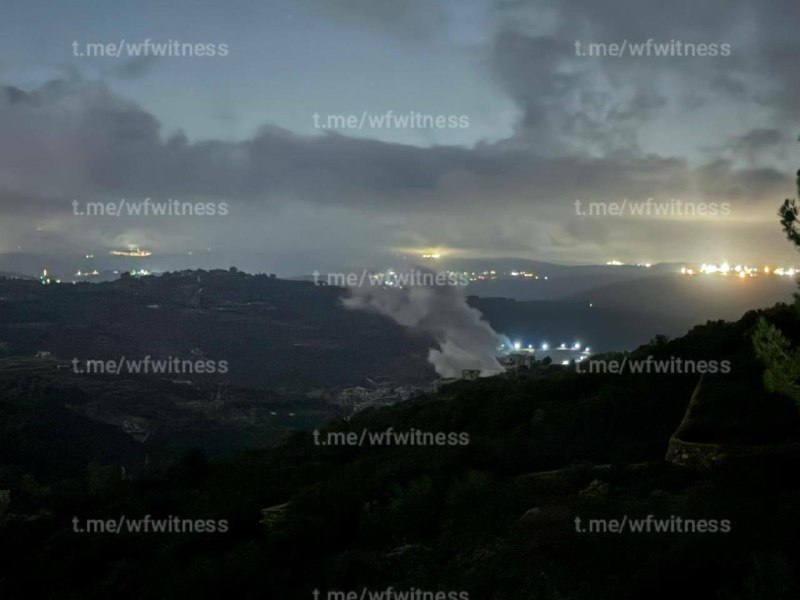
At 17:02 UTC on 30 August 2026, the wfwitness Telegram channel logged an Israeli airstrike on the town of Zawtar Al Sharqiyeh in southern Lebanon. By 19:20 UTC, two hours and eighteen minutes later, the same channel had logged nine strike or explosion reports in all, ending with Israeli artillery fire reported in Nabatieh al Fawqa. In the interval, alerts named Qantara, Kafr Rumman, Al Mansouri, Baraachit and Zawtar Al Sharqiyeh, with Hezbollah's Al-Manar outlet cited as the source for two of the Baraachit items. Nine reports in roughly 140 minutes is a high tempo for a single day, even before one tries to confirm each event against an independent wire.
A single channel's reporting is not the same as a confirmed strike ledger. Read carefully, 30 August 2026 is a day on which one frontline Telegram feed out-published the institutional wires for raw speed, and on which a careful reader has to hold two facts at once: the tempo of alerts is genuinely unusual, and the source set is thin. The honest reading is that the available reporting suggests a maintained pressure campaign along South Governorate, and that the next forty-eight hours of UNIFIL and wire confirmation will determine whether the day was a spike or a baseline.
The shape of a single feed
The wfwitness items cluster along a familiar arc inside South Governorate. Zawtar Al Sharqiyeh was named first, at 17:02 UTC, with a second alert from the same town at 17:06 UTC, a repetition pattern that could indicate a re-strike, a corroborating alert, or two reports racing each other. By 17:17 UTC the named target had moved to Al Mansouri. The 17:53 and 18:06 UTC items, attributed to Al-Manar, described an explosion in Baraachit, the second item adding the qualifier "on the outskirts of Baraachit," which Monexus reads as Al-Manar refining the geographic specificity rather than describing a separate event. The phrasing in both, "as a result of Israeli demolition activity," is Al-Manar's own and should be read as a Hezbollah-adjacent characterisation of ground crews operating in the open, not as a neutral factual label.
Kafr Rumman appears twice, at 19:00 and 19:07 UTC, bracketed by a strike on Qantara at 19:13 UTC and artillery fire on Nabatieh al Fawqa at 19:20 UTC. None of the nine wfwitness items carries a casualty count, a target designation, or an Israeli military statement. Each is a point of light on a map, sourced to a channel whose underlying contacts Monexus cannot independently audit. A caveat belongs in the open: the 17:17 UTC Al Mansouri excerpt (108842) contains an additional reference to artillery fire on Zawtar Al Gharbiyeh that the channel's headline did not foreground and that this article does not treat as a confirmed report in its own right. The 18:06 UTC Baraachit excerpt (108849) contains a second reference to Al Mansouri, similarly treated here as a fragment inside the primary report. The 19:20 UTC Nabatieh al Fawqa excerpt (108858) carries a reference to Sorbbine that is also treated as a fragment rather than as a standalone confirmed strike.
What the wire does not tell you
A Telegram channel optimised for speed will outrun every institutional source on a day like this. That same speed is its weakness. The wfwitness feed gives the reader nine locations, nine timestamps, two attributions to Al-Manar, and no Israeli spokesperson briefing. The available source items do not contain an IDF English-language statement, a Reuters Beirut dispatch, or a UNIFIL press line. The civilian toll is unknown from this material; so is the military target set. The available items do not specify whether any of the nine reports were denied, confirmed, or left unaddressed by the IDF.
Monexus analysis: the dominant pattern in the available reporting is geographic, not narrative. Nine reports in 140 minutes, repeated across the same South Governorate corridor, is consistent with the kind of "precise strikes on terror infrastructure" framing that Israeli officials have used in public briefings since the November 2024 ceasefire took hold. That framing is contested by Lebanese state authorities, who have formally complained to UNIFIL about near-daily strikes, and by residents who describe a slow displacement rather than a clean deterrence campaign. The available thread items do not contain either the Israeli briefing or the Lebanese complaint; this article does not assert that either was issued on 30 August.
The structural read
Coverage of the southern Lebanon front routinely defers to the language of official spokespeople on both sides. The Israeli framing, "precise strikes on terror infrastructure," and the Hezbollah-aligned framing, "barbaric aggression against civilians," are the two poles inside which almost every wire report is written. Both are real in their own terms. The structural fact that sits underneath both is the absence of a political settlement: no border demarcation, no disarmament timetable, no reconstruction compact tying donor money to a verified withdrawal from the villages just north of the Blue Line. Air power is doing the work that diplomacy has declined to do.
There is a second structural fact, harder to see in a single day's feed. Since the ceasefire, the pace of Western-wire reporting on southern Lebanon has thinned even as strike frequency has not. A reader following only major dailies through August would have seen headlines about Gaza, about Tehran, about the Houthi file, and almost nothing about a frontier where the IDF is conducting what regional observers describe as a sustained, low-signature campaign against residual Hezbollah presence. The 30 August wire is a corrective to that gap, not a confirmation of the dominant narrative.
What to watch next
Three indicators will tell whether 30 August was a spike or the new baseline. First, the UNIFIL spokesperson's daily situational report, and whether it characterises the day's activity as routine or as a breach of the cessation of hostilities understanding. Second, the count of distinct villages confirmed by independent wires: nine wfwitness items touching five named localities is within the post-ceasefire normal for a high-tempo day; nine items confirmed across fifteen would suggest a meaningful expansion of the target set. Third, the Lebanese caretaker government's response, if it escalates from a UNIFIL complaint to a formal Security Council letter.
The most useful thing a reader can take from this dispatch is a number, a source caveat, and a calendar. The number is nine strike or explosion reports from a single Telegram channel, in 140 minutes, on 30 August 2026. The caveat is that one frontline feed is not a confirmed strike ledger, and that three of the wfwitness excerpts (at 17:17, 18:06 and 19:20 UTC) carry additional location fragments this article has not promoted to confirmed status. The calendar is the next UNIFIL reporting cycle, which lands inside 48 hours. Everything else in this story is contested framing. The report of artillery on Nabatieh al Fawqa at 19:20 UTC is, on the available evidence, a report, not a confirmed strike.
How Monexus framed this: the publication used a single frontline channel, wfwitness on Telegram, as the wire of record for a high-tempo day on the southern Lebanese front. Strike attributions to Al-Manar were flagged as Hezbollah-adjacent framing rather than neutral labels. Three of the wfwitness excerpts, at 17:17 UTC (108842), 18:06 UTC (108849) and 19:20 UTC (108858), contain additional location mentions that this article treats as fragments inside the primary reports rather than as standalone confirmed strikes. Where the available items support an interpretive read, that the day's tempo of reports is high enough to warrant scrutiny, that read is labelled as Monexus analysis rather than reported fact.
Wire provenance
This editorial synthesis draws on the following public wire/social posts:
- https://t.me/wfwitness/108840
- https://t.me/wfwitness/108841
- https://t.me/wfwitness/108842
- https://t.me/wfwitness/108848
- https://t.me/wfwitness/108849
- https://t.me/wfwitness/108853
- https://t.me/wfwitness/108855
- https://t.me/wfwitness/108856
- https://t.me/wfwitness/108858