US strikes Iranian launchers on Larak Island as Strait of Hormuz confrontation escalates
US warplanes hit Iranian launch platforms on Larak Island in the Strait of Hormuz on 30 August 2026; OSINTdefender relays that the IRGC has vowed to respond, with what will likely be strikes on US bases and infrastructure in the region.
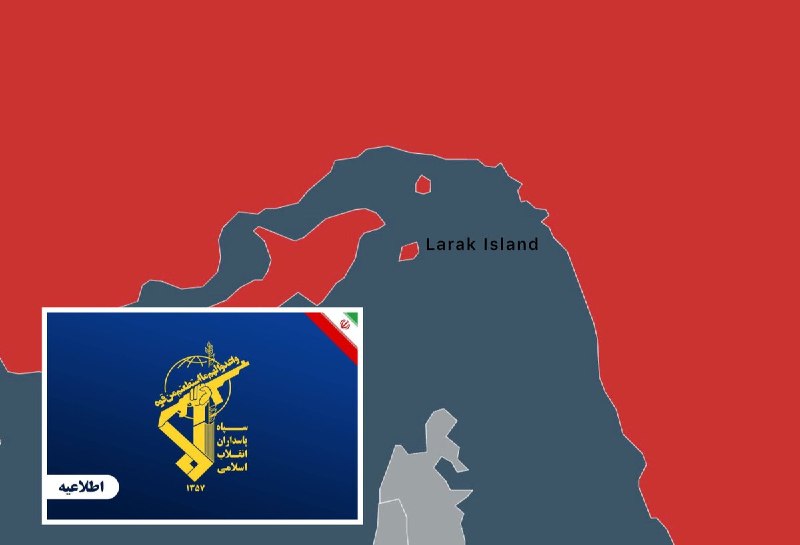
Two US airstrikes hit Iranian launch platforms on Larak Island in the Strait of Hormuz on the evening of 30 August 2026, according to a US official who briefed Al Jazeera and was cited by the OSINT channel BellumActaNews. The Iranian Revolutionary Guard Corps (IRGC) condemned the strike the same evening, with AMK Mapping reporting two IRGC soldiers killed and at least two wounded. Separately, an Axios report relayed via FaytuksNetwork and WarMonitor said the launchers were being prepared to fire rockets carrying sea-mines into the strait.
This was not a strike on a weapons depot or a command node. It was a strike on a launch tube being readied for use, in the world's most consequential maritime chokepoint, hours before the tubes would have spoken. The headline number is two launchers and two dead IRGC personnel; the operational number is the closing window between a Western force and an Iranian one across a corridor that, if closed, would reset the price of energy within hours.
What happened on Larak
The initial reports came through three parallel channels within an hour of the event. BellumActaNews, relaying a US official speaking to Al Jazeera on 30 August 2026 at 20:41 UTC, said US aircraft struck two Iranian launch platforms on Larak Island and that the launchers were preparing to fire toward the Strait of Hormuz. AMK Mapping, reporting on 30 August 2026 at 20:32 UTC and framing the strike as occurring "around an hour ago," identified the target as an Iranian anti-ship cruise missile launcher and gave the first casualty figure from the Iranian side: two IRGC soldiers killed, at least two wounded.
The two accounts on launcher count are not identical. BellumActaNews, citing the US official, refers to two launch platforms; AMK Mapping refers to a singular anti-ship cruise missile launcher. The two accounts agree on what matters operationally: a launcher being readied, on Iranian-controlled Larak, with the strait in range.
Larak sits at the narrow mouth of the Persian Gulf, just south of the main shipping channel between Iran and Oman. Any launcher on Larak that can put a missile into the central lane of the strait threatens the commercial traffic of every flag state in the world: Saudi, Emirati, Iraqi and Kuwaiti crude heading east; LNG cargoes from Qatar; the steady procession of Chinese, Indian and European vessels trading with the Gulf. WarMonitor, relaying Axios via FaytuksNetwork on 30 August 2026 at 20:24 UTC, framed the payload explicitly as rockets carrying sea-mines for the Strait of Hormuz, with IRGC forces observed preparing to launch. The US official's account to Al Jazeera, by contrast, described the launchers as preparing to fire missiles toward the strait without specifying sea-mines.
The strikes are therefore best read not as punishment for a past act but as an interruption of a planned one. Every account in the public reporting agrees on that much: the tubes were being readied, not stored. They disagree on the payload.
The Iranian response, and what it signals
Within the same hour, the IRGC's posture shifted from condemnation to a vow of response. OSINTdefender, via the relay monitored on 30 August 2026 at 20:24 UTC, reported that the IRGC had vowed to respond, with what would likely be strikes on US bases and infrastructure in the region. That formulation matters: the Iranian reply being floated by IRGC-aligned commentary is not a denial of the strike, it is a promise of a counter-strike against US positions across the Gulf.
Monexus assessment, the credible reading: Tehran is signalling that it considers the Larak operation an act of war against Iranian territory proper, not a marginal skirmish. Larak is not a forward base in Lebanon, Iraq or Yemen; it is an island in the Hormuz transit zone, which Iran has for decades treated as sovereign strategic ground. A strike on Iranian soldiers on Iranian-claimed territory, by a foreign air force, in the heart of the energy corridor, raises the stakes in a way previous rounds of tit-for-tat did not.
The less charitable reading, which US-aligned commentators will press: the launchers were being prepared precisely because Tehran had calculated that the corridor was a hostage it could seize at will. If that is the case, the strike is preventive in the older sense of the word: stop the act before it locks in.
Why the Strait of Hormuz is different
The geography is unforgiving. The Strait of Hormuz narrows to roughly 33 nautical miles across the shipping lanes, with a two-mile-wide inbound and outbound channel divided by a two-mile buffer. A handful of mobile launchers on Larak or Qeshm, positioned correctly, can deny that lane without firing a missile; a single mine or anti-ship missile is enough to halt commercial traffic for the hours it takes to clear and assess. Insurance markets repriced this kind of risk within minutes during earlier rounds, and freight rates spiked. The premium on Hormuz risk has been a quiet line item in global shipping for forty years. It is now, plainly, an active war premium.
This is also a story about a corridor, not a country. The actors with the most to lose if the strait closes are not in Washington or Tehran. They are in Beijing, which imports the majority of Gulf crude through Hormuz-bound tankers; in New Delhi, which depends on the same route; in Tokyo and Seoul, with their structurally thin domestic energy reserves; and in Riyadh and Abu Dhabi, whose crude has to leave through the same lanes. The decision to fire on a launcher being readied on Larak was taken in Washington, but the bill will be presented to every oil-importing economy on the planet.
Monexus analysis: the United States has moved from a posture of denying Iranian power-projection in the Levant and Iraq to a posture of denying Iranian power-projection inside the chokepoint itself. That is a widening of the contest, and it pulls in the energy importers whether they have consented or not.
What to watch over the next 72 hours
Three concrete signals will tell the reader whether this is a contained strike or the opening round of a wider exchange.
First, IRGC actions in the strait. If the launchers are replaced, repositioned and re-crewed within hours, the political signal from Tehran is that the strike will be answered in kind. If the launchers are quietly stood down, the strike has been internalised as a cost.
Second, US force posture in the Gulf. Basing arrangements at Al Udeid in Qatar, Al Dhafra in the UAE and the Fifth Fleet headquarters in Bahrain will indicate whether Washington is bracing for the Iranian counter-strike that the OSINTdefender relay says the IRGC has publicly floated.
Third, oil and shipping markets. The first hard data point will be the reopening of war-risk premiums on Hormuz transits in Lloyd's and the response of front-month Brent and Dubai crude. The second will be the first confirmed diversion of a major VLCC away from the strait, which would convert a tactical story into a global economic one.
What the available source items do not specify is which specific US platform carried out the strike, which US command authority ordered it, the exact time of the strike itself, whether the launching tubes were armed with missiles, rockets carrying sea-mines or both, or whether any Iranian-side claim of civilian casualties on Larak has been independently corroborated. Those gaps will close inside the first 24 hours of reporting; they are the reason this publication is labelling the strike as an event in motion, not a closed episode. The Larak strike is a fact; the payload, the timing, and the next 72 hours are an open ledger.
Desk note: Wire reporting on this strike is fragmentary and partly relayed. Monexus has traced the core event through a US official's account to Al Jazeera, an IRGC-aligned casualty report via AMK Mapping, and the Axios description of the payload via WarMonitor and FaytuksNetwork, while flagging that the three accounts diverge on what the tubes were about to fire and on whether one or two launchers were involved.
Wire provenance
This editorial synthesis draws on the following public wire/social posts:
- https://t.me/BellumActaNews/176777
- https://t.me/BellumActaNews/176776
- https://t.me/AMK_Mapping/36830
- https://t.me/osintlive/568235
- https://t.me/osintlive/568226