Yemen's drone economy is rewriting the rules of attrition warfare
A 10-minute Ansarallah compilation released 30 August documents a sustained drone campaign against Saudi-backed formations across multiple Yemeni frontlines, evidence that low-cost aerial attrition has become the Houthis' signature export.
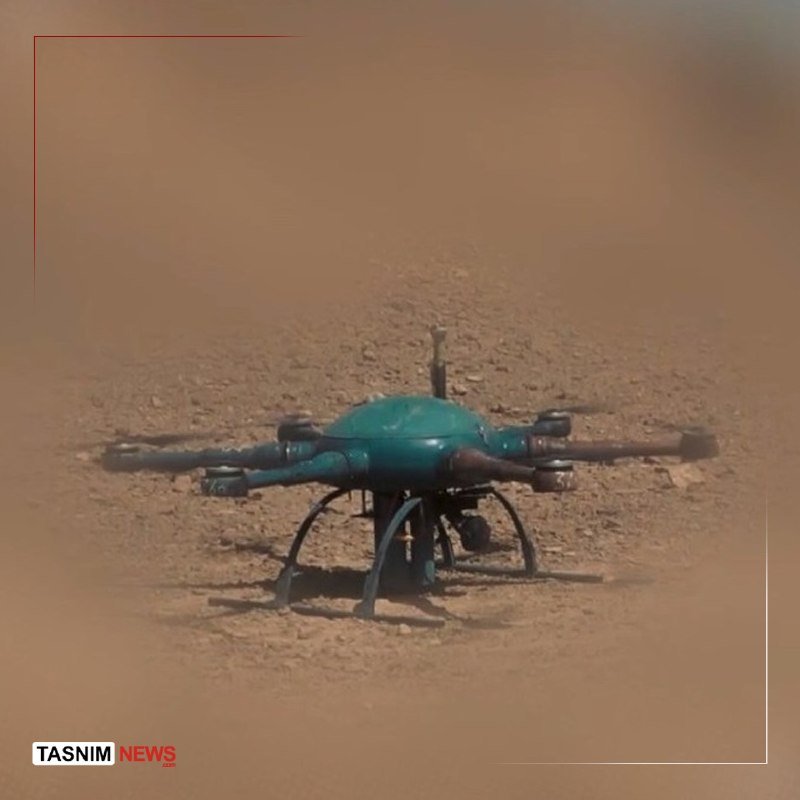
At 13:30 UTC on 30 August 2026, the press outlet The Cradle Media posted a ten-minute compilation on Telegram showing Ansarallah, the Houthi movement that controls much of northern Yemen, conducting coordinated drone attacks against Saudi-backed forces across multiple Yemeni frontlines. Twenty-seven minutes earlier, the conflict monitor Clash Report had posted its own summary of the same campaign: drone strikes hitting Saudi armoured vehicles and troop positions on several fronts. The two posts, arriving within the same hour from different channels, mark a small data point in a much larger pattern: the steady conversion of the Yemen war into a laboratory for cheap, mass-produced aerial attrition.
The immediate story is tactical. Drone footage, edited and released by Ansarallah itself, is by nature a curated record: it shows successful strikes, not the ones intercepted or missed. Read as evidence rather than as footage, however, the compilation documents something more durable: a Yemeni non-state actor sustaining a serial drone campaign against the better-funded coalition that has bombed the country since 2015, using what appears to be locally assembled or transferred loitering munitions. Saudi-backed formations inside Yemen, not Saudi territory, are the named target in both the Cradle post and the Clash Report thread.
The counter-narrative from Riyadh and its partners is straightforward: these are terrorist attacks by an Iranian-backed militia against a legitimate coalition. That framing is partially defensible; it is also incomplete. The Houthi movement emerged from a domestic Zaydi revival in the 1990s and fought six wars with the central government before the 2015 intervention. Outside support, almost certainly including Iranian technical assistance, is one input to the drone programme, not its sole cause. Treating Ansarallah purely as a Tehran proxy erases the local political economy that produced a generation of northern Yemeni fighters with both motive and supply chain.
What the footage documents, in plain terms, is the slow industrialisation of low-cost aerial warfare. A loitering munition costs a fraction of a manned strike aircraft, can be produced in small workshops, and requires minimal training to operate. Fielded in sufficient numbers against armoured convoys and forward positions, it compresses the cost calculus of any counter-insurgency campaign. The coalition's response, hundreds of billions of dollars spent on air superiority, ballistic-missile defence, and ground operations, has not broken the cycle. The structural read here is that technological diffusion, not battlefield invention, is what is changing the military balance: once drone manufacturing leaves the small circle of major-state defence contractors, attritional advantages compound for whoever can absorb losses longest.
The stakes are regional. A movement that can sustain serial drone strikes inside Yemen while separately disrupting Red Sea shipping, as Ansarallah has done periodically since late 2023, exercises a lever disproportionate to its conventional strength. For Saudi Arabia, the political cost of an open-ended ground presence keeps mounting. For the United Arab Emirates, which withdrew most of its ground forces years ago, the lesson is that expeditionary commitments in Yemen carry diminishing returns. For Iran, the Yemen front validates a long-running bet on partner networks over direct confrontation. For Western defence planners, the more uncomfortable read is that proliferation-resistant drone supply chains are no longer a future problem; they are a present-tense one.
Some uncertainty is unavoidable. The Cradle's compilation is Ansarallah's own release; independent geolocation of every frame is beyond what this desk could verify from the available items. Clash Report's shorter thread, posted at 13:03 UTC, names "several fronts" without specifying provinces. The Saudi-led coalition has not, on the basis of these two source items, issued a casualty statement, and the available posts do not specify coalition losses. A serious reader should weight the footage as Ansarallah-curated, useful for what it shows about capability and tempo, less reliable as a neutral count of effect.
The real question is not whether Ansarallah can win the Yemen war from the air; it cannot. The real question is whether a cheaper-than-manned-strike drone economy, sustained across years, can keep the coalition from winning it on the ground. The compilation released on 30 August is one more data point suggesting that the answer, at least for now, is yes.
Desk note: this piece treats both Telegram-sourced posts as primary research material, weighted for what they show about Ansarallah's media tempo and stated targeting, not as independent confirmation of coalition losses. Where wire outlets later publish verified casualty figures, Monexus will update accordingly.
Wire provenance
This editorial synthesis draws on the following public wire/social posts:
- https://t.me/TheCradleMedia/67050
- https://t.me/thecradlemedia/67050
- https://t.me/ClashReport/94196