Bessent sets a weekly sanctions clock on Iran, with China kept as the open option
Treasury Secretary Scott Bessent told AP on 30 August 2026 that the US will sanction another bank this week and that new secondary sanctions on Iran will now arrive on a weekly cadence, with China kept explicitly in scope as an option.
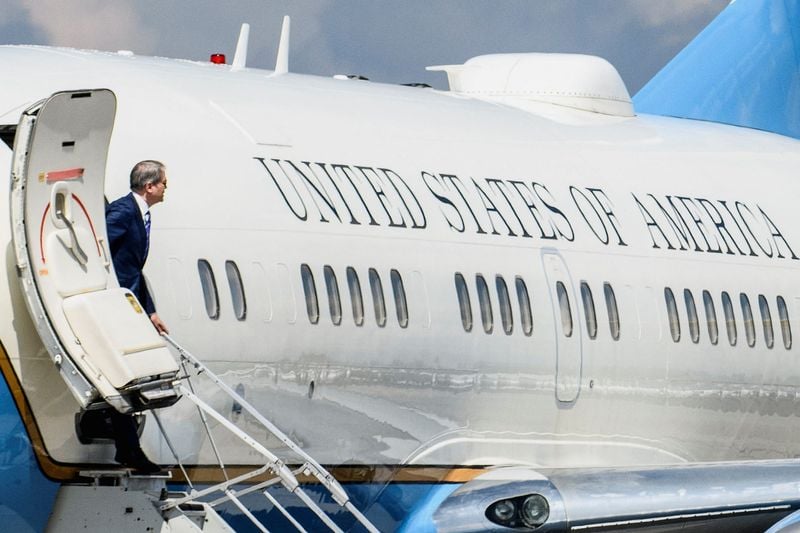
US Treasury Secretary Scott Bessent told the Associated Press on 30 August 2026 that the Trump administration intends to sanction another bank this week, and that fresh US secondary sanctions aimed at Iran should now be expected on a weekly cadence. The remarks were carried overnight into 31 August by Reuters, Investing.com and the ClashReport and BRICS News Telegram channels, and they put Beijing explicitly inside the optionality: Bessent said "all options are on the table" regarding sanctioning China over its continued purchases of Iranian goods.
What changes is the tempo. Where US financial pressure on Iran has historically moved in batched, deliberative packages out of the Office of Foreign Assets Control, the 30 August comments convert the cadence into a serialised news flow: a fresh designation every few trading days, with markets, foreign ministries and compliance desks forced to ingest new names on a rolling clock. This article's assessment is that the Bessent remarks amount to a procedural hardening of an already-public pressure track rather than a brand-new doctrine; the novelty is the open-ended schedule attached to it, and the explicit extension of the same threat to a Chinese counterparty.
Weekly designations, one bank at a time
Bessent's AP remarks, relayed by the ClashReport Telegram channel at 22:12 UTC on 30 August, framed the upcoming package in procedural terms: the Trump administration "plans to sanction another bank this week" as part of an intensification aimed at countries still doing business with Iran. Wire copy from Reuters and Investing.com, timestamped 30 August between 23:54 and 00:00 UTC on 31 August, carried the same comments with the headline emphasis on a weekly rhythm of secondary sanctions.
Secondary sanctions attach penalties to non-US persons and non-US financial institutions that facilitate designated Iranian activity, including oil exports, ship-to-ship transfers, and oil-product revenues routed through banks that touch the dollar-clearing system. The practical reach is therefore wider than the named Iranian target. The bank Bessent flagged for this week was not named in the source items.
The China variable
The more provocative cut, carried by ClashReport at 22:13 UTC on 30 August, is the open-ended warning on China. Bessent's framing, as relayed by ClashReport, is that the US "could sanction China over its continued purchases from Iran" and that "all options are on the table." The available source items do not specify which Chinese bank or ministry Bessent was referring to, and the wire copy stresses the open-endedness of the option rather than announcing an imminent action.
The standard counter-narrative runs as follows. Washington cannot fully weaponise the dollar-clearing system against Chinese state-linked banks without accelerating the construction of alternative payment rails that Chinese policy has been assembling for nearly a decade. A designation of a large Chinese bank would also narrow the diplomatic runway for any negotiated settlement of the broader US-Iran standoff. Most of Iran's crude still flows east, which gives Beijing a structural objection that does not require much rhetoric to deploy.
Monexus analysis: read as a negotiation posture rather than a first move, the China option looks like a credible tail risk that Bessent is rebuilding weekly, alongside the Iran-targeted package, to keep optionality open in both files at once.
Yen volatility, and the cost of a sanctions drumbeat
The same Treasury Secretary sounded a different alarm a day earlier. On 29 August 2026 at 17:23 UTC, Investing.com reported Bessent warning that yen volatility risks spillover to global markets, the kind of cross-asset remark a serial sanctions regime tends to magnify. A weekly designations calendar means more transaction-cost noise for any firm exposed to Iranian oil, to Iranian-touched shipping, or to Gulf-routed cargo. Dollar funding markets, Asian currencies with deep trade links to Gulf energy, and Japanese and Korean refining margins all sit somewhere in the chain. Bessent's own framing of the yen betrays awareness that the pressure tool has collateral damage.
Stakes, and what the cadence actually changes
Read together, the 30 August disclosures do three things at once. They harden the expectation that OFAC will operate on a public weekly clock for new Iran-related secondary actions. They re-insert Iran as a recurring financial-shock vector for global markets, after a stretch in which the war's military tempo dominated the headlines. And they raise the probability, without yet confirming it, that the next escalation step could be drawn from the China file rather than the Iran file itself.
The counter-read is straightforward. A sanctions cadence this public, this compressed, and this openly aimed at a third-party economic great power, risks becoming a classic over-extension. It can also be read as a negotiation tactic intended to push Tehran back to the table before any Chinese designation is actually invoked.
Background context from the same 30 August window: the BRICS News channel posted at 22:29 UTC that several missiles had been launched from various areas in Iran, and at 22:41 UTC that the US said all missiles launched by Iran had been intercepted so far. The available source items do not specify a US official or spokesperson by name for the interception claim, and they do not specify where the missiles were headed. Those items are noted here as part of the same news cycle in which Bessent spoke; the article's claims about Treasury's cadence do not rest on them.
What remains uncertain
The source items do not name the bank Treasury intends to designate this week, do not specify the Iranian sectors or counterparties targeted by the upcoming package, do not contain a first-party Chinese response to Bessent's remarks, and do not specify the venue, destination, or speaker for the missile-launch and interception reports carried by BRICS News. Wire copy emphasises intent and tempo, not list. Until OFAC publishes the next set of designations, the precise scope of "secondary" in any given weekly tranche is a moving target, and that moving target is now by design.
Desk note: Monexus reports this as a hardening of the Iran sanctions tempo with China held in reserve, leaning on Bessent's wire comments and the ClashReport, BRICS News, Reuters and Investing.com relays of the AP interview rather than on tertiary commentary.
Wire provenance
This editorial synthesis draws on the following public wire/social posts:
- https://reut.rs/4cii3fQ
- https://x.com/Reuters/status/2094213820570890743
- https://www.investing.com/news/economy-news/bessent-expects-new-us-secondary-sanctions-weekly-aiming-to-increase-pressure-on-iran-4882080
- https://x.com/Polymarket/status/2094229737837060299
- https://t.me/ClashReport/94271
- https://t.me/ClashReport/94272
- https://t.me/bricsnews/17965
- https://t.me/bricsnews/17966
- https://t.me/bricsnews/17967
- https://x.com/Polymarket/status/2094111581902712892
- https://www.investing.com/news/economy-news/us-treasurys-bessent-warns-yen-volatility-risks-spillover-to-global-markets-4881990
- https://reut.rs/4cii3fQ
- https://x.com/Reuters/status/2094213820570890743
- https://www.investing.com/news/economy-news/bessent-expects-new-us-secondary-sanctions-weekly-aiming-to-increase-pressure-on-iran-4882080
- https://x.com/Polymarket/status/2094229737837060299
- https://t.me/ClashReport/94271
- https://t.me/ClashReport/94272
- https://t.me/bricsnews/17965
- https://t.me/bricsnews/17966
- https://t.me/bricsnews/17967
- https://x.com/Polymarket/status/2094111581902712892
- https://www.investing.com/news/economy-news/us-treasurys-bessent-warns-yen-volatility-risks-spillover-to-global-markets-4881990