Oil and equities rerate as US-Iran strikes enter a second month
Brent added more than 2% after a US strike on Larak Island; Washington is now signalling weekly secondary sanctions. Markets are starting to price an open-ended escalation.
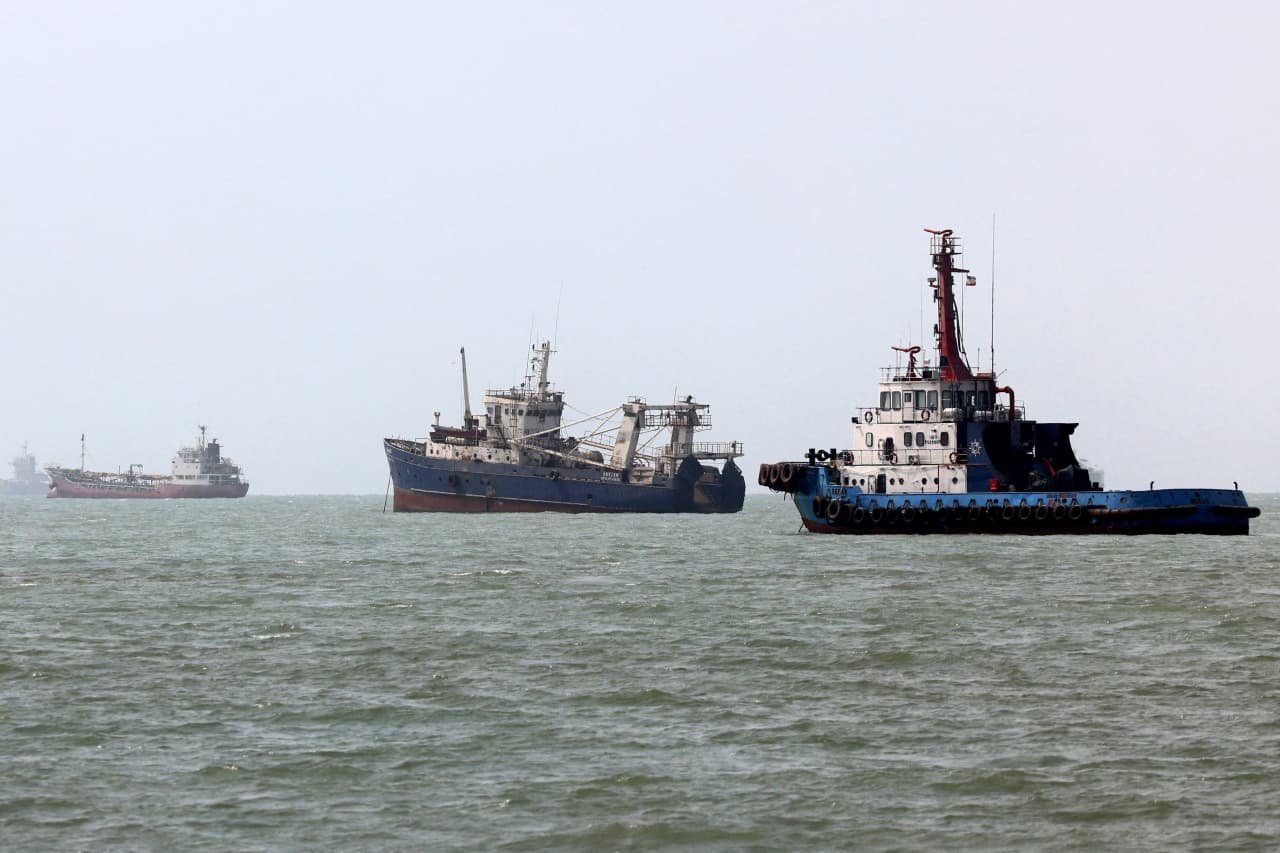
Brent crude jumped more than 2% in the hours after a US strike on Iran's Larak Island on 30 August 2026, with futures markets pricing a conflict that has now lasted more than a month and shows no sign of de-escalating. By 00:32 UTC on 31 August, US stock futures had tipped lower in tandem, an unusual synchronisation that traders read as a signal the macro has shifted from tail risk to base case.
This is what an oil shock embedded in a sanctions regime looks like once it stops being treated as a surprise. The price action is one thing. The architecture of escalation that produced it is the more durable story.
The escalation ladder is now the product
The strike on Larak, in the Strait of Hormuz approach, came roughly a month after the first US action against Iranian targets in this cycle. CGTN, citing Iranian state-aligned reporting relayed via its 02:26 UTC post on 31 August, framed the Larak action as the first US strike in a month and carried Iranian claims of retaliatory strikes hitting US bases. Those retaliation claims originate with one party to an active conflict; the available source items do not independently confirm them, and the wire record treats them as asserted rather than verified.
The pattern that matters, to the extent the reporting supports it, is the cycle length: one strike, one claimed response, then another strike, then another claimed response. Each round narrows the off-ramp, if and only if both sides' claims hold up under independent reporting that the cited sources do not yet supply.
The price tape moved with that cadence regardless. Investing.com reported oil's 2%-plus jump within hours of the Larak strike, and US equity futures the same evening pointed to a softer open. When Brent and the S&P move in the same direction on a Middle East headline, the macro is not pricing the headline. It is pricing the next headline.
Sanctions are now a weekly instrument
What changed in the last week is the policy tempo. On 31 August 2026 at 04:10 UTC, Reuters reported that US Treasury Secretary Scott Bessent expects new secondary sanctions to be issued on a weekly basis, with the explicit aim of increasing pressure on Iran. The Reuters item confirms the cadence expectation and the pressure objective; it does not, on the cited evidence, lay out the operational mechanics of secondary sanctions in any detail. Monexus treats the doctrinal elaboration that follows as reading-of-the-record, not as confirmed Treasury policy.
In plain terms, secondary sanctions are the US instrument that reaches non-US firms transacting with sanctioned Iranian counterparties, which is how Washington extends its jurisdiction over European, Chinese and Gulf trading desks. Past administrations issued sweeping new sanctions architectures at intervals measured in months or years, often in coordination with European allies. A weekly cadence is closer to a campaign than a sanctions program. Whether OFAC compliance staff and allied enforcement can keep up with that pace is a question the cited record does not answer.
Monexus analysis: Bessent's framing reads as an attempt to substitute sanctions tempo for military tempo. If the kinetic cycle is producing oil-price shocks the administration does not want, weekly sanctions give Washington a parallel pressure track that does not move the crude tape the same way. The trade-off is legitimacy cost: the more frequently secondary sanctions are issued, the more the practice becomes a normal tool of statecraft rather than an extraordinary one. That is a long-run shift in how the dollar's clearing role gets used.
The market read is symmetric
What is notable about the August 2026 rerate is that equities and energy moved together. That is unusual. A conventional energy shock, the kind the policy commentariat spent the 2020s modelling, hits two ways: it punishes importers through input costs, and it lifts energy producers. The two effects partially cancel in an index-weighted sense. In the latest session, both legs moved in the same direction because traders are discounting both the persistence of the shock and the recession risk it imposes.
The broader question Investing.com posed on 30 August, headlined "How will US-Iran conflict reshape the world?", is the right one. The honest near-term answer, on the cited record, is that it reshapes the input-cost stack. Brent through $80, with optionality on $90, lifts jet fuel, diesel and naphtha simultaneously. Refining margins tighten, freight rates through the Strait of Hormuz widen, and any buyer with optionality (Indian, Chinese, Japanese) reaches first for non-Iran barrels at a premium.
Stakes and a date to watch
The structural stakes fall on three sets of actors. First, the Iranian state, which now faces a US sanctions tempo it cannot match in kind; secondary sanctions are unilateral and do not require a reciprocal instrument to bite. Second, European and Asian corporates with legacy exposure to Iranian oil, petrochemicals or shipping services, who will need to map weekly OFAC updates onto compliance workflows designed for slower-moving regimes. Third, the broader petrodollar architecture: weekly sanctions push more bilateral settlement into non-dollar instruments and more Iranian and Russian hydrocarbons into the Chinese and Indian refining systems, with each tonne that clears in yuan or dirham rather than dollars incrementally thinning the reserve currency's transactional base.
Monexus assessment: the more durable shift is in the sanctions tempo itself. Past cycles of US pressure on Iran produced architecture with a half-life of years. The current cadence is producing architecture with a half-life of weeks. That compresses the planning horizon for every counterparty in the system, allied or not, and it makes the next Bessent statement the next macro catalyst. Watch the 04:10 UTC Reuters cadence as the rhythm section for the autumn.
Desk note: where wire coverage treated the Larak strike as an isolated incident, Monexus read it as the second beat in a monthly cycle with a parallel weekly sanctions track. The synthesis is the story. The retaliation claim from Iranian-aligned reporting is flagged here as one party's assertion in an active conflict; readers should not treat it as independently verified.
Wire provenance
This editorial synthesis draws on the following public wire/social posts:
- https://www.investing.com/news/commodities-news/oil-jumps-more-than-2-after-us-attack-on-irans-larak-island-4882075
- https://www.investing.com/news/stock-market-news/us-stock-futures-dip-amid-renewed-iran-hostilities-4882085
- https://www.investing.com/news/economy-news/how-will-usiran-conflict-reshape-the-world-4882050
- https://reut.rs/3V4mBR2
- https://news.cgtn.com/news/2026-08-31/news-1Q2Z34oDxMk/p.html
- https://www.investing.com/news/commodities-news/oil-jumps-more-than-2-after-us-attack-on-irans-larak-island-4882075
- https://www.investing.com/news/stock-market-news/us-stock-futures-dip-amid-renewed-iran-hostilities-4882085
- https://www.investing.com/news/economy-news/how-will-usiran-conflict-reshape-the-world-4882050
- https://reut.rs/3V4mBR2
- https://news.cgtn.com/news/2026-08-31/news-1Q2Z34oDxMk/p.html