Two signals on the dollar in one evening: Warsh at the G20, Trump on the wire
At 19:19 UTC the Fed chair told G20 ministers the world was seeing a global investment surge; by 20:20 UTC the President was on a separate channel putting a different arithmetic on the table. The cross-talk is now the policy.
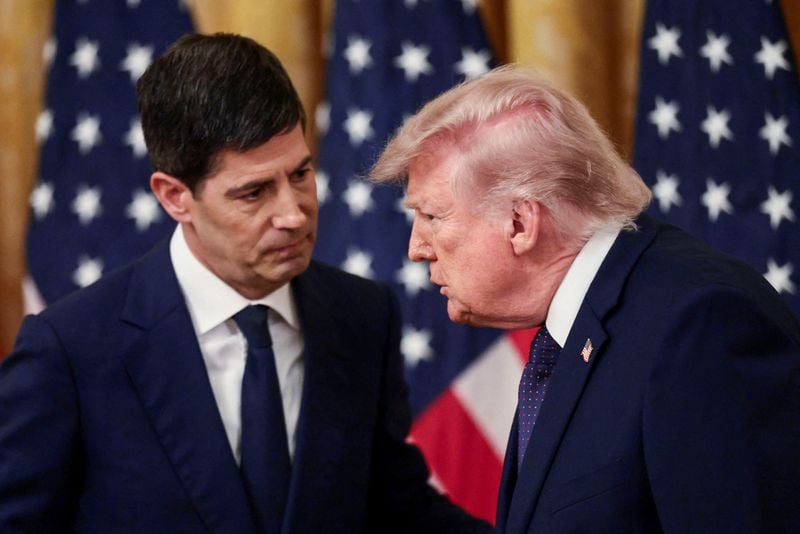
At 19:19 UTC on 31 August 2026, Federal Reserve Chair Kevin Warsh told G20 finance ministers that the world was in the middle of a "global investment surge," according to an Investing.com dispatch. In the sixty-one minutes that followed, the President whose appointee he is was on a separate channel putting a different arithmetic on the table: "We don't need their product," he said at 20:20 UTC on the ClashReport wire, "So, if we cut off trade with that country, we just made $40 billion. You do a few countries like that, and we become a big money machine." Earlier in the evening, at 19:51 UTC on the same channel, he had offered a second number: "We should have the lowest interest rates in the world."
The cross-talk between an institutional voice and a transactional one is the dollar story of the week. Read in isolation, each statement has a plausible read. Read together, they describe two layers of pressure on the same balance sheet: one broadcast to foreign reserve managers, one to a domestic political audience. The question for the rest of 2026 is which signal compounds faster.
A quieter chair, on purpose
Warsh's G20 framing fits a posture that Investing.com, reporting at 17:01 UTC on 31 August, described as a "quieter Fed": fewer forward-guidance statements, with "a smidgen of guidance" replacing the thicker Powell-era vocabulary of conditional commitments. The phrase matters because it defines the audience. The Warsh-era institution appears to be trading that vocabulary for fewer, more declarative statements, and the explicit point of the G20 line, on the reporting available, is to characterise global capital flows as benignly surging.
Monexus analysis: the implicit audience for that story is not American homebuyers. It is the foreign holders of U.S. assets who must decide, every quarter, whether to keep extending duration into U.S. Treasuries. By endorsing the phrase "global investment surge," Warsh is offering those holders a narrative they can use to justify staying long. The hedging available to the chair is real, and the G20 setting is a deliberate choice of venue. It is not, however, a guarantee. The available source items do not specify which foreign counterparts the chair was addressing in the room, or whether the G20 communiqué itself carried that language.
In a separate item at 20:18 UTC, Investing.com reported Trump's own characterisation of Warsh: "He'll do what he has to do." The phrasing sets the Fed chair up as responsive to administration preferences while preserving the appearance of central-bank independence. The market's problem is that those two stories are not the same story, and price action over the next two sessions will be the test.
The President's own ledger
Monexus analysis: Trump's remarks on the ClashReport wire are best read as a transactional doctrine laid out in plain language. At 19:51 UTC, the demand for "the lowest interest rates in the world" is a request to compress borrowing costs on his timetable. At 20:20 UTC, the framing of a bilateral trade cutoff as something that "made" the United States $40 billion is a presentation of that cutoff as a net-positive balance-sheet event. The two statements are twenty-nine minutes apart in the wire and arrive on the same channel, which is itself a tell about the intended audience.
The "$40 billion" figure in the second quote is a specific dollar number attached to a single bilateral cutoff. The arithmetic the President is gesturing at is broader: a regime in which access to the U.S. market is itself a fiscal tool, and in which a handful of large partners can be treated as the variable in the equation. Monexus assessment: there is a tension between this framing and the G20 line that the chair cannot fully resolve by tone management. Holders of U.S. assets will price the cross-talk more honestly than either speaker would prefer. Whether that pricing is orderly is the next month's question. The available reporting does not specify how the dollar actually traded in the session.
The fiscal backdrop nobody can ignore
Treasury Secretary Scott Bessent told reporters on 31 August that a federal debt-reduction plan is still in formulation and could arrive "months away," per a MarketWatch report at 17:02 UTC. The framing is candid: the plan exists in outline, but the political timing has slipped. "Top officials in the Trump administration have taken the wraps off a plan for tackling the federal government's persistent deficits," the report notes, while leaving the timing and the policy mix unspecified.
This is the floor under the dollar story. Persistent deficits must be financed at scale, and the buyer base for that financing is sensitive to the political signals the White House is sending. A quieter Fed lowers realised volatility in the rollover chain; coercive bilateral trade rhetoric raises the political premium that foreign holders demand. Bessent's pending plan sits in the gap, and the available sources do not specify which side of that gap it will lean toward. The reporting frames "months away" with a list of hurdles the plan will face when it arrives, but the substance of the hurdles, whether revenue-side or spending-side, is not pinned down in the cited excerpt.
A separate front opens at the same time. CNBC reported at 17:20 UTC that the Trump administration is preparing to announce new drug-pricing deals with nearly a dozen drugmakers, and an Investing.com wire at 16:13 UTC ran the same story earlier. CNBC characterises the administration push as a plan to "link the nation's drug prices to cheaper ones abroad," extending an existing framing rather than introducing it. For the sector, this is a discrete balance-sheet event. Monexus analysis: read against the dollar architecture, the linkage is a further instance of U.S. administered prices being tied to outcomes determined outside the U.S. market, the same general posture the President's trade rhetoric sets out. The available sources do not specify how the named drugmakers responded to the linkage framing.
What the cross-talk actually changes
There are two ways to read the week, and they lead to different positions.
The first reading is institutional. Warsh delivers the G20 message; Bessent delivers the fiscal plan in due course; the drug-pricing announcement lands without disturbing the Treasury complex; foreign holders stay long because the chair gave them cover. Under this reading, the President's bilateral arithmetic is bargaining posture that softens as the year-end political calendar tightens, and the chair's quieter line turns out to have been the dominant signal all along. The trade is to fade the headline and fade the volatility.
The second reading is structural. The bilateral cutoffs the President is describing are not chips to be traded away but a doctrine to be applied. A $40 billion line item per partner, extended across a handful of large trading relationships, is the arithmetic of a regime that treats trade balances as a domestic budget entry. That posture pushes foreign reserve diversification faster than any G20 communiqué can slow. The drug-pricing linkage to foreign-administered prices adds a second mechanism through which U.S. market value is partially shared rather than fully retained. Under this reading, the chair's quieter line is a counter-cyclical patch over a deteriorating structure. It works for a quarter, perhaps two. It does not work for a cycle.
The thread evidence does not resolve which reading will prove correct. It establishes that both vectors are operating in parallel: an institutional Fed engineered to underwrite U.S. assets at minimum political premium, and a White House extracting policy rent from the same market's size. The available reporting does not specify the dollar's price action in the session, and the policy outcomes remain contingent on variables the wire does not pin down. What the sources do establish, clearly, is that the chair's and the President's statements are now sequencing into the same audience, and that audience is the foreign holder of U.S. assets. From this week forward, both feeds have to be read together.
Monexus framed this piece around the Warsh–Trump cross-talk rather than a single wire on the Bessent deficit plan, because the more consequential question for the dollar is whether the institutional line can absorb the transactional one, and that question is only visible if both feeds are read in the same sitting. The drug-pricing reporting is treated as a parallel sectoral signal rather than the headline, on the view that it confirms the same administration pattern without changing the macro frame.
Wire provenance
This editorial synthesis draws on the following public wire/social posts:
- https://www.investing.com/news/economy-news/feds-warsh-tells-g20-world-seeing-global-investment-surge-93CH-4883178
- https://www.investing.com/news/economy-news/warshs-quieter-fed-now-includes-a-smidgen-of-guidance-4883101
- https://www.investing.com/news/economy-news/trump-on-warsh-hell-do-what-he-has-to-do-4883217
- https://www.marketwatch.com/story/bessent-now-says-debt-reduction-plan-could-be-months-away-it-will-face-hurdles-when-it-arrives-d87b6f7a?mod=mw_rss_topstories
- https://www.cnbc.com/2026/08/31/trump-drug-pricing-deals.html
- https://www.investing.com/news/stock-market-news/trump-administration-to-announce-drug-pricing-deals-4883081
- https://t.me/ClashReport/94408
- https://t.me/ClashReport/94395
- https://www.investing.com/news/economy-news/feds-warsh-tells-g20-world-seeing-global-investment-surge-93CH-4883178
- https://www.investing.com/news/economy-news/warshs-quieter-fed-now-includes-a-smidgen-of-guidance-4883101
- https://www.investing.com/news/economy-news/trump-on-warsh-hell-do-what-he-has-to-do-4883217
- https://www.marketwatch.com/story/bessent-now-says-debt-reduction-plan-could-be-months-away-it-will-face-hurdles-when-it-arrives-d87b6f7a?mod=mw_rss_topstories
- https://www.cnbc.com/2026/08/31/trump-drug-pricing-deals.html
- https://www.investing.com/news/stock-market-news/trump-administration-to-announce-drug-pricing-deals-4883081
- https://t.me/ClashReport/94408
- https://t.me/ClashReport/94395