Iranian media report Saudi tanker Cedar stopped in Strait of Hormuz as oil keeps moving
Iranian media say the 2-million-barrel Saudi tanker Cedar was stopped in the southern Strait of Hormuz, hours after reports that producers were still finding ways to keep oil moving through the corridor.
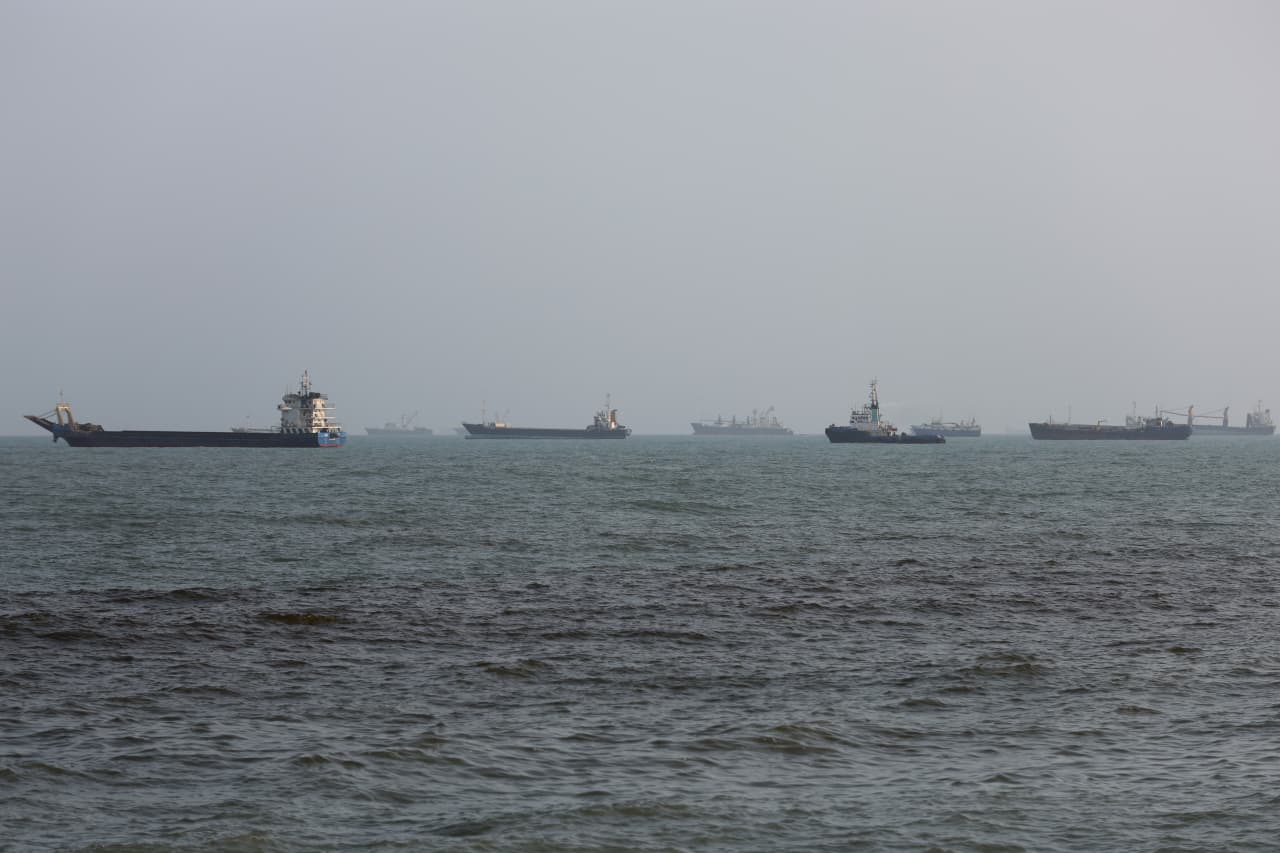
At 21:18 UTC on 31 August 2026, Iranian media reported that the Saudi oil tanker Cedar, capable of carrying 2 million barrels, had been stopped while transiting the southern Strait of Hormuz, according to a Telegram post by the channel Clash Report. The report landed hours after MarketWatch's account that Middle Eastern producers were finding new ways to evade Iranian threats and push more crude through the same waterway, and after France 24's report that President Donald Trump had threatened to hit Iran hard following a fresh exchange of strikes in the corridor.
The development sharpens, rather than rewrites, the story. Commercial oil was already being routed around Iranian pressure on 31 August, and the US policy process was already weighing a possible new campaign against Iranian positions along the strait. A reported seizure of a single very-large Saudi cargo carrier suggests that the Iranian response to those adaptations, and to Washington's threats, may now include direct action against named vessels rather than only the generalised threats of disruption that have framed the dispute in preceding days.
The Cedar incident
Clash Report's Telegram post is the only supplied source for the incident. It says Iranian media reported the Saudi tanker Cedar, capable of carrying 2 million barrels, was stopped in the southern Strait of Hormuz. The post does not specify the vessel's operator, owner or flag; it does not name the Iranian outlet that carried the original report; it does not say who stopped the vessel, on what authority, or under what legal justification. It does not state whether the tanker was being diverted, boarded, escorted, or held in place.
Those gaps constrain what can be said. The available source supports the narrow claim that Iranian media, as relayed by Clash Report, said a Saudi tanker named Cedar with a stated 2-million-barrel capacity was stopped in the southern Strait of Hormuz on 31 August. It does not support claims about Iranian Revolutionary Guard Corps involvement, about a boarding action, about the cargo's ownership, about the destination port, or about the duration of any detention. Each of those details would need separate sourcing and is excluded here.
The post's provenance also shapes the certainty of the account. Clash Report is a Telegram channel summarising open-source and regional reporting. The Cedar item is a relay of Iranian media; this publication cannot independently verify the report from the supplied material alone. The incident should be treated as a claim made by Iranian state-adjacent media and circulated by a conflict-monitoring channel, pending corroboration from ship-tracking data, Saudi statements, or independent wire reporting.
The corridor still in business
MarketWatch's earlier account remains the clearest evidence of the commercial response. It said Middle Eastern oil producers were finding more ways to evade Iranian threats and push additional crude through Hormuz. The Cedar report does not contradict that finding; it sits inside it. A single reported stoppage of a 2-million-barrel tanker is consistent with a corridor where traffic continues but where specific vessels face selective interference.
That distinction is the structural point. The relevant question is no longer whether oil moves through Hormuz at all. On the available evidence, it does. The question is whether the movement takes place under conditions of selective enforcement, in which named cargoes face delay, diversion, or boarding, alongside shipments that pass without incident. A 2-million-barrel cargo is a meaningful share of a day's seaborne crude flow from the Gulf, but it is a single cargo, not a closure.
The available sources do not specify what mechanism would have been used to stop a commercial tanker of that size in the southern strait, whether Iranian naval units have the capacity to do so at will, or whether any third flag state has been asked to intercede. They also do not say how the stoppage, if confirmed, would affect war-risk premia, insurance rates, or charter decisions over the following days. Each of those questions is consequential and each remains outside the supplied record.
Monexus analysis: a graduated Iranian toolkit
Two readings of the Cedar report are plausible. On the first, the stoppage is an escalation: a single, identifiable Saudi cargo is now subject to direct Iranian action, signalling that the threat of disruption has moved from rhetoric to enforcement. On the second, it is a graduated step consistent with the pattern of selective pressure that Iranian media have reported throughout 2026: a demonstrative action designed to raise the cost of passage without closing the corridor.
Monexus's assessment is that the second reading fits the evidence better, but only tentatively. The supplied sources do not describe a broader halt to traffic; MarketWatch's account of producers finding ways to ship more crude through Hormuz was published on the same day. The Cedar report is therefore best read, on present evidence, as a tactical move inside an ongoing commercial contest rather than as the opening of a campaign to seal the strait. The reading could change if additional vessels are reported stopped, if Saudi Arabia issues a formal protest, or if independent tracking data confirms a sustained pattern.
The structural fact underneath both readings is the same. Maritime corridors are now the primary terrain on which the US-Iran confrontation is being fought. Hormuz is where military pressure, shipping decisions and the pricing of political risk meet. Any Iranian move that selectively enforces passage reshapes the environment in which Gulf crude reaches market. Any US strike campaign intended to degrade Iran's ability to attack ships would, conversely, alter the calculation behind actions like the reported Cedar stoppage. The two tracks are not independent: a single tanker incident is a data point in the same negotiation as a possible Washington authorisation of force.
The terms, the fees, and what to watch
The rest of the day's record still holds. A Polymarket post published at 17:19 UTC on 31 August assigned a 37% chance that Iran would charge fees in the Strait of Hormuz during 2026. France 24 reported that Trump's threat to hit Iran hard followed a US strike on an island in the strait and Iranian attacks on US targets in the Middle East. Two Telegram posts relayed Axios reporting that the administration was weighing a new campaign against Iranian positions along the strait. An X post attributed to SprinterPress quoted US Treasury Secretary Steven Mnuchin laying out four conditions: Iran must abandon its nuclear programme, transfer enriched material out of the country, stop supporting its allies, and leave the Strait of Hormuz open.
The Cedar report adds a fifth moving part to that picture: direct action against a named commercial vessel. The Polymarket fee question concerns one possible Iranian instrument; a stoppage of a Saudi tanker is another. Both are graduated, demonstrative tools short of closure, and both would alter the economics of passage if sustained.
Several consequential uncertainties remain. The supplied sources do not specify the operator or flag of the Cedar, the identity of the Iranian outlet that first reported the stoppage, or the mechanism by which the vessel was held. They do not establish whether Saudi Arabia has been officially notified or has issued a statement. They do not provide Iran's response to the US conditions reported by SprinterPress, or any independent confirmation of the Axios reporting on a possible US campaign. They do not show how the Cedar incident, if confirmed, would feed back into the 37% fee probability or into the operational planning reported by Axios.
The next concrete signals are straightforward. A statement from Saudi Arabia's energy ministry or from the tanker's operator would confirm or deny the incident. Ship-tracking services would show whether the Cedar is holding position, diverting, or continuing its voyage. Any Iranian official statement on transit fees would convert the Polymarket question into declared policy. Any US announcement would clarify whether strike planning has become an operation. Until then, the corridor carries oil, one named Saudi cargo is reported stopped in its southern reach, and Washington preserves more than one option.
Desk note: Monexus added the reported Cedar stoppage as an Iranian-media claim relayed by Clash Report, kept the commercial-flow reading from MarketWatch and the policy reading from France 24 and the relayed Axios posts, and labelled the incident a relay rather than a confirmed event.
Wire provenance
This editorial synthesis draws on the following public wire/social posts:
- https://t.me/ClashReport/94422
- https://www.marketwatch.com/story/this-maneuver-is-boosting-oil-shipments-through-the-strait-of-hormuz-070d8fa3?mod=mw_rss_topstories
- https://www.france24.com/en/middle-east/20260831-trump-threatens-to-hit-iran-hard-as-strikes-resume-after-month-long-lull
- https://poly.market/g5Gka3x
- https://x.com/Polymarket/status/2094475179866874247
- https://t.me/osintlive/568543
- https://t.me/osintlive/568535
- https://x.com/SprinterPress/status/2094520384217399582
- https://t.me/ClashReport/94422
- https://www.marketwatch.com/story/this-maneuver-is-boosting-oil-shipments-through-the-strait-of-hormuz-070d8fa3?mod=mw_rss_topstories
- https://www.france24.com/en/middle-east/20260831-trump-threatens-to-hit-iran-hard-as-strikes-resume-after-month-long-lull
- https://poly.market/g5Gka3x
- https://x.com/Polymarket/status/2094475179866874247
- https://t.me/osintlive/568543
- https://t.me/osintlive/568535
- https://x.com/SprinterPress/status/2094520384217399582