Iran's strait gambit meets a market already routing around it
Middle East producers are moving more crude through Hormuz while Iranian projectiles and a 37% Polymarket bet on tolls remind traders the chokepoint is contested in real time.
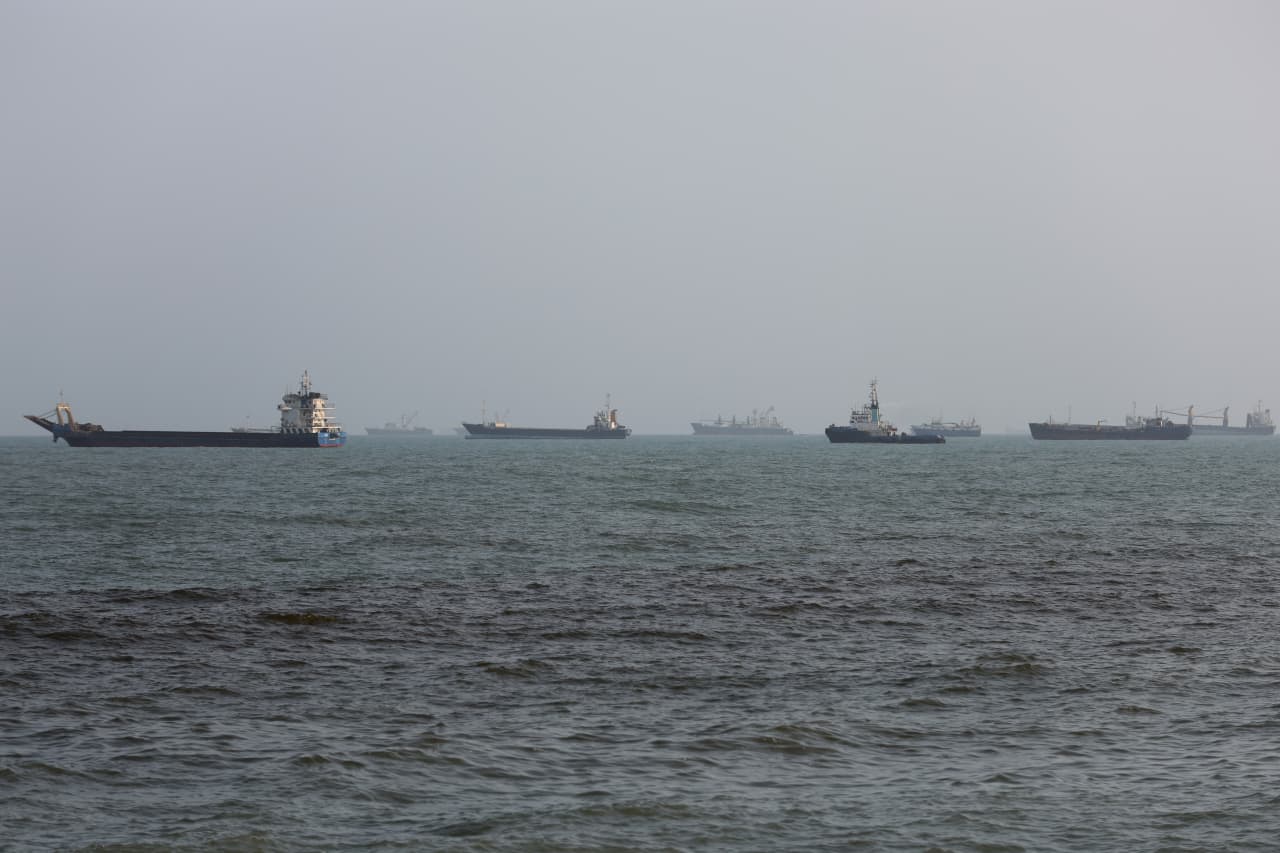
At 20:56 UTC on 31 August 2026, MarketWatch reported a quiet rerouting of crude: Middle East producers are using a new maneuver to push more oil shipments through the Strait of Hormuz even as Iranian threats intensify around the waterway. The same evening, an Iran- and Oman-focused Telegram channel, RNIntel, logged initial reports of Iranian projectiles launched toward the strait. The wider window contains President Donald Trump's threat to "hit Iran hard" following reciprocal US-Iran strikes, and a separate Telegram relay citing three US officials via Axios that Trump is mulling a further resumption of strikes.
The pattern, as this publication reads it, is the story. Iranian coercion, US retaliation, and a private market already pricing, and partly preempting, the closure risk are running on the same clock. A Polymarket contract puts a 37% probability on Iran imposing transit fees on Hormuz shipping before 31 December 2026, a non-trivial premium for a step that, if taken, would mark the first formal toll regime on a corridor the world economy treats as a free common.
The maneuver that is moving the barrels
MarketWatch's reporting identifies a specific operational shift: producers in the Gulf are finding new ways to evade Iranian interdiction and keep product flowing through the strait. The piece frames it as a workaround to Iranian harassment rather than a response to a declared closure. The implication, as Monexus reads it: shippers, insurers, and charterers have built redundancy into routes, timing, and flag-state choices faster than Tehran can raise the cost of transit. In plain terms, the market is not waiting on the situation to resolve before using the corridor.
That distinction matters for how traders discount the risk. The MarketWatch piece sits inside the harassment category: deniable, slow-moving pressure on selected transits. The Polymarket contract, separately, prices a different question, whether Tehran establishes a formal toll regime by year-end. Neither source describes a clean shutdown of the waterway; both describe an erosion of its free-use status, one operational, one financial.
What Polymarket is actually pricing
The Polymarket contract at issue lists a 37% chance that Iran charges fees in the Strait of Hormuz this year, traded on a binary question of whether Tehran establishes a toll regime before 31 December 2026. A 37% implied probability is not a forecast of closure, but it is high enough to move war-risk premiums and shipping insurance. Informed bettors, the desk's assessment runs, treat an Iranian move to monetise the strait as a credible tail risk inside the next four months, distinct from the question of whether traffic physically stops.
The framing difference is worth holding. Closure is a kinetic event. A toll regime is a legal-financial event that tests whether outside powers treat the strait as an international waterway in the formal sense, or as something Iran can unilaterally price. The Polymarket price sits closer to the second question than to the first.
The kinetic overlay
The 31 August picture is not only commercial. At 21:36 UTC, RNIntel relayed initial reports of Iranian projectiles launched toward the Strait of Hormuz; the channel's post does not specify the weapon type, the target, or the outcome, and this article has not independently confirmed those details. At 20:36 UTC, France 24 reported that Trump had threatened to "hit Iran hard" as US strikes on Iranian targets in the Middle East resumed after a roughly month-long lull, with France 24's framing placing the Iranian attacks as a response to earlier US action. A separate Telegram relay from OSINTdefender, citing three US officials via Axios, said Trump is mulling a further resumption of strikes. Each item is a relay rather than a first-person confirmation; the Axios scoop is the tier-one attribution, but only the relay link is present in the source set, and any read of Trump's specific posture should be hedged accordingly.
Monexus analysis: the kinetic and commercial tracks are now interleaved. A Polymarket price moves on the same news flow that a Telegram channel uses to flag projectiles. A MarketWatch report on a maneuvering pattern cites the same underlying tension as its premise. The strait is no longer just a route; it is a live options market, a propaganda surface, and a contested military corridor simultaneously.
Stakes and what to watch
If the workaround pattern described by MarketWatch holds, the commercial logic favours continued flow even under harassment. The forward calendar is short and specific. Watch for: a Polymarket repricing above 50% on the toll contract, which would indicate the market believes Iran is moving from harassment to monetisation; any Iranian statement, carried by state media such as IRNA, Mehr, or Tasnim, that frames future transit in fee terms rather than rights-of-passage terms; and any Axios or wire confirmation of Trump's reported strike resumption beyond the existing relay, which would push the kinetic track back above the commercial one. If two of those three occur inside a week, the working assumption that the strait remains an open common at free transit ceases to hold.
What remains uncertain: the RNIntel projectile reports do not specify impact, intercept, or escalation status, and the OSINTdefender relay attributes Trump's posture to three anonymous officials rather than to Trump himself. The source set does not specify whether any tanker was struck, diverted, or detained in the 31 August window, and this article has not independently established whether any flag-state authority issued new advisories in response. The Polymarket price, by construction, is one informed-bettor consensus rather than a settled forecast. The next 72 hours will tell whether the workaround is durable or whether the market is buying itself protection the corridor will not, in fact, deliver.
Desk note: The wire line on 31 August framed this as a Trump-Iran escalation story. Monexus is leading with the commercial track, because the market, not the rhetoric, is doing the real work of pricing Hormuz risk.
Wire provenance
This editorial synthesis draws on the following public wire/social posts:
- https://www.marketwatch.com/story/this-maneuver-is-boosting-oil-shipments-through-the-strait-of-hormuz-070d8fa3?mod=mw_rss_topstories
- https://poly.market/g5Gka3x
- https://x.com/Polymarket/status/2094475179866874247
- https://t.me/rnintel/65920
- https://www.france24.com/en/middle-east/20260831-trump-threatens-to-hit-iran-hard-as-strikes-resume-after-month-long-lull
- https://f24.my/C8Et.g
- https://t.me/france24_en/18433
- https://t.me/osintlive/568543
- https://www.marketwatch.com/story/this-maneuver-is-boosting-oil-shipments-through-the-strait-of-hormuz-070d8fa3?mod=mw_rss_topstories
- https://poly.market/g5Gka3x
- https://x.com/Polymarket/status/2094475179866874247
- https://t.me/rnintel/65920
- https://www.france24.com/en/middle-east/20260831-trump-threatens-to-hit-iran-hard-as-strikes-resume-after-month-long-lull
- https://f24.my/C8Et.g
- https://t.me/france24_en/18433
- https://t.me/osintlive/568543