Iran says it stopped Saudi tanker in Strait of Hormuz, hours after a Marketwatch report on traffic rerouting
Iranian state media say the Cedar, a 2 million-barrel Saudi-flagged tanker, was disabled in Omani waters. The claim lands the same day wire reporting documented producers rerouting around the chokepoint.
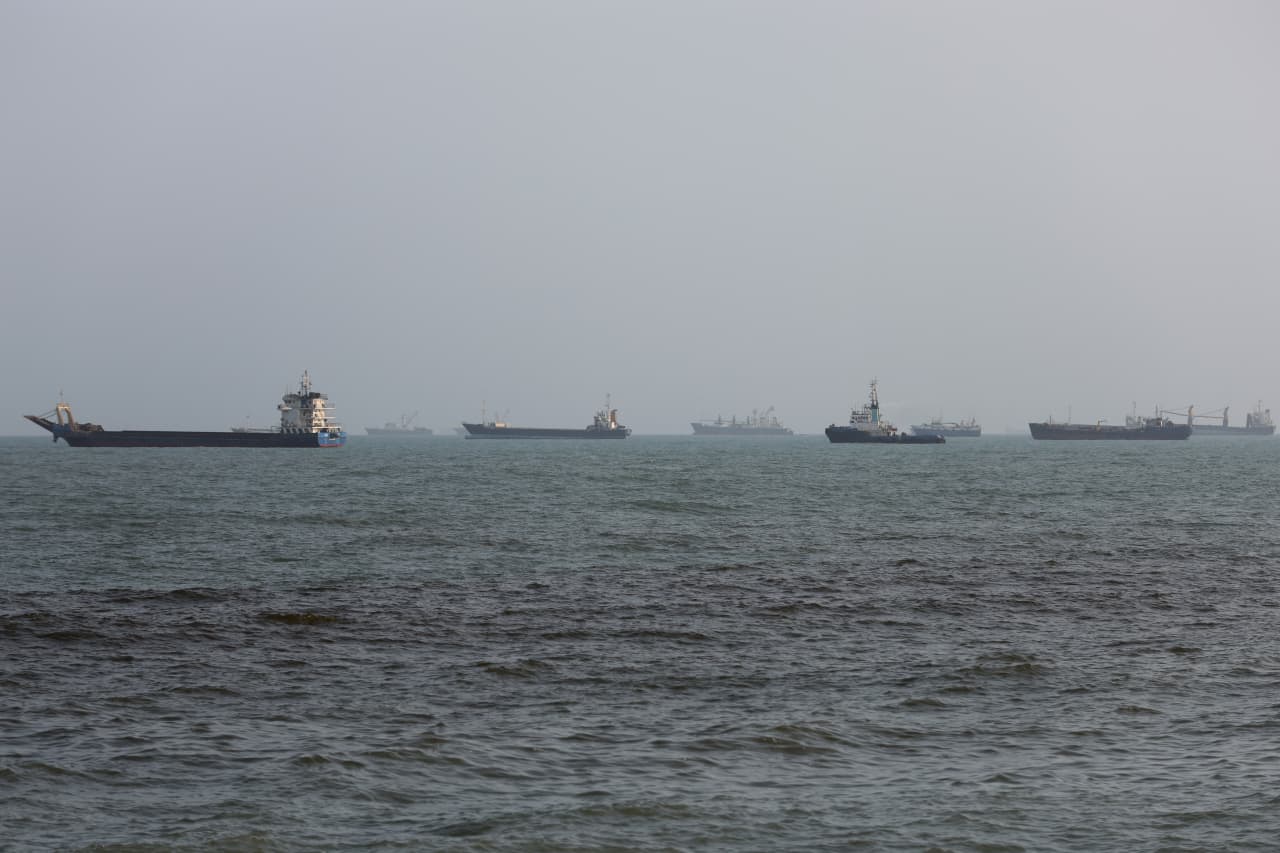
Iranian state-aligned outlets reported at 21:24 UTC on 31 August 2026 that a Saudi-flagged oil tanker named Cedar was disabled while transiting the southern Strait of Hormuz via Omani waters. The English-language account came first via the Telegram channel rnintel, attributing the claim to IRIB, the Islamic Republic's official broadcaster. Within nineteen minutes, the geopolitical channel GeoPWatch repeated the account, and by 21:36 UTC the same information had propagated onto X through a Polymarket status post, where it sat beside the day's oil-market odds.
The tanker was carrying roughly 2 million barrels of crude, according to the Telegram channel Clash Report, which cited Iranian media. Neither IRIB nor the Iranian outlets that relayed the account specified the vessel's owner, its flag registry, its last port of call, or whether it had been boarded, diverted, or physically damaged. The available source items do not specify any of those details. Cedar, as a name, returns several historical crude carriers but no single confirmed match for the 31 August incident.
The hours before the claim landed
Hours earlier, a 20:56 UTC piece on Marketwatch had framed the same body of water as a chokepoint that Gulf producers are actively working around, not through. The thrust of that reporting: Middle East oil exporters have been redirecting shipments away from the most exposed Hormuz approaches, adding distance and cost to reduce the surface area available to Iranian harassment. The Cedar claim lands inside that exact window, when the market had just been reminded that routing around Iran is now a default cost-of-business for Saudi, Emirati, and Omani shippers.
The chronology matters. A tanker-disabling incident reported by Iranian state media is, by default, a Tehran-curated claim until corroborated by vessel tracking, insurer bulletins, or the ship's operating company. Iranian outlets have previously carried accounts of maritime incidents in the Strait that did not survive contact with Lloyd's List intelligence or with the Lloyd's Joint War Committee listed-area advisories. Nothing in the cited thread provides that independent corroboration.
What the framing does
Read as a piece of signalling rather than a confirmed seizure, the pattern fits a familiar Iranian playbook: publicise an interdiction, let the message travel through Telegram and X with minimum friction, and let the freight market price the ambiguity. War-risk premia, rerouting surcharges, and tonnage auctions off Fujairah all move on the assumption that Hormuz is a contested surface, even when no shots have been confirmed. The Cedar announcement, even at the level of an unverified IRIB report, restores that baseline cost.
Monexus assessment: the more analytically interesting read is that the Iranian claim and the same-day Marketwatch piece point in the same direction. Gulf exporters are already routing around the chokepoint; Tehran's maritime messaging rewards them for doing so by pricing the detour back into the headline. The structural frame is a slow-mo transfer of risk from insurers and shipowners onto consumers, with the producer states absorbing the political cost and the shipping intermediaries absorbing the freight premium.
What is and is not established
The 31 August reports converge on three verifiable points: a Saudi-named tanker was, according to Iranian state media, stopped or disabled in the southern Strait of Hormuz on 31 August 2026; the tanker is named Cedar; and it is being described by Iranian outlets as having been transiting Omani waters. Those three points sit across IRIB (via rnintel), an Iranian-media summary on GeoPWatch, and a Polymarket post on X. The fourth point, that the vessel could carry roughly 2 million barrels, comes from one Iranian-media summary and is not corroborated elsewhere in the cited thread.
The cited source items do not specify the vessel's owner, operator, charterer, last port of call, or flag registry. They do not specify whether the tanker was boarded, escorted, struck, or simply ordered to alter course. They do not specify any Saudi, Omani, or US Naval Forces Central Command response. They do not specify that the ship is in fact Saudi-owned or that any crew are Saudi nationals. Any of those details, if produced later, would meaningfully change the read. None of the cited posts contains a named Saudi Aramco or Bahri statement, and none contains a Lloyd's List or TankerTrackers confirmation. The thread contains no first-party statement from Saudi, Omani, US, or Iranian foreign-ministry officials beyond the IRIB relay.
Stakes for the next 48 to 72 hours
Brent and Dubai crude will move first, on thin volume if Asian trade is closed, with the freight complex following at the Asian reopen. The practical stakes for the oil market are whether a credible Iranian interdiction is confirmed by vessel-tracking data and a named owner's statement. Until that happens, the Cedar narrative sits in the same epistemic category as previous Iranian-channel claims that have both held up and quietly faded. Market response on a confirmed interdiction is materially different from market response on an IRIB bulletin.
The geopolitical stakes are larger. If the vessel is confirmed Saudi-owned and the interdiction holds, the incident lands on top of an already-active round of Saudi-Iranian diplomacy and an Omani mediation track that has been limping for months. If it is not, the incident is a reminder that the Hormuz signal-chamber does not need a confirmed event to move price; it needs only a plausible one. Both readings are consistent with the cited source items.
Desk note: the wire framing of any Strait-of-Hormuz incident leans on Iranian-curated claims in the first hours, with independent maritime intelligence arriving later. Monexus is flagging the IRIB relay as Iranian-attributed rather than treating it as a confirmed seizure, and will update the read on confirmation from Lloyd's List, TankerTrackers, or a named owner's statement.
Wire provenance
This editorial synthesis draws on the following public wire/social posts:
- https://x.com/Polymarket/status/2094539767341830640
- https://www.marketwatch.com/story/this-maneuver-is-boosting-oil-shipments-through-the-strait-of-hormuz-070d8fa3?mod=mw_rss_topstories
- https://t.me/GeoPWatch/39244
- https://t.me/rnintel/65918
- https://t.me/ClashReport/94422