IRGC general tells al-Mayadeen Iran kept most of its missiles in the June war
A senior IRGC commander told al-Mayadeen that more than 90% of Iran's ballistic missiles remain intact and that production now outpaces battlefield consumption.
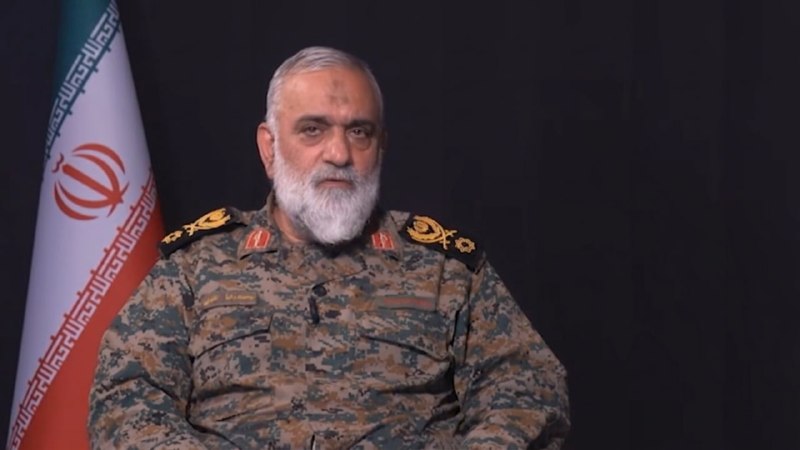
On 31 August 2026, Iran's Press TV relay began publishing excerpts of an interview in which Brigadier General Mohammad Reza Naqdi, a senior commander in the Islamic Revolutionary Guard Corps, told Lebanon-based al-Mayadeen that Iran's military had retained the bulk of its ballistic missile inventory through the June war with the United States. Press TV's first excerpt post went out on its Telegram channel at 15:07 UTC; a second excerpt followed at 15:09 UTC. By mid-afternoon the same passages had been relayed by Middle East Spectator, Open Source Intel and ClashReport, and the headline claim was circulating in four channels within roughly half an hour: "More than 90% of our missiles are still there," Naqdi said. "We are currently producing at a rate far exceeding our consumption at the front. Our stockpile is increasing."
That figure is the centre of gravity of the interview, and it is doing political work in a window before any post-war settlement is written. If the claim holds, the June war did not strip Iran of the deterrent it relied on before the fighting began. If it does not, the IRGC has chosen to stake its public credibility on a number that is independently unverifiable, in front of an Arab audience that has every reason to check Tehran's homework.
What Naqdi actually said
The interview was conducted by al-Mayadeen, the Beirut outlet long associated with the Hezbollah-aligned media ecosystem, and the excerpts circulated in text form across four Telegram channels between 15:07 and 15:39 UTC on 31 August. Naqdi made four distinct claims in the passages that circulated.
First, on inventory: more than 90% of Iran's ballistic missiles are still in place, and current production outpaces battlefield use, so the stockpile is growing rather than shrinking. Second, on US performance: "Our assessment of the capabilities of the U.S. armed forces was greater than what turned out to be the case. They greatly exaggerated their capabilities." Third, on the political utility of victory: "We expected to achieve victory against the United States, because God is with us. But honestly, we did not think it would be this easy." Fourth, on civil-military relations inside Iran: "Relations between the IRGC and the government are stronger than ever," a line that appeared across both Press TV excerpt posts, and, in a follow-on passage, a warning that "if the Americans want to make a mistake again, the response will be stronger."
Naqdi used a sporting analogy that landed harder than the rest. "All football players have a ball made to the same standards, but they are not all Ronaldo," he said. The implicit message: US forces and Iranian forces were working with similar tools, but only one side had the will to use them. The closed-doors logic is laid out in a separate relay: "The Americans possess a hundred times more weapons than we do, and they have better missiles and drones, but they cannot use them effectively."
The al-Mayadeen question
The choice of venue is not incidental. Al-Mayadeen is read closely in Beirut, Baghdad and Sanaa, and its studio guests are treated as authoritative on matters touching the so-called Axis of Resistance. An Iranian general choosing it over state-aligned domestic outlets such as IRIB is sending a signal about the intended audience.
Monexus assessment: the venue tells you who the message is for. The 90% figure is being aimed at audiences who already sympathise with Tehran's narrative and who can be mobilised politically if a second round opens. Whether the same line will hold up in technical arms-control talks, where numbers have to survive satellite-truther scrutiny, is a different question.
The structural problem for any Iranian public claim about missile inventory is that no public US bomb-damage assessment appears in the cited posts, and the cited posts do not specify whether one is pending. Without an independent count of launchers, storage sites and reloads, the public argument is essentially two speeches pointing past each other. This article has not independently established whether US Central Command has released, or is preparing, its own tally of what was destroyed in June.
Reading between the lines
Naqdi also touched on the internal politics of the war. The line that "relations between the IRGC and the government are stronger than ever" is doing double duty. It reassures a domestic audience that the wartime command arrangement survived, and it warns external audiences that any attempt to drive a wedge between the civilian and military wings during a future crisis will fail. The same passage appears twice in the Press TV relay, which suggests it was flagged for emphasis rather than transcribed by accident.
There is a second layer in his "we did not think it would be this easy" remark. Naqdi is claiming that Iranian pre-war intelligence over-estimated US capability, not the other way around. The framing lets Tehran concede that the US has more hardware, more missiles, more drones, while insisting that hardware did not decide the outcome. The argument is a familiar one in Iranian strategic commentary: quantity without doctrine is a paper army.
What it changes, and what it doesn't
If the 90% figure is roughly accurate, the strategic picture in the Gulf is closer to a pause than a settlement. Iran's deterrent survived; its production lines are running; its political command structure is intact. A second round, were one to come, would begin from a position closer to the status quo ante than to the punitive disarmament that hardliners in Washington had been demanding before the war.
If the figure is inflated, the story Naqdi is selling will collapse on contact with the first independent inventory estimate, and the IRGC will have spent post-war credibility on a number that could not be defended. The al-Mayadeen audience may not press the point; a US or IAEA technical audience almost certainly will.
The bigger tell is what is missing. Naqdi did not address drone inventories, the status of Iran's nuclear file, or the fate of any post-war understanding that may be taking shape behind closed doors, and the cited posts do not specify whether those questions were raised and cut from the broadcast, or were simply not asked. Either way, the public version of the interview is built around the missile number and the morale claim. That is a choice, and it tells you where Tehran thinks the next argument will be fought.
, Filed under the intelligence desk. Monexus framed this story around the source-of-claim problem: a senior Iranian general, speaking on an Arab outlet sympathetic to the Axis of Resistance, asserting an inventory figure that no wire service in the cited thread has independently verified, and doing so in a window when no US damage assessment appears in the same thread. The wire has largely carried the quotes; this piece asks what the quotes are doing.
Wire provenance
This editorial synthesis draws on the following public wire/social posts:
- https://t.me/presstv/204909
- https://t.me/presstv/204908
- https://t.me/Middle_East_Spectator/36145
- https://t.me/Middle_East_Spectator/36146
- https://t.me/Middle_East_Spectator/36147
- https://t.me/osintlive/568507
- https://t.me/osintlive/568508
- https://t.me/ClashReport/94362
- https://t.me/ClashReport/94361
- https://t.me/ClashReport/94363
- https://t.me/presstv/204909
- https://t.me/presstv/204908
- https://t.me/Middle_East_Spectator/36145
- https://t.me/Middle_East_Spectator/36146
- https://t.me/Middle_East_Spectator/36147
- https://t.me/osintlive/568507
- https://t.me/osintlive/568508
- https://t.me/ClashReport/94362
- https://t.me/ClashReport/94361
- https://t.me/ClashReport/94363