Ternus takes the Apple CEO seat, with Schiller out and a 'huge launch' one week out
On 1 September 2026 John Ternus formally replaces Tim Cook as Apple CEO, Phil Schiller steps back from App Store and events duties, and Cupertino signals a flagship reveal inside seven days.
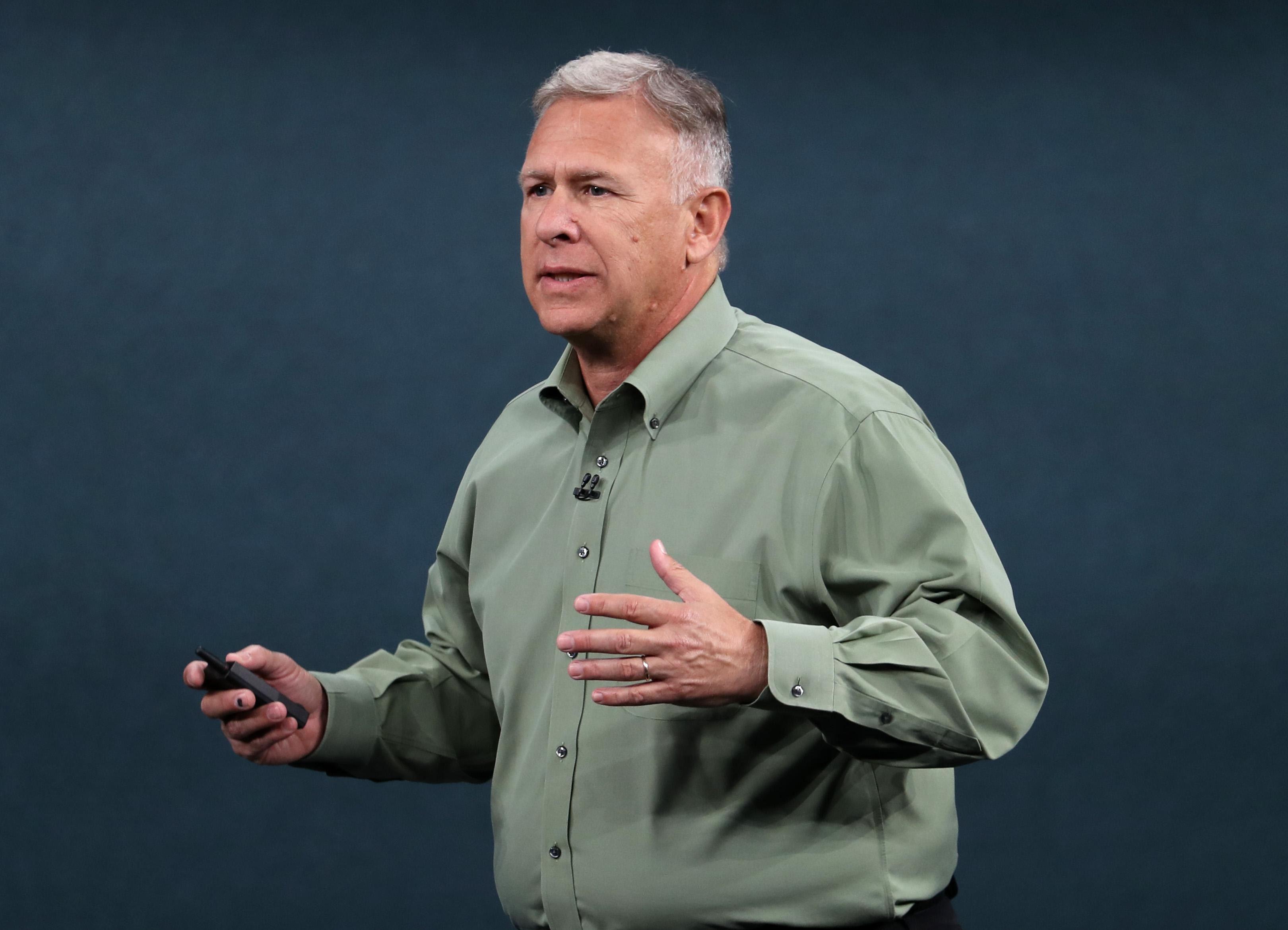
Cupertino changed hands at the top of the org chart on 1 September 2026. John Ternus, the Apple executive who has run the company's hardware engineering organisation, formally took over as chief executive from Tim Cook, ending a tenure that began in August 2011 when Cook succeeded Steve Jobs.
The handoff arrived in two pieces of news packed into roughly 24 hours. On 31 August, Bloomberg reported that Phil Schiller, Apple's long-serving fellow, is stepping down from his role overseeing the App Store and Apple Events, while remaining at the company. Then on the morning of 1 September, Ternus's first internal memo, obtained by Bloomberg and published by The Verge, thanked Cook and pivoted to what comes next. Per The Verge's excerpt of the memo, Ternus wrote: "We have a huge launch next week that's going to be phenomenal. Thanks for everything you've all done to make it possible."
Three announcements, one calendar week, and a CEO change baked in. The sequencing is the story.
The memo and the moment
Ternus's note, dispatched to staff on the day his promotion took effect, struck two notes at once: tribute to his predecessor, and an immediate operational pivot to a product event scheduled for the second week of September. The Verge's account runs the thank-you and the launch tease in adjacent paragraphs, the kind of internal choreography Apple uses when it wants employees to read the transition as continuity rather than rupture.
The choice of Ternus matters. He is a hardware leader inside the company, and the executive The Verge identifies as the person the organisation will now look to. TechCentral's write-up of the change, published the same day, frames the Ternus era as one inheriting the company's biggest challenges in services, regulation and the on-device AI race. That profile matters for the launch Apple has telegraphed: according to the Verge excerpt of Apple's announcement, the 9 September event is where Apple is "expected to unveil new iPhones including the rumored foldable iPhone Ultra and iPhone 18 Pro models." In an Apple that has spent the last five years arguing the silicon and services story, putting a hardware leader in the chair reads as a statement that the next argument will also be hardware-shaped.
The Schiller move is the quieter signal. Schiller has been a public face of Apple's developer relations and its product keynotes. Stripping him of those duties, while keeping him on the org chart, is the kind of housekeeping a new CEO does in his first week when he wants to know who he is actually trusting on stage.
The Cook ledger
Cook took over in August 2011 from a founder who was, by then, visibly ill. The company he inherited was the most valuable in technology and the most dependent on a single product line. The Verge's retrospective on Cook's tenure, published 1 September, frames the decade-and-a-half as a story of operational excellence and product hits alongside the misses. Monexus reads that balance as plausible. Cook's Apple is a company that runs the supply chain and services motion at scale; the question the new CEO now has to answer is whether the next cycle produces the same kind of cash generation without a new category to lean on.
The relevant question for September 2026 is not who Cook was. It is what Ternus is signalling he wants to be.
What the 'huge launch' is, and isn't
The phrase in Ternus's memo, "huge launch next week," is doing two jobs at once. Internally, it tells employees the calendar is not slipping and that the new CEO's first week on the job will end with a flagship on stage. Externally, leaked to Bloomberg and amplified across the trade press, it primes the analyst and developer communities to treat whatever Apple unveils on 9 September as a referendum on the new regime, not just an annual refresh.
The Verge excerpt of Apple's own announcement points in a specific direction: the 9 September event is "expected to unveil new iPhones including the rumored foldable iPhone Ultra and iPhone 18 Pro models." That phrasing leaves room for Apple to surprise the room, but it does narrow the field. The "huge" in Ternus's memo, on this reading, refers to scale of launch rather than category novelty.
Either way, the timing of the Schiller move is the part that should get the most attention. A CEO who wants continuity would not reshuffle the App Store relationship in his first 48 hours. A CEO who wants to send a signal that the App Store, the developer platform, and the events format are open for renegotiation would.
Analysis: what Ternus is buying with the symbolism
Apple's chief executive transition is, structurally, an exercise in succession signalling. The company's market capitalisation, its supplier contracts, its developer relationships and its regulatory exposure all hinge on whether the financial community reads the new boss as a continuation or a break. Cook's job for fifteen years was to convert Jobs-era products into cash without breaking the brand. Ternus's job, as described by the memo and the personnel moves, appears to be the harder one: ship the next cycle, or at least be seen trying to.
Three signals point in the same direction. The first is the choice of Ternus over the operations-and-services candidates that some on the Street had expected. The second is the immediate calendarisation of the 9 September launch in the first internal memo. The third is the Schiller reorganisation, which clears the events stage and the developer-relations desk in a single move and lets the new CEO choose his own voices for both. None of those signals is dispositive on its own. Together, they read as a leadership team that has decided the safest thing to do, in a year when Apple's growth profile has narrowed and the on-device AI story is being told more loudly by Google and Samsung than by Apple, is to look like it is moving quickly.
The competitive frame matters too. Cupertino is shipping into a market where the on-device AI story Google and Samsung are telling around Gemini has more third-party developer buy-in than Apple's private-cloud approach, and where regulators in Brussels, Washington and Beijing have moved from occasional annoyance to permanent counterparty. The September stage will be judged not only on what Apple shows but on whether the developer and carrier partners in the room believe the next twelve months are an Apple cycle.
Stakes, and what to watch
The stakes are concrete and short-dated. The keynote Apple has scheduled for 9 September will set the narrative for the holiday quarter and, more importantly, for the 2027 developer conference, where the AI platform story will either harden or stall. If Ternus uses the stage to reframe Apple's AI offering around a more open developer story, the Schiller move looks like a precondition. If he uses it to ship the iPhone lineup Apple's announcement has telegraphed, the Schiller move looks like routine housekeeping done early.
Two dates matter from here. The first is 9 September itself, the moment the memo has been pointing at since Tuesday. The second is Apple's fiscal-quarter earnings call, when the market will want to know whether the new CEO's first quarter produced the kind of revenue print that justifies the symbolism.
Until then, the read is the read: a clean, deliberately staged transition, with a hardware leader in the chair, a stage cleared of the previous era's emcee, and a launch timed to land inside the new boss's first week. It is the safest possible version of a change at the top. Whether it is also the most consequential one will be answered on stage.
Desk note: Wire coverage of the CEO transition has framed Ternus primarily through the lens of succession, with The Verge and TechCentral both emphasising the engineering pedigree. Monexus frames the same news through the simultaneous Schiller reorganisation and the timing of the 9 September keynote, reading the three moves as a single coordinated signal about the new CEO's first hundred days.
Wire provenance
This editorial synthesis draws on the following public wire/social posts:
- https://www.theverge.com/tech/987583/apple-john-ternus-staff-memo
- https://techcentral.co.za/john-ternus-apple-ceo-tim-cook/285604/
- https://www.theverge.com/tech/987043/tim-cook-biggest-wins-misses
- https://t.me/theverge_news/8632
- https://www.theverge.com/tech/986869/apple-phil-schiller-stepping-down
- https://t.me/theverge_news/8622
- https://www.theverge.com/tech/987583/apple-john-ternus-staff-memo
- https://techcentral.co.za/john-ternus-apple-ceo-tim-cook/285604/
- https://www.theverge.com/tech/987043/tim-cook-biggest-wins-misses
- https://t.me/theverge_news/8632
- https://www.theverge.com/tech/986869/apple-phil-schiller-stepping-down
- https://t.me/theverge_news/8622