Warsh tells G20 the savings glut is now an investment surge. The Fed is being told to look the other way on inflation.
At a G20 finance meeting on 31 August 2026, Fed governor Kevin Warsh framed a long-running global savings overhang as an investment boom. Hours later, the president said growth could hit 20% and warned the Fed off rate hikes.
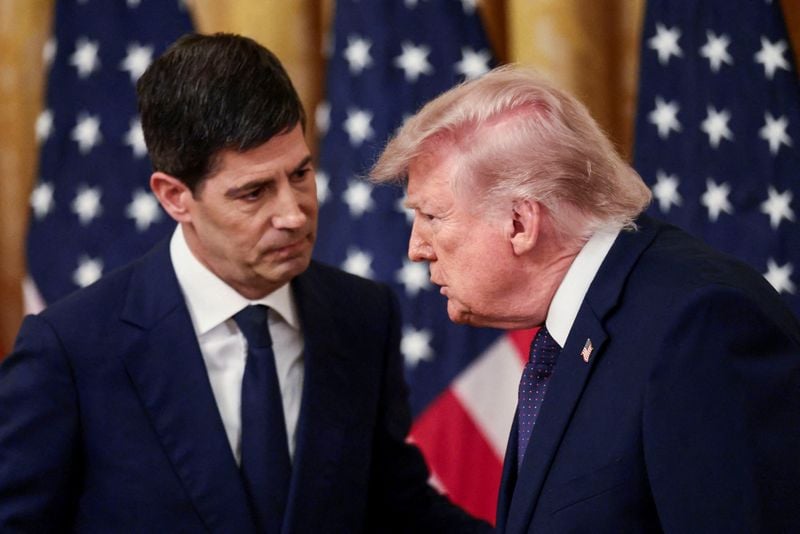
The split-screen on 31 August 2026 was unusually tidy. At 19:19 UTC, Reuters and Investing.com carried Federal Reserve governor Kevin Warsh into the G20 finance track telling counterparts that the world's long-running savings glut is morphing into an investment surge. By 20:18 UTC, Investing.com had Donald Trump on tape saying Warsh "will do what he has to do." By 20:50 UTC, CNBC was reporting that the president thinks U.S. growth could hit 20%, a print that has happened only once since the Second World War, and that he argued rapid expansion should not move the Federal Open Market Committee to raise rates even as inflation remains above the central bank's 2% target. The same evening, the administration was preparing what CNBC called a fresh slate of drug-pricing deals with nearly a dozen manufacturers.
The pattern, read together, is not hard to see. A White House that wants headline growth and lower consumer prices is being matched, in real time, with a central-bank voice re-labelling one of the more uncomfortable macro stories of the past decade: too much money chasing too few productive outlets. If that money is now productive, the argument runs, the Fed has less reason to lean against it. That is this publication's reading of the sequencing; the wires reported each item on its own terms.
Warsh's reframe
The phrase "savings glut" is associated with former Fed chair Ben Bernanke and his effort to describe the post-2001 surge in foreign reserves recycled into U.S. Treasuries. Warsh, speaking to G20 counterparts on 31 August 2026, inverted the framing. Per the Reuters wire picked up by Investing.com and the Reuters X account, he argued that the same pool of capital is now funding an investment surge, with the implication that the real-economy payoff is showing up in capex rather than asset prices. Investing.com's 19:19 UTC item carries Warsh's claim that "the world" is seeing the shift. Reuters's short-form report, posted to X under the Reuters handle, frames it as "past global savings glut is turning into investment surge."
That is a useful phrase for a Fed governor under political pressure. If the overhang is being absorbed in plant, software and infrastructure, the textbook case for holding rates restrictive weakens. Productivity gains would, in theory, allow growth to run hot without entrenching inflation. The empirical case is thinner than the rhetoric, and the cited items do not resolve it. U.S. non-residential investment trends, the split between domestic capacity build-out and financial engineering, and the trajectory of the labour share all sit outside the four wires this article draws on.
What Trump wants the Fed to do
Trump's August comments are not subtle. CNBC's 20:50 UTC piece records the president arguing rapid growth "should not prompt Fed rate hikes" while inflation is still above target. The 20% growth claim, by Trump's own framing, is a ceiling rather than a base case; the wire notes that level has been hit only once since the Second World War. The political logic is straightforward on its face. A 20% nominal growth print, if even half-credible, would validate an incumbent's economic stewardship. A rate cut cycle would lower mortgage and auto-loan rates and reinforce the claim that policy is working. Warsh's "investment surge" framing gives the Fed political room to act on that preference.
The "he'll do what he has to do" line, carried by Investing.com at 20:18 UTC, is the connective tissue between the two appearances. Read narrowly, it is anodyne. Read as a signal to markets about a pending personnel decision, or about the Fed chair succession question that follows Jerome Powell's term as chair, it is more pointed. Whether that signal is what Trump intended is something this publication cannot resolve from the cited items alone. The available sources do not specify Warsh's standing in any succession contest, nor whether the White House has timed the comments with a personnel decision in mind.
The drug-pricing lever
While the inflation-versus-growth argument was being staged, the administration was lining up a separate inflation fight with a different theory of action. CNBC's 17:20 UTC item reports that the president plans to announce new drug-pricing deals with nearly a dozen manufacturers, building on the earlier push to anchor U.S. prices to cheaper ones abroad. The structural bet is that the most-fought-over component of household medical bills is also the component most exposed to international reference pricing.
That is a different policy channel from the Fed's, but the political logic converges. Pharmaceutical inflation is one of the few CPI components where the administration can plausibly claim a direct lever. If list-price compression shows up in the print, the headline inflation number drifts down, and the case for holding rates higher weakens. Whether reference pricing actually moves the CPI sub-index, as opposed to list prices on websites, is contested in the broader policy literature, and the cited items do not adjudicate the question. What the CNBC item does specify is the direction of travel: more deals, more reference pricing, more pressure on a sticky CPI component.
What the wire is not telling you
Monexus analysis: the cleaner reading is that Warsh's G20 speech and the White House's drug-pricing announcements are being sequenced to constrain the Fed's September meeting. A governor publicly framing savings as productive investment, a president publicly arguing growth can absorb above-target inflation, and an executive-branch announcement timed to pull a stubborn CPI component lower, all within a single news cycle, is preparation. That is a reading of the timing, not a claim about the content of any internal Fed deliberation; the cited wires do not report on the FOMC's private discussions.
The opposing read is that the inflation problem is largely energy, shelter and services, where neither reference pricing nor productivity rhetoric moves the needle. The cited items do not specify the composition of the current CPI print, and this article has not independently verified it. If the administration's claim that inflation is rolling over is right, the Fed has cover to cut. If the data under the political messaging is softer than the messaging suggests, the cover does not hold. Reuters, CNBC and Investing.com, the three sources in this thread, do not adjudicate that question.
The honest answer at the end of August 2026 is that the public-facing macro story is being told more confidently than the data behind it. Warsh's investment-surge framing is a hypothesis the Fed is now putting on its own letterhead, and the White House is helping the hypothesis along with price controls on a sector it can reach. Whether the underlying inflation prints validate the framing, or refute it, will land in the next two CPI releases. Until then, the gap between the talking points and the data is the story.
Desk note: Where the wire carried the Warsh G20 comments as a one-line item, Monexus read the underlying Reuters and Investing.com coverage and the Reuters X post to triangulate; the analysis above is this publication's, not the wires'.
Wire provenance
This editorial synthesis draws on the following public wire/social posts:
- https://www.cnbc.com/2026/08/31/trump-us-gdp-growth-20-percent-economy.html
- https://www.investing.com/news/economy-news/trump-on-warsh-hell-do-what-he-has-to-do-4883217
- https://www.investing.com/news/economy-news/feds-warsh-tells-g20-world-seeing-global-investment-surge-93CH-4883178
- https://www.cnbc.com/2026/08/31/trump-drug-pricing-deals.html
- https://reut.rs/4xC0VdM
- https://x.com/Reuters/status/2094563440039723403
- https://www.cnbc.com/2026/08/31/trump-us-gdp-growth-20-percent-economy.html
- https://www.investing.com/news/economy-news/trump-on-warsh-hell-do-what-he-has-to-do-4883217
- https://www.investing.com/news/economy-news/feds-warsh-tells-g20-world-seeing-global-investment-surge-93CH-4883178
- https://www.cnbc.com/2026/08/31/trump-drug-pricing-deals.html
- https://reut.rs/4xC0VdM
- https://x.com/Reuters/status/2094563440039723403