Southern Lebanon takes the hits, and the wire keeps moving
An open-source channel logged repeated Israeli strikes in southern Lebanon on 2 September 2026, while relaying a separate report that Lebanese security forces dismantled a network linked to former Syrian regime officers and Hezbollah. The sequence is revealing, but the available evidence does not establish what was hit or why.
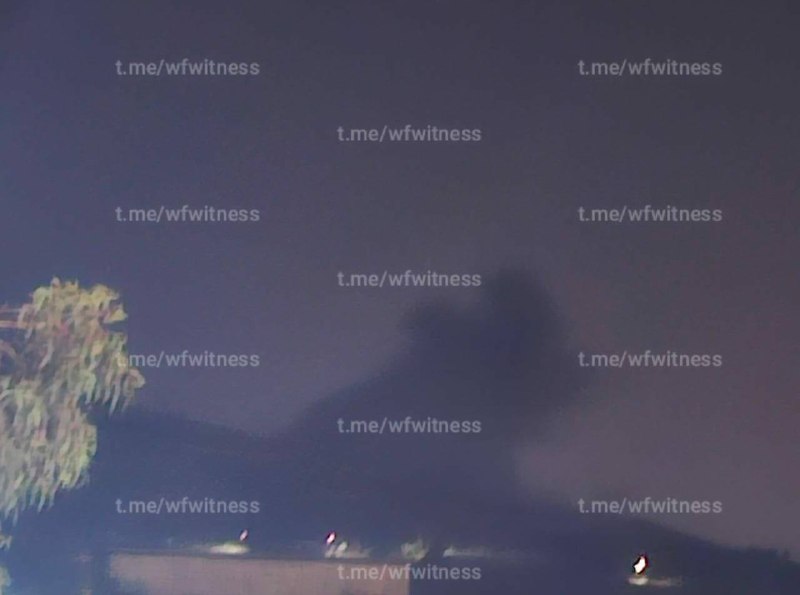
Between 17:18 and 17:44 UTC on 2 September 2026, the open-source witness channel wfwitness reported an Israeli airstrike in Ali al-Taher and a succession of further strikes in Nabatieh al-Fawqa, both in southern Lebanon. In the same period, the channel reported artillery fire in Barachit and a detonation in Houla. At 17:43 UTC, it relayed an MTV Lebanon report that Lebanese security forces had dismantled a network linked to former Syrian regime officers and Hezbollah. At 17:08 UTC, it also reported that two young men who had entered Kfar Tibnit encountered Israeli military vehicles. The sequence is notable, but the available source items do not establish the targets, the damage, or the circumstances behind each event.
The proper conclusion is narrower than the most dramatic headlines suggest. A repeated sequence of strike reports in one municipality, together with reports of other military activity across southern Lebanon, indicates a concentrated period of escalation. It does not, by itself, prove what Israel struck, whether Hezbollah was responsible, or what strategic calculation connected the events. Monexus analysis: the significance lies less in any single claim than in the contrast between the volume of immediate operational reporting and the scarcity of independently specified evidence.
The arithmetic of Nabatieh
The channel's Nabatieh al-Fawqa posts provide the clearest evidence of tempo. It reported two strikes at 17:39 UTC, another at 17:41 UTC and a fourth at 17:44 UTC. Earlier posts at 17:09 and 17:22 UTC also described two strikes in the municipality. Taken together, the available source items document repeated reported strikes in Nabatieh al-Fawqa during the 17:09 to 17:44 UTC window. They do not identify the targets or provide casualty figures.
That distinction matters. The Israeli security position is legitimate in principle, particularly where military infrastructure is used to threaten Israeli territory. But the supplied material does not show that the reported strikes hit launchers, weapons stores, command nodes or any other specific facility. It would therefore be an error to turn an unattributed sequence of incident reports into a verified account of Israeli operational intent.
The broader evidence is similarly limited but troubling. Airstrike activity was reported in Ali al-Taher, artillery shelling in Barachit and a detonation in Houla. The channel also reported that Israeli jets had entered southern Lebanese airspace. These are consequential claims, yet the available source items do not specify the resulting damage, the weapons used or the authority responsible for independently confirming them.
The other column
The MTV Lebanon report relayed by wfwitness adds a different category of pressure. According to that report, Lebanese security forces dismantled a network linked to former Syrian regime officers and Hezbollah. The same post says the network was believed to have been trained and to have sheltered Syrian operatives. Because this is a relay of a media report, not a first-party Lebanese security statement, its wording should remain attributed.
The plausible interpretation is not that the two developments prove a single coordinated campaign. They may be separate responses to overlapping security problems. Monexus assessment: the juxtaposition is still analytically useful because it places external military activity and reported domestic security action in the same theatre at nearly the same time. It supports a reading of pressure on Hezbollah-linked structures, not a conclusion about command, control or shared planning.
What the framing leaves out
Fast-moving conflict reporting rewards certainty. A target, a casualty count and an official explanation arrive later, if at all. In the meantime, the headline can harden around the most assertive available account. The source material here contains repeated claims of strikes and a relayed report of a dismantled network, but it does not contain the basic evidence required to resolve the central question: what exactly happened on the ground?
That is not an argument for treating every claim as equally credible. The repeated Nabatieh posts are mutually consistent within one channel, and the other southern Lebanon locations are reported with similar phrasing. But consistency of posts is not independent corroboration. The same channel is also the source for the account of the two young men in Kfar Tibnit, and that account should likewise remain qualified as a report rather than a verified reconstruction.
The media problem is therefore not simply the volume of claims. It is the absence, in the available items, of named first-party statements specifying targets, legal rationale, network membership or casualty information. Without those details, the story risks becoming a contest over which outlet has the most assertive language rather than a clear account of what occurred.
The stakes are in the unknowns
For residents of southern Lebanon, the distinction between a confirmed military target and an unexplained strike is not semantic. Repeated attacks can endanger civilians, damage local infrastructure and intensify pressure on communities already living through insecurity. For Israel, the competing concern is that border-adjacent territory can be used for attacks. Neither concern is served by a reporting chain that fills evidentiary gaps with inference.
The next useful evidence would be an Israeli military statement identifying the objectives of the Nabatieh and other reported strikes, and a Lebanese security or MTV Lebanon report specifying the dismantled network's composition and alleged activities. Until those records are available, the strongest defensible claim is limited: wfwitness logged repeated reported strikes in Nabatieh al-Fawqa and additional military activity elsewhere in southern Lebanon on 2 September 2026, while relaying a report of a Hezbollah-linked network being dismantled by Lebanese security forces. The wire keeps moving, but the facts have not yet caught up.
Desk note: This article reports Israeli and Lebanese security concerns, preserves the distinction between verified facts and relayed claims, and avoids supplying absent target, casualty or coordination details.
Wire provenance
This editorial synthesis draws on the following public wire/social posts:
- https://t.me/wfwitness/109522
- https://t.me/wfwitness/109520
- https://t.me/wfwitness/109517
- https://t.me/wfwitness/109514
- https://t.me/wfwitness/109511
- https://t.me/wfwitness/109510
- https://t.me/wfwitness/109509