US strikes on Iran escalate as Tehran retaliates against regional assets
A US barrage against southern Iranian cities drew Iranian retaliation against US assets in the region, in what Reuters called the most serious escalation in weeks.
The United States carried out a barrage of airstrikes against targets in southern Iran early on 2 September 2026, prompting retaliatory strikes by Iranian armed forces on US assets across the region, Reuters reported at 01:59 UTC. Iranian state media said the operations hit southern cities and that scores of civilians, including children, were killed and wounded; the Iranian armed forces said they had begun targeting US positions in retaliation for renewed attacks.
What is unfolding is the most serious week-on-week escalation of the US–Iran confrontation in months, and it lands on a global economy already bracing for a fresh oil shock. The question is no longer whether the two sides are talking past each other. It is whether either side is still talking at all.
What the wire says happened
According to a 01:59 UTC Reuters dispatch, the US launched the strikes and "prompted Iranian retaliation, in the most serious escalation in weeks in a conflict that has driven up global energy prices and weighed on President" Trump's domestic political position. The framing matters: the escalation is being read first as an energy story and second as a market story, with political weight trailing close behind.
Iranian state outlet Press TV, posting at 02:26 UTC, said the Iranian armed forces "target US assets in the region in retaliation for US renewed attacks on a number of Iranian southern cities." A separate Press TV bulletin at 02:36 UTC said "scores of Iranian civilians, including a large number of children, are killed and wounded in fresh strikes by the aggressor US forces on Iran's southern regions." These figures cannot be independently corroborated from the available sources and are presented here as Iranian state-media reporting.
The tanker dimension
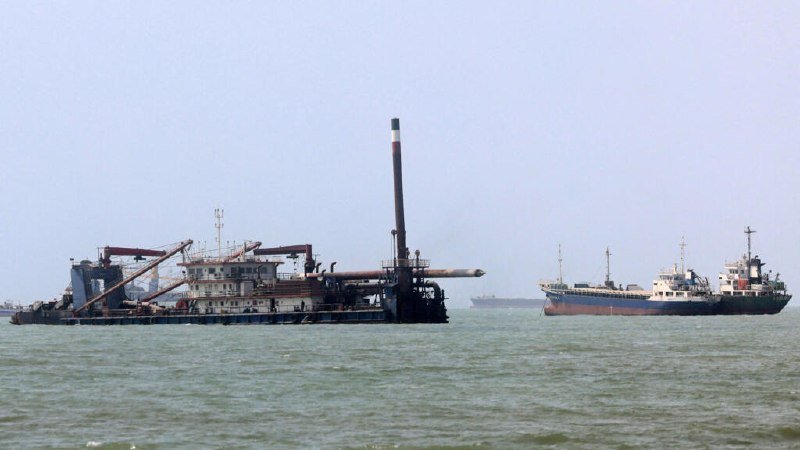
The strikes did not stay over land. A 00:33 UTC report relayed by Telegram channel RN Intel, citing Axios, said "the U.S. struck two Iranian tankers off Iran's coast as part of the new round of attacks today, with American drones launching missiles into the ships' engine rooms." The targeting of commercial shipping off the Iranian coast raises the cost of the operation for the global oil trade, since tanker incidents in the Gulf historically feed straight into insurance premiums, charter rates, and benchmark crude prices within hours. The available source items do not specify the tankers' flags, owners, cargoes, or the extent of any spill.
This is the kind of detail that decides whether a regional escalation stays regional. Two struck tankers is not a closure of the Strait of Hormuz. It is the precedent for one.
Trump's diplomatic posture
A 01:33 UTC post by the Telegram channel OSINT Live, relaying OSINTdefender, captured US President Donald J. Trump saying he "isn't interested in signing an agreement with Iran that they deem to be worthless," and questioning "why the Iranian people" would accept such a deal. Read against the morning's strikes, the statement functions as a public marker: Washington is no longer negotiating under cover of talks. The diplomatic track and the military track are now visibly running on separate timetables, with the military track ahead.
That posture narrows Tehran's options in a way that matters for the next 72 hours. A leadership looking for off-ramps needs something to claim; a leadership told the other side has no use for the deal on offer has fewer off-ramps to claim, and more incentive to retaliate where it can.
What is still uncertain
The casualty count cited by Press TV is unverified by any source in this thread beyond Iranian state media itself. Reuters's escalation framing is corroborated by the trajectory of the morning's events, but the wire dispatch excerpted here does not enumerate targets struck, weapon types used, or Iranian retaliatory outcomes. The Axios tanker report, as relayed by RN Intel, names two tankers and engine-room targeting but the available items do not name the vessels, their operators, or any independent naval tracking confirmation.
The gap between what Iranian state media asserts and what can be independently established is the live story. Press TV's language ("aggressor US forces," "scores of civilians," "large number of children") reflects the framing a wartime Iranian state broadcaster is obliged to produce. It is not, on this evidence, a verified body count.
Stakes and the next 72 hours
Three things to watch. First, whether Iranian retaliation expands beyond a symbolic strike cycle into persistent targeting of Gulf shipping lanes or US bases in Iraq, Syria, or the Gulf Cooperation Council states. Second, whether the oil benchmark response measured in Brent and WTI prints forces a political reaction in Washington that the morning's confidence did not budget for. Third, whether any back-channel survives in capitals that have previously mediated, since Trump's stated dismissal of a deal he calls worthless leaves little air in the diplomatic tire.
The structural read is plain. A hegemonic transition does not require a formal announcement; it requires a series of moments in which the dominant power chooses confrontation over accommodation and the secondary power demonstrates it can still hurt back. The 2 September strikes, and the retaliation they produced, look like one of those moments. Whether it is the moment or just another data point depends on what happens between now and Friday.
Monexus framed the US strikes and Iranian retaliation through Reuters's escalation framing, with Press TV's civilian-casualty claims reported as Iranian state-media assertions rather than as confirmed numbers, and the Axios tanker report cited as relayed through RN Intel rather than as a first-party Axios URL.
Wire provenance
This editorial synthesis draws on the following public wire/social posts:
- https://reut.rs/4wYW6K7
- https://x.com/Reuters/status/2094968366423314485
- https://t.me/presstv/205143
- https://t.me/presstv/205144
- https://t.me/osintlive/569064
- https://t.me/rnintel/66003